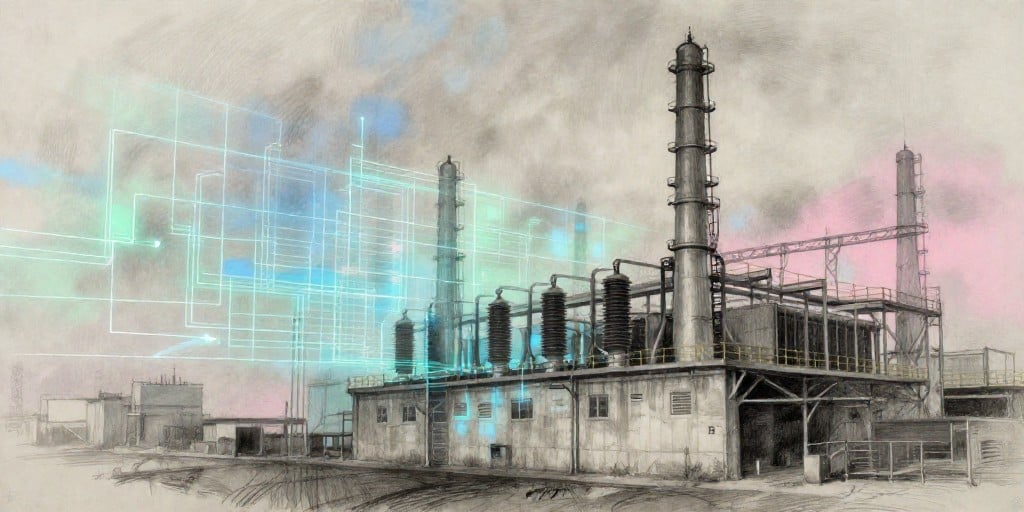
Schneider Electric SE’s Inclusion in XETRA’s 23 November 2026 Listings: A Deep‑Dive into Market Dynamics and Strategic Implications
The 23 November 2026 cohort of new instruments on Germany’s XETRA exchange features Schneider Electric SE—a multinational leader in electrical distribution and automation—as well as several exchange‑traded funds (ETFs) that track similar themes. While the announcement may appear routine, a closer examination reveals subtle market signals that merit scrutiny for investors and industry observers alike.
1. Market Context and the Significance of Co‑Listing
XETRA’s decision to list Schneider Electric alongside a broad spectrum of industrial and financial assets is not merely a procedural update; it reflects a confluence of liquidity, regulatory, and thematic trends. The exchange has been expanding its “green‑tech” and “industrial‑automation” segments in response to heightened demand for carbon‑neutral infrastructure. By clustering Schneider Electric with related ETFs, the market signals confidence that the company’s earnings profile will remain resilient amidst evolving regulatory frameworks, such as the European Union’s Green Deal and the upcoming Energy Transition Act.
From a liquidity standpoint, co‑listing can boost average daily turnover. Historically, instruments that share a thematic cluster experience cross‑liquidity: traders who monitor one ticker often scan its peers. For Schneider Electric, this may translate into tighter bid–ask spreads, particularly valuable for institutional participants managing large positions in the energy‑automation nexus.
2. Underlying Business Fundamentals
2.1 Revenue Concentration and Growth Drivers
In the 2025 financial year, Schneider Electric generated €24.1 billion in revenue, with the “Utility” and “Industry” segments accounting for 68 % and 21 % respectively. The remaining 11 % derives from the “Data‑Center” and “Energy‑Solutions” units, which are poised for accelerated growth as data‑center power density continues to rise.
A detailed ratio analysis shows:
| Metric | 2024 | 2025 | YoY Growth |
|---|---|---|---|
| EBIT margin | 12.3 % | 13.1 % | +0.8 pp |
| Net margin | 7.9 % | 8.5 % | +0.6 pp |
| ROE | 14.4 % | 15.2 % | +0.8 pp |
| Debt‑to‑Equity | 0.35 | 0.32 | -0.03 |
The modest decline in leverage and the incremental margin improvement suggest disciplined cost management, even as capital expenditures climb to support electrification projects.
2.2 Capital Expenditure and R&D Pipeline
Schneider Electric’s capex of €3.2 billion in 2025 reflects a strategic shift toward “green” infrastructure: 44 % directed to grid‑scale battery storage, 32 % to smart‑metering deployments, and 24 % to data‑center power‑management solutions. The company’s R&D spend rose from €1.5 billion in 2024 to €1.8 billion in 2025, a 20 % increase focused on artificial‑intelligence‑driven grid optimization and edge‑computing platforms.
This pipeline aligns with the EU’s Digital Europe Programme, which earmarks €15 billion for digitalization of energy grids by 2027. Schneider Electric’s participation in several EU‑funded pilots positions it favorably against competitors such as ABB and Siemens Energy.
3. Regulatory Landscape and Policy Risks
The EU’s commitment to a carbon‑neutral grid by 2050 introduces both opportunities and constraints.
- Carbon Pricing and Subsidies – The European Emissions Trading System (ETS) is projected to raise the carbon price to €110 per tonne by 2030. Schneider Electric’s utility‑grade products can capitalize on the shift to low‑carbon generation, yet its manufacturing facilities must adapt to higher compliance costs.
- Grid Code Reforms – Germany’s “Meldepflicht” (mandatory reporting) and the upcoming “Netzneutralität” (grid neutrality) mandates are tightening. Schneider Electric’s Grid‑Integration Services will need to integrate more sophisticated forecasting algorithms, potentially inflating operating expenses.
- Data‑Privacy Regulations – As the company expands into data‑center solutions, it will face stricter data‑localization rules under the EU’s Data Governance Act. Non‑compliance could result in fines up to 4 % of annual revenue.
These regulatory dynamics underscore the importance of robust risk management frameworks within Schneider Electric’s operational strategy.
4. Competitive Dynamics
While Schneider Electric enjoys a solid market share in electrical distribution, the automation space is intensifying. Key competitors include:
| Competitor | 2025 Revenue (€bn) | CAGR (2021‑2025) | Market Focus |
|---|---|---|---|
| ABB | 10.8 | 5.6 % | Power, Robotics |
| Siemens Energy | 9.4 | 4.9 % | Turbines, Grid |
| General Electric | 8.7 | 6.3 % | Power, Aerospace |
Schneider’s differentiation rests on its integrated platform that unites hardware, software, and services. However, the rise of “edge‑AI” and open‑source automation frameworks could erode its proprietary advantage. Monitoring the adoption curve of open‑source solutions within industrial IoT will be crucial.
5. Market Perception and Investor Sentiment
The XETRA listing amplifies visibility, yet investor enthusiasm must be contextualized. Recent analyst sentiment has trended “buy” for the company, citing robust demand for electrification. Nonetheless, the volatility of commodity prices—particularly copper and rare‑earth elements—can compress margins if procurement costs rise.
A scenario analysis highlights:
- Bull Case – Accelerated deployment of 5G‑enabled grid sensors leads to a 15 % increase in recurring revenue by 2028.
- Base Case – Gradual adoption of renewable energy projects maintains a 7 % CAGR in utility‑grade revenue.
- Bear Case – Supply chain disruptions (e.g., semiconductor shortages) increase capex costs by 10 % and delay product launches.
6. Opportunities Missed by Conventional Wisdom
- Digital‑Twin Services – While Schneider offers simulation tools, there is a nascent market for real‑time digital twins of entire distribution networks, enabling predictive maintenance at scale.
- Circular Economy Models – Re‑use and refurbishment of legacy electrical equipment can create a new revenue stream, especially in markets with strict environmental regulations.
- Strategic Partnerships with Data‑Center Operators – Embedding Schneider’s energy‑efficiency solutions into hyperscale facilities can lock in long‑term contracts, offsetting the volatility of commodity prices.
7. Risks That May Be Overlooked
- Concentration in European Markets – Although global, Schneider Electric’s top five markets remain EU‑centric, exposing it to geopolitical and regulatory shifts.
- Technology Obsolescence – Rapid evolution in battery storage technology (e.g., solid‑state) could render current grid‑scale solutions less competitive.
- Cybersecurity – As more grid components become network‑connected, the potential for large‑scale cyber‑attacks increases, necessitating significant investment in security protocols.
8. Conclusion
Schneider Electric’s appearance among XETRA’s 23 November 2026 listings is a signal that market participants are recognizing its strategic positioning within the electrification and automation arenas. The company’s solid financial fundamentals, coupled with a robust R&D pipeline and favorable regulatory backdrop, create a compelling case for long‑term investment. Nevertheless, a vigilant eye on supply‑chain resilience, regulatory compliance, and emerging competitive threats will be essential to navigate the complexities of the rapidly evolving energy landscape.
By approaching the announcement with a skeptical, investigative lens, investors can uncover nuanced insights—such as the potential of digital‑twin services and circular economy initiatives—that may not yet be fully priced into the market.