
Corporate News – Technological Innovation in Energy‑Technology
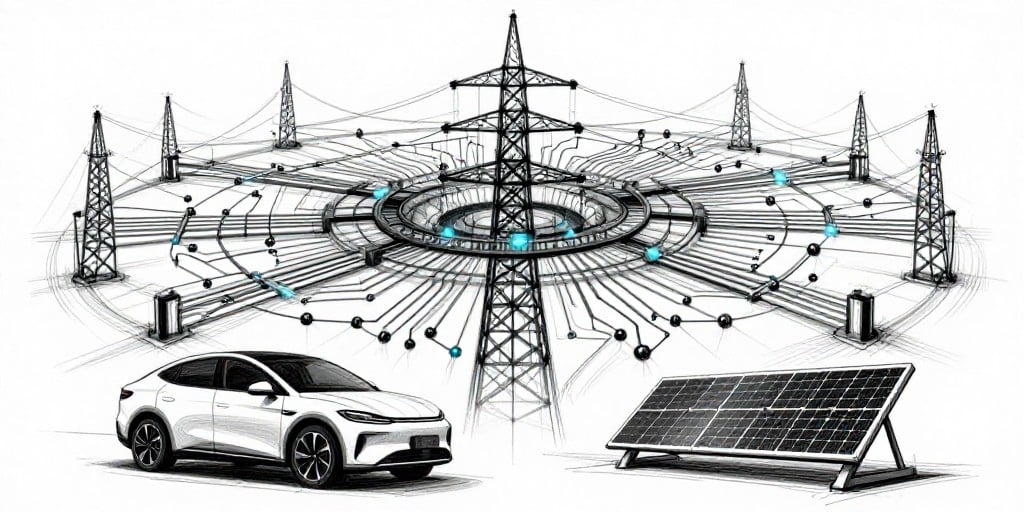
Schneider Electric, a leading global energy‑technology company, has underscored its strategic engagement in the evolving landscape of distributed energy generation and AI‑driven infrastructure through a series of high‑profile initiatives and thought‑leadership activities. The firm’s participation in Paris’s VivaTech 2026, coupled with recent collaborations with SoftBank and Foxconn, highlights its commitment to delivering end‑to‑end technology stacks that accelerate the deployment of intelligent, sustainable AI operations across diverse sectors.
Integration of AI and Energy Management in Heavy Industry
The company’s agenda at VivaTech focuses on the energy implications of AI, the evolving rules of innovation, and the role of strategic autonomy in shaping technology deployments. Executives will detail how demand‑side efficiency and intelligent management can complement the deployment of renewable resources. By embedding AI‑enabled control loops into energy‑management systems, Schneider Electric enables real‑time optimization of power flows, predictive maintenance of industrial assets, and automated load‑shifting strategies that reduce peak demand and improve grid stability.
From an engineering perspective, this involves the seamless integration of:
| Component | Role in the System | Productivity Impact |
|---|---|---|
| AI‑powered data‑center infrastructure | Predictive analytics for cooling and power usage effectiveness | 15–20 % reduction in PUE |
| Intelligent devices (smart breakers, sensors, relays) | Continuous monitoring of voltage, current, and fault signatures | 30 % faster fault isolation |
| Software‑defined architectures | Dynamic reconfiguration of network topologies | 25 % improvement in network uptime |
These capabilities translate into measurable productivity metrics for heavy‑industry clients, including higher equipment utilization rates, lower unplanned downtime, and extended asset lifecycles.
Capital Investment Trends and Economic Drivers
The expansion of distributed energy generation is driven by multiple economic forces:
Capital Expenditure (CapEx) Optimization Companies are reallocating CapEx toward modular, scalable solutions that reduce upfront costs and enable incremental scaling. Schneider Electric’s modular platform—combining hardware, firmware, and cloud‑based analytics—offers a clear path to amortize investment over a shorter horizon compared to traditional, monolithic infrastructure.
Regulatory Incentives European Union directives on grid decarbonization and energy‑efficiency mandates are creating a favorable policy environment. The European Green Deal and the Fit‑for‑55 package are pushing utilities to integrate distributed generation, thereby boosting demand for Schneider’s grid‑integration solutions.
Infrastructure Spending Public‑private partnerships (PPPs) and stimulus packages aimed at modernizing power grids provide a steady inflow of funding. Schneider’s involvement in large‑scale AI data‑center projects aligns with these funding streams, ensuring sustained capital outlays for R&D and deployment.
Supply Chain Implications
The company’s strategic alliances with SoftBank and Foxconn reinforce its supply‑chain resilience:
SoftBank Partnership – Accelerates the development of AI‑driven data‑center infrastructure in France, ensuring a robust supply of high‑bandwidth connectivity and cooling solutions. This collaboration mitigates bottlenecks in the procurement of cryogenic cooling components, a critical factor in reducing data‑center energy intensity.
Foxconn Collaboration – Provides integrated solutions for the build‑out of AI platforms, leveraging Foxconn’s manufacturing expertise to deliver scalable, cost‑effective hardware platforms. This partnership shortens lead times for high‑volume sensor and actuator deployment, supporting rapid rollout in industrial settings.
By embedding these partnerships into its supply‑chain model, Schneider Electric enhances its ability to respond swiftly to market demands and regulatory shifts, while maintaining cost efficiencies across the product lifecycle.
Competitive Landscape and Market Position
Schneider Electric competes alongside industry leaders such as Siemens, ABB, and General Electric. Its portfolio of intelligent devices, AI‑powered systems, and digital services positions it at the forefront of the transition toward decentralized, resilient energy networks. The firm’s focus on performance gains, sustainability targets, and strategic autonomy provides a differentiated value proposition for utilities and large industrial operators seeking to integrate renewable resources with advanced digital controls.
Conclusion
Schneider Electric’s activities—highlighted at VivaTech 2026 and manifested through key partnerships—reflect a deep commitment to advancing energy intelligence and fostering collaborations that accelerate AI‑enabled infrastructure deployment. By aligning its technological innovations with the broader shift toward distributed, sustainable energy solutions, the company is well positioned to influence productivity metrics, capital investment trends, and the overall trajectory of the heavy‑industry energy sector.