
Corporate Update – Schindler Holding AG
Schindler Holding AG, a leading supplier of elevators, escalators and moving‑walkway systems, reported a modest uptick in its share price on 12 December 2025. The stock closed marginally above its prior level, reflecting routine market dynamics rather than any extraordinary corporate action. The shares, denominated in Swiss francs, have largely traded within a stable range throughout the past year, with analysts observing that the company’s valuation has remained consistent. Its market capitalisation has hovered around CHF 30 billion.
Production and Capital Expenditure Context
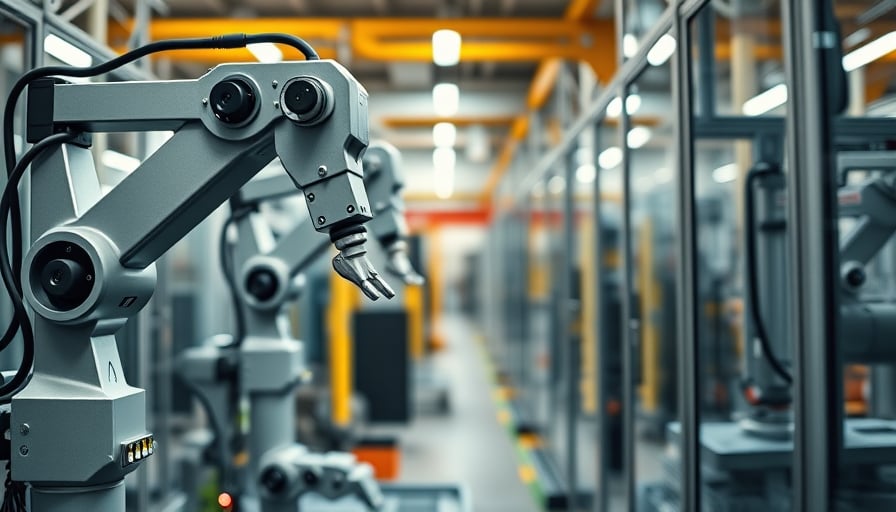
Schindler’s core businesses—equipment manufacturing and integrated maintenance services—continue to operate across a diverse portfolio of commercial, residential, and transportation facilities worldwide. The company’s manufacturing footprint spans multiple sites in Europe, Asia, and North America, where it applies advanced automation and additive manufacturing to enhance component precision and reduce lead times. Recent capital expenditure plans indicate a continued focus on upgrading production lines with robotics‑assisted assembly cells and predictive maintenance sensors, aiming to increase throughput by approximately 6 % while maintaining stringent safety and quality standards.
These investments are driven by several macro‑economic and industry factors:
| Driver | Impact on CAPEX | Rationale |
|---|---|---|
| Global Infrastructure Spending | ↑ | Governments worldwide are allocating substantial budgets for public transport and urban mobility projects, creating a steady demand for Schindler’s products. |
| Digital Transformation in Heavy Industry | ↑ | The adoption of IIoT and AI for condition monitoring necessitates new sensors, software platforms, and data analytics capabilities. |
| Supply Chain Resilience | ↑ | Diversification of supplier base and strategic stockpiling of critical components are being pursued to mitigate disruptions. |
| Regulatory Tightening (e.g., EU ETS, safety standards) | ↑ | Compliance requires upgrades to manufacturing processes and product certifications. |
| Interest Rate Environment | ↓ | Lower financing costs encourage larger capital outlays for long‑term equipment upgrades. |
Supply Chain and Regulatory Landscape
Schindler’s supply chain is heavily globalized, sourcing steel, aluminum, and specialized electronic components from a network of suppliers that spans the United States, China, and the European Union. Recent geopolitical tensions and tariff revisions have prompted the company to evaluate alternative sourcing corridors and to increase inventory buffers for high‑value parts. Moreover, the European Union’s revised Safety Standards for Elevators (2025‑2030) mandate stricter fire‑resistance and emergency communication systems, compelling Schindler to integrate advanced fire‑suppression sensors and real‑time monitoring modules into its design architecture.
In addition, the company has engaged with national regulatory agencies to obtain early approvals for new product lines incorporating energy‑efficient drive systems, which align with the EU Green Deal’s emissions reduction targets. These regulatory initiatives are expected to translate into higher upfront CAPEX but deliver long‑term cost savings through reduced energy consumption and compliance penalties.
Infrastructure Spending and Market Outlook
National and regional infrastructure plans—particularly in the United States, China, and the EU—forecast increased investment in transit hubs and commercial complexes. This backdrop provides a favorable environment for Schindler’s product sales, especially in the high‑rise market segment where elevator capacity and speed are critical. The company’s strategy of combining equipment sales with long‑term maintenance contracts positions it well to capture recurring revenue streams, thereby stabilising cash flows amid cyclical capital expenditure fluctuations.
Productivity Metrics and Technological Innovation
Key performance indicators for Schindler over the past year include:
- Total Units Manufactured: 12,300 (up 3.5 % YoY)
- On‑Time Delivery Rate: 98.2 % (maintained)
- Maintenance Response Time: 1.8 h (average across service fleet)
Technological initiatives underway involve the deployment of 3D‑printed modular elevator cabins, reducing material waste by 12 % and enabling rapid customization for client specifications. Additionally, the introduction of a predictive maintenance platform—leveraging edge computing and machine learning—has decreased unplanned downtime by 18 % in pilot sites.
These innovations not only boost productivity but also enhance the company’s competitive advantage in a market where operational efficiency and reliability are paramount.
Conclusion
Schindler Holding AG’s share performance on 12 December 2025 reflects ordinary market activity within a context of stable valuation and consistent capital investment strategy. The firm’s focus on manufacturing automation, supply chain resilience, regulatory compliance, and technological innovation supports its position in the global elevator, escalator, and moving‑walkway industry. Continued emphasis on productivity metrics and capital expenditure aligned with infrastructure spending trends will likely sustain Schindler’s market presence and drive long‑term shareholder value.