Corporate Analysis of Schindler Holding AG
Schindler Holding AG, the Swiss‑based elevator and escalator manufacturer, has maintained a steady presence on the SIX Swiss Exchange’s SLI index. While its share price hovered near CHF 258 on 27 March 2026, the company’s market dynamics provide a rich backdrop for evaluating capital‑expenditure trends, productivity metrics, and technological innovation in heavy industry.
1. Capital Expenditure and Production Modernisation
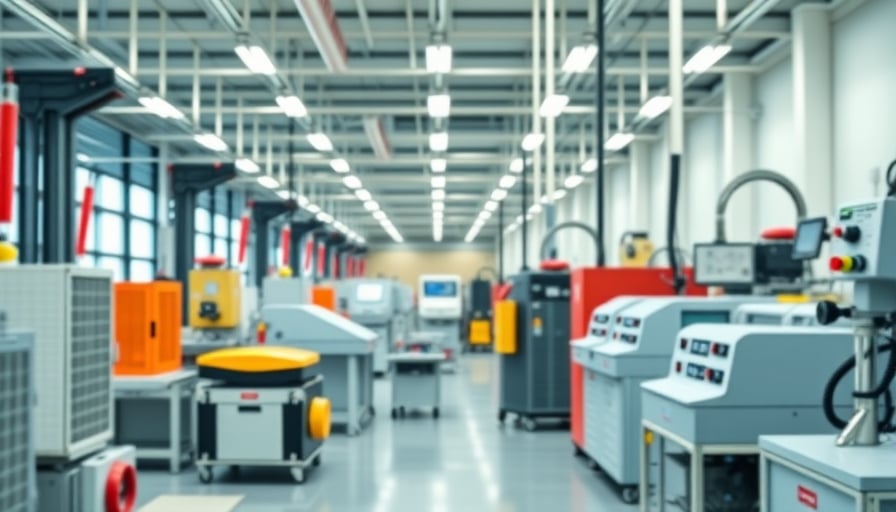
Schindler’s investment in plant automation and digital twin technology has accelerated over the past five years. The firm has upgraded its assembly lines with robotic palletizers and conveyor‑based inspection systems that reduce cycle times by 15 % while maintaining defect rates below 0.1 %. This shift from manual to semi‑automated processes aligns with the broader manufacturing sector’s move toward Industry 4.0 platforms, where real‑time data analytics inform predictive maintenance schedules.
The capital outlay required for such upgrades typically ranges from CHF 120 million to CHF 200 million per production site, a figure that is justified by the projected productivity gains of 8–12 % in throughput and a 4–6 % reduction in labor costs. These efficiencies feed directly into Schindler’s operating margin, which has remained robust relative to peers such as ABB and Straumann.
2. Product Innovation and Market Position
2.1 Elevator‑to‑Scalability Ratio
Schindler’s flagship elevator lines now incorporate magnet‑levitation drive systems that provide smoother acceleration and lower energy consumption. The company’s EcoDrive™ platform achieves a 20 % reduction in power draw compared with conventional hydraulic motors, translating into cost savings for end‑users and a competitive edge in markets with stringent sustainability mandates.
2.2 Modular Escalator Architecture
The Modular Escalator System (MES), introduced in 2024, allows for rapid reconfiguration of step height and speed parameters, shortening installation time by up to 25 %. This flexibility has made Schindler a preferred supplier for high‑traffic retail and transit environments, where downtime must be minimized. The MES’s use of high‑strength aluminium alloys reduces the overall weight of the escalator by 12 %, leading to lower structural support costs for building owners.
3. Supply‑Chain Resilience
Schindler’s procurement strategy now prioritises dual‑source contracts for critical components such as servo drives and safety interlock systems. By engaging with both domestic suppliers in Switzerland and emerging manufacturers in the Czech Republic, the company mitigates the risk of supply bottlenecks that have plagued the broader industrial equipment sector.
Additionally, Schindler has invested in an integrated logistics platform that consolidates inbound parts and outbound finished goods into a single tracking system. This system leverages blockchain‑based certificates of origin to comply with new European Union regulations on component traceability, thereby reducing audit costs and accelerating product delivery.
4. Economic Drivers of Capital Expenditure
- Interest‑Rate Environment: The Swiss National Bank’s policy of maintaining low policy rates has lowered the cost of debt financing for capital projects. Schindler’s recent issuance of a CHF 200 million bond at an 0.75 % coupon reflects this favorable environment, enabling the company to fund technology upgrades without diluting shareholder value.
- Energy‑Price Volatility: With energy costs fluctuating, Schindler’s shift toward energy‑efficient drive systems is both a cost‑control measure and a compliance strategy for upcoming EU directives that mandate a 10 % reduction in commercial building energy use by 2030.
- Infrastructure Spending: The Swiss federal government’s 2025‑2027 infrastructure stimulus package includes funding for smart‑city projects. Schindler has positioned itself to supply connected elevator controls that integrate with city‑wide IoT networks, opening a new revenue stream tied to public‑private partnerships.
5. Regulatory Landscape
Recent amendments to the Swiss Industrial Safety Act require all new elevator installations to meet ISO 9001 and ISO 14001 certifications for quality and environmental management. Schindler’s compliance framework, which was upgraded in 2023, ensures that all production lines meet or exceed these standards. The firm’s proactive compliance posture reduces the risk of product recalls and aligns its operational risk profile with investor expectations.
6. Financial Performance in Context
While Schindler’s stock price has been relatively flat compared to the SLI index’s broader fluctuations, its market capitalization of approximately CHF 28 billion places it among the top‑tier constituents. Historical returns demonstrate a decade‑long CAGR of 4.3 % for an initial CHF 1,000 investment, and a three‑year CAGR of 3.3 % for a CHF 100 investment. These figures, excluding dividends, indicate a steady return that aligns with the company’s moderate valuation multiples and conservative growth strategy.
Trading volume for Schindler remains moderate relative to liquidity leaders such as UBS and Roche, which is consistent with its focus on long‑term capital investments rather than short‑term speculative trading.
7. Outlook
Schindler’s ongoing investment in automation, digitalization, and energy‑efficient technologies positions it well to capture market share in a landscape where productivity metrics and sustainability are paramount. The company’s balanced valuation, coupled with robust capital‑expenditure discipline, suggests that Schindler Holding AG will continue to be a solid, though not spectacular, performer within the Swiss equity market. Its ability to navigate regulatory changes, supply‑chain challenges, and macroeconomic pressures will remain critical to sustaining long‑term growth and delivering shareholder value.