Corporate Update: Saturn Metals Limited (ASX: STN)
Saturn Metals Limited (ASX: STN) has announced a series of promising drill results from its Apollo Hill gold project in Western Australia. The recent data, derived from reverse‑circulation (RC) drilling conducted in March 2026, focus on the newly identified Titan Zone and reinforce the prospectivity of the Iris footwall structure.
Key Drill Outcomes
| Hole | Depth | Intercept Length | Grade (g / t) |
|---|---|---|---|
| March 2026 | Shallow | 15 m | 5.5 |
| March 2026 | Shallow | 2 m | 17.7 |
| March 2026 | Shallow | 7 m | 3.5 |
| February 2026 | – | Various intervals > 1 g / t | – |
| February 2026 | – | 2 m | 7.7 |
The high‑grade 2‑metre intercept at 17.7 g / t is particularly noteworthy, as it demonstrates the potential for economically viable gold concentrations at shallow depths. Earlier February holes, which also produced grades exceeding 1 g / t, further underscore the project’s consistency.
Development and Resource Planning
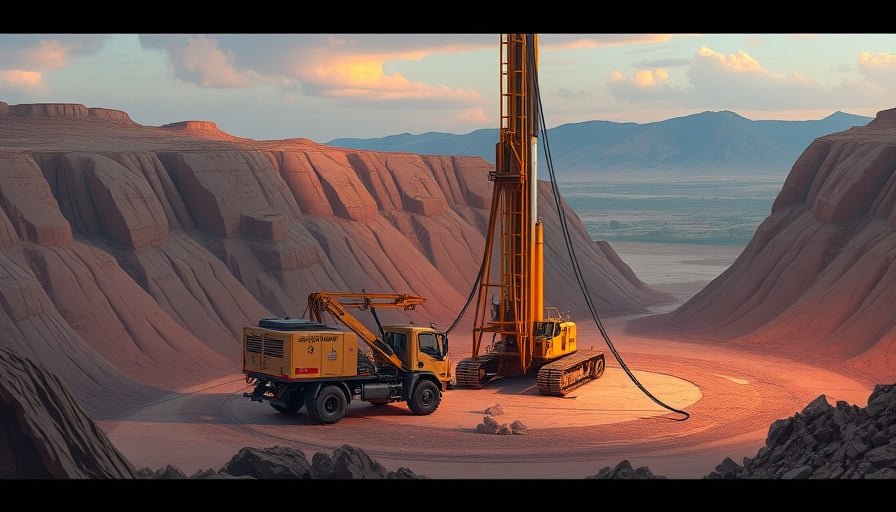
Saturn Metals intends to integrate the latest data into a mineral resource upgrade slated for the second quarter of 2026. In parallel, the company is executing an extensive RC drilling campaign that has already covered approximately 2,000 m, with an additional 15 km of drilling pending assay. All results are recorded under stringent geological and assay quality controls to ensure data integrity for the upcoming resource estimate.
Strategic Implications
Management has highlighted the possibility that the high‑grade zones identified within the Titan Zone may be replicated along the Iris Trend. If confirmed, this could lead to an expansion of the Apollo Hill mineral resource. The company’s strategy emphasizes low‑capital‑expenditure (capex) and low‑operational‑expenditure (opex) development, leveraging the well‑permitted, infrastructure‑rich environment of the region. The recent findings reinforce the view that Apollo Hill remains a viable, low‑cost gold producer.
Industry Context
Gold exploration in Western Australia has historically benefited from favorable regulatory frameworks and robust infrastructure, factors that continue to support companies like Saturn Metals. The ability to achieve high grades at shallow depths aligns with broader market trends favoring projects with rapid, cost‑effective mine life extensions. Moreover, the company’s focus on low‑capex, low‑opex operations positions it competitively against peers that rely on larger, more capital‑intensive projects.
Conclusion
Saturn Metals Limited’s recent drill results from the Apollo Hill project underscore the project’s continued potential for high‑grade gold production. By integrating these findings into an upcoming resource estimate and pursuing further drilling along the Iris Trend, the company is poised to enhance its resource base while maintaining a disciplined, low‑cost development approach.