SAP SE: Consolidation, Efficiency, and Cloud‑First Momentum in Germany’s Equities Landscape
SAP SE continues to dominate the German market as the constituent with the highest market capitalisation within the DAX index. Recent intraday trading has shown the share price oscillating within a tight corridor, delivering modest gains for the day while the broader index has maintained a positive trajectory. Over the course of the year, SAP’s stock price has demonstrated a gentle upward trend, contributing materially to the overall strength of the German equity market.
Market‑Capitalisation Leadership and Investor Sentiment
The persistence of SAP’s market‑capitalisation leadership signals sustained investor confidence in its long‑term growth prospects. The narrow trading band observed today reflects a market environment of cautious optimism: while the broader DAX remains buoyant, investors are selectively allocating capital to high‑quality, value‑led firms such as SAP. This behavior is consistent with a broader trend in the German market where capital is increasingly directed toward companies with demonstrable structural resilience and a clear path to profitability.
Corporate Governance and Structural Reform
SAP’s executive leadership has reiterated a focus on structural reform and efficiency improvement. The CEO’s emphasis on streamlining operations and strengthening governance aligns with the German government’s broader push for regulatory and economic reforms aimed at enhancing corporate transparency and operational efficiency. By tightening internal controls and simplifying decision‑making pathways, SAP seeks to mitigate the risks associated with complex legacy systems and to accelerate its strategic initiatives.
The emphasis on organisational clarity is perceived as a stabilising force for the company’s valuation. A robust governance framework not only reduces regulatory exposure but also enhances stakeholder confidence, a factor that has proven to be a critical determinant of long‑term share performance across the DAX.
Technological Acceleration: Cloud, Automation, and AI
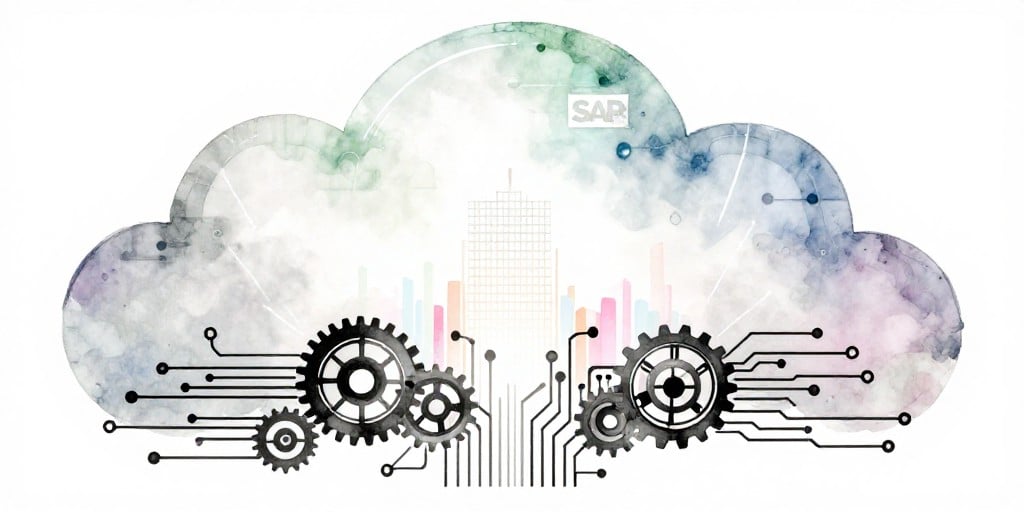
From a technology standpoint, SAP remains highly active in expanding its cloud and automation capabilities. The recent partnership with Business Core Solutions (BCS) introduces advanced orchestration to SAP Cloud ALM, thereby enhancing operational resilience and reducing manual intervention. This integration is strategically positioned as a stepping stone toward fully autonomous, AI‑driven operations in enterprise environments.
Key features of the partnership include:
- Automated Lifecycle Management – Seamless provisioning, monitoring, and remediation of cloud workloads across multi‑cloud environments.
- AI‑Enabled Predictive Analytics – Proactive identification of configuration drift and performance bottlenecks.
- Enhanced Governance Controls – Role‑based access and audit trails aligned with European data protection regulations.
The move toward cloud‑native automation is consistent with global enterprise trends that favour “cloud first” strategies as a lever for cost optimisation, scalability, and rapid deployment of new services. By embedding AI capabilities into its core platform, SAP positions itself to capture a growing segment of the market that demands low‑friction, self‑service operational models.
Cross‑Sector Implications and Broader Economic Context
SAP’s focus on cloud, automation, and governance mirrors developments observed in adjacent sectors such as banking, manufacturing, and logistics—industries that are increasingly digitising their operations to gain competitive advantage. For instance, German banks are deploying AI‑driven risk management tools that rely on similar orchestration principles, while automotive manufacturers are using SAP’s solutions to synchronize supply‑chain operations across global sites.
From an economic perspective, the company’s emphasis on structural efficiency dovetails with Germany’s industrial policy initiatives aimed at enhancing the “Made in Germany” brand through high‑tech exports. By reinforcing its own internal processes, SAP not only strengthens its competitive positioning but also serves as a benchmark for other firms seeking to modernise their operations within a tightly regulated European framework.
Conclusion
SAP SE’s performance and strategic trajectory underscore a deliberate convergence of three pillars: market‑capitalisation leadership, governance‑driven efficiency, and cloud‑first technological innovation. By consolidating its operations, streamlining governance, and advancing AI‑enabled automation, SAP reinforces its standing as a key driver of the German equity market while positioning itself to capture emerging opportunities across multiple sectors. The company’s approach exemplifies a model of resilience and adaptability that transcends industry boundaries and aligns with broader economic trends shaping Germany’s post‑pandemic recovery and digital transformation agenda.