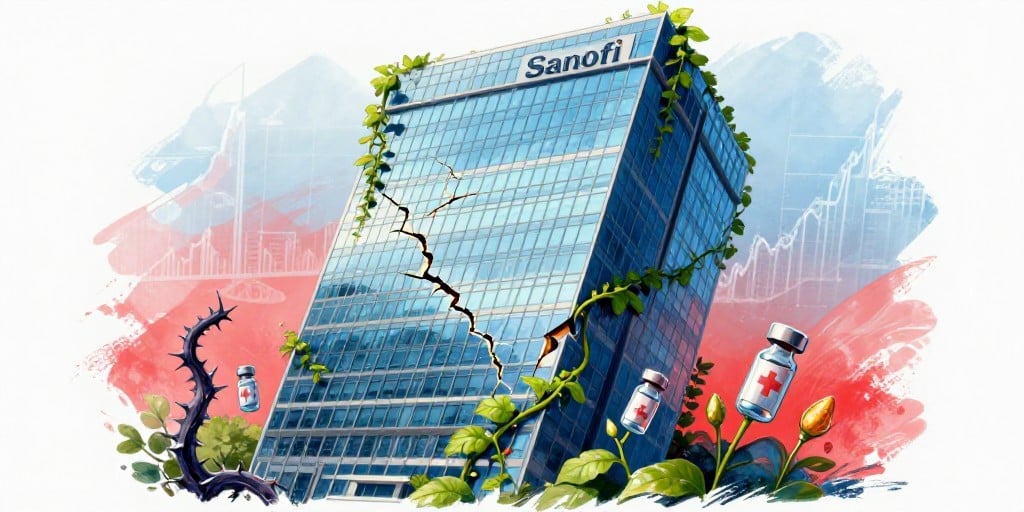
Sanofi–Teva Collaboration on Duvakitug: A Case Study in Strategic Co‑Development
Sanofi’s latest corporate activity centers on its partnership with Teva Pharmaceutical Industries to develop the investigational monoclonal antibody duvakitug. The antibody targets the protein TL1A, which has been implicated in the pathophysiology of inflammatory bowel disease (IBD). The collaboration was announced in late October and has recently yielded encouraging data from a long‑term extension of a phase‑2 study, presented at the United European Gastroenterology Week in Barcelona.
Clinical Evidence and Therapeutic Potential
The extension study followed patients with ulcerative colitis (UC) and Crohn’s disease (CD) who had previously responded to an induction phase of duvakitug. Over a 44‑week maintenance period, patients received either 450 mg or 900 mg of the drug subcutaneously every four weeks. Results demonstrate that:
- Clinical Outcomes: Both dose cohorts maintained clinically meaningful improvements in symptoms and endoscopic assessments.
- Dose‑Response Relationship: The 900 mg cohort consistently outperformed the 450 mg group, showing higher rates of remission and endoscopic improvement.
- Safety Profile: Adverse events were comparable across dose groups and mirrored the induction phase findings; no new safety signals were observed.
These data reinforce the therapeutic promise of duvakitug as a next‑generation biologic for IBD, potentially filling an unmet need for patients who either cannot tolerate existing therapies or experience inadequate disease control.
Joint Development and Commercialization Strategy
Sanofi and Teva have structured the partnership to balance resource allocation and market reach:
- Development Costs: Both parties share the financial burden of pre‑clinical and clinical development, mitigating individual risk.
- Commercialization: Sanofi is responsible for North America, Japan, and selected Asian markets, while Teva manages Europe, Israel, and other designated regions.
This arrangement aligns with Sanofi’s broader strategy of maintaining a diversified portfolio that blends established products with emerging biologics. By leveraging Teva’s established presence in key European markets and Sanofi’s strength in North America and Japan, the collaboration is poised to accelerate duvakitug’s path to regulatory approval and commercial launch.
Market Dynamics and Investor Sentiment
Over the past three years, Sanofi’s share price has declined by approximately 28 %, falling from its early‑2024 peak to the close of October 2026. Despite a market capitalisation still in the mid‑high €80 billion range, the sustained downward trajectory has prompted investors to reassess the risk‑reward profile of their holdings.
Several factors contribute to this sentiment:
- Competitive Landscape: The IBD market is crowded, with multiple biologics and small‑molecule agents in development or already approved.
- Pricing Pressure: Health‑system cost‑control measures and reimbursement negotiations have tightened margins for specialty drugs.
- Innovation Focus: Sanofi’s ongoing investment in novel modalities, such as duvakitug, underscores a strategic pivot toward growth through innovation rather than incremental price increases.
From an economic standpoint, the company’s emphasis on regulatory efficiency and market‑access strategies is designed to sustain long‑term growth. By developing therapies that address high‑impact, high‑cost conditions and securing favorable pricing agreements, Sanofi seeks to generate incremental revenue streams that can offset the volatility inherent in the specialty pharmaceutical sector.
Cross‑Sector Implications
The Sanofi–Teva partnership illustrates broader trends that resonate across multiple industries:
- Co‑Development Models: Joint ventures that split development costs while allocating markets based on regional strengths are increasingly common in technology, automotive, and energy sectors.
- Risk‑Mitigation Through Shared Expertise: Leveraging complementary capabilities—such as manufacturing know‑how or regulatory experience—helps firms navigate complex market entry barriers.
- Innovation‑Driven Growth: Companies across the spectrum are prioritizing breakthrough product pipelines over incremental pricing strategies to achieve sustainable competitive advantage.
In summary, the duvakitug collaboration represents a strategic alignment between Sanofi’s commitment to a diversified, innovation‑heavy portfolio and Teva’s regional expertise. While market conditions have exerted downward pressure on Sanofi’s share price, the firm’s focus on next‑generation biologics and efficient market access positions it to capitalize on emerging opportunities in the high‑impact therapeutic space.