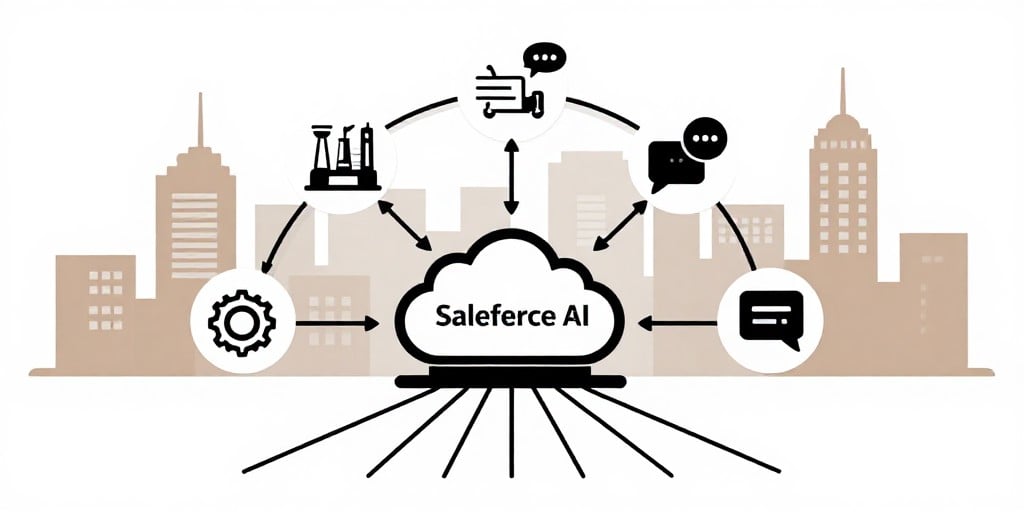
Executive Summary
Salesforce Inc. has entered into a five‑year agreement to purchase 500,000 data‑verified methane‑reduction credits from Mitti Labs, a deep‑tech firm specializing in precision agriculture. The credits will fund water‑saving rice‑farming practices across tens of thousands of smallholder farms in India. This move marks a continuation of Salesforce’s broader strategy to embed climate‑smart solutions into its sustainability and customer‑experience platforms, following a similar offtake contract with Google. The partnership underscores a growing corporate appetite for satellite‑verified, verifiable offset projects and aligns with Salesforce’s “Beyond Alliance” initiatives aimed at scaling data‑backed sustainable agriculture.
1. Strategic Rationale
1.1 Alignment with Salesforce’s Sustainability Goals
Salesforce has pledged to achieve net‑zero emissions by 2050 and to provide customers with tools that enable their own climate goals. By acquiring methane‑reduction credits, the company bolsters its carbon portfolio while showcasing a tangible, scalable impact in a high‑emission sector—rice production. This strategy diversifies Salesforce’s offset holdings beyond traditional forestry or renewable energy projects, positioning it as a leader in ag‑tech climate solutions.
1.2 Data‑Backed Validation as a Competitive Edge
Mitti Labs leverages satellite imagery, on‑field sensors, and machine‑learning models to quantify methane reductions from altered irrigation regimes. The data‑verified nature of the credits addresses a persistent skepticism around “unverified” offset projects. For Salesforce, this offers a competitive advantage: customers can trust the integrity of the offsets they incorporate into their own ESG reporting.
2. Market Dynamics and Competitive Landscape
| Market Segment | Current Share | Key Competitors | Emerging Threats |
|---|---|---|---|
| Agricultural Offsets | ~12% of global offset market | Nori, ClimateTrade, Terrapass | Emerging blockchain‑based verification platforms |
| Climate‑Smart SaaS Platforms | Emerging niche | IBM Green Horizons, Microsoft Azure Sustainability | Regulatory tightening on ESG disclosures |
| Carbon Credit Aggregation | Growing | ClimatePartner, Ecosystem Marketplace | Price volatility due to policy changes |
The table reflects a rapidly evolving sector where data‑verification is becoming a differentiator.
3. Underlying Business Fundamentals
3.1 Revenue Streams
- Subscription Fees: Salesforce will likely monetize the offset data via its Sustainability Cloud, offering tiered analytics packages to enterprises.
- Marketplace Integration: The platform may enable third‑party sellers of ag‑tech offsets, generating transaction fees.
- Data Licensing: High‑resolution methane and water‑use datasets can be sold to agronomists and research institutions.
3.2 Cost Structure
- Infrastructure: Satellite data acquisition and processing require significant cloud storage and compute resources.
- Field Validation: On‑site sensors and local partnerships with Indian agronomists add recurring operational costs.
- Compliance: Adhering to ISO 14064, CDP, and other ESG reporting standards incurs audit and certification fees.
4. Regulatory Environment
| Jurisdiction | Key Regulation | Impact on Project |
|---|---|---|
| EU | EU Emissions Trading System (ETS) | Creates demand for high‑quality, verifiable offsets; could raise price floor. |
| USA | Climate Action Tracker mandates | Encourages corporate offset procurement; may increase regulatory scrutiny on data claims. |
| India | National Action Plan on Climate Change (NAPCC) | Supports methane‑reduction projects; potential government incentives for sustainable rice cultivation. |
Risk Note: Shifts in national climate policies could alter the discount rate applied to future methane‑reduction benefits, impacting project valuation.
5. Competitive Advantage & Potential Risks
5.1 Advantages
- First‑Mover Credibility: Early adoption of satellite‑verified ag‑tech offsets builds brand trust among ESG‑conscious investors.
- Scalability: The technology can be replicated across other high‑methane crops (e.g., sugarcane, livestock) and geographies.
- Cross‑Platform Synergy: Data can enrich Salesforce’s existing customer‑experience tools, providing integrated ESG dashboards.
5.2 Risks
- Verification Validity: If methane‑reduction estimates are over‑optimistic, Salesforce risks reputational damage and potential financial penalties.
- Agricultural Adoption: Smallholder farmers may face barriers (e.g., cost of alternate irrigation windows, land tenure issues) that reduce program uptake.
- Price Volatility: Global carbon markets have shown swings of up to ±30% in the past year; long‑term pricing of methane credits is uncertain.
6. Opportunity Landscape
- Vertical Expansion
- Agri‑Finance Integration: Partner with micro‑finance institutions to subsidize the adoption of alternate irrigation practices.
- Extension Services: Bundle Salesforce’s data analytics with agronomic advisory platforms.
- Technology Development
- AI‑Driven Predictive Models: Refine methane‑emission estimates, improving credit pricing and investor confidence.
- Blockchain Verification Layer: Add immutable audit trails to further reduce skepticism.
- Policy Advocacy
- Standard Harmonization: Lobby for unified standards across carbon credit verification, simplifying cross‑border trade.
- Subsidy Leverage: Advocate for government subsidies that reduce the cost of implementing methane‑reduction practices.
7. Conclusion
Salesforce’s partnership with Mitti Labs signals a strategic pivot toward data‑verified, scalable climate solutions within the agricultural sector. By intertwining rigorous scientific validation with enterprise software, Salesforce positions itself to capture a niche yet expanding market. However, success hinges on the accurate quantification of methane reductions, the practical uptake by smallholder farmers, and a stable regulatory backdrop. Investors and stakeholders should monitor verification outcomes, policy shifts, and market pricing trends to assess the long‑term viability of this ambitious climate‑smart venture.