
Investigation of SAIC Motor Corp Ltd’s Expansion into India Through the JSW Motors Partnership
Executive Summary
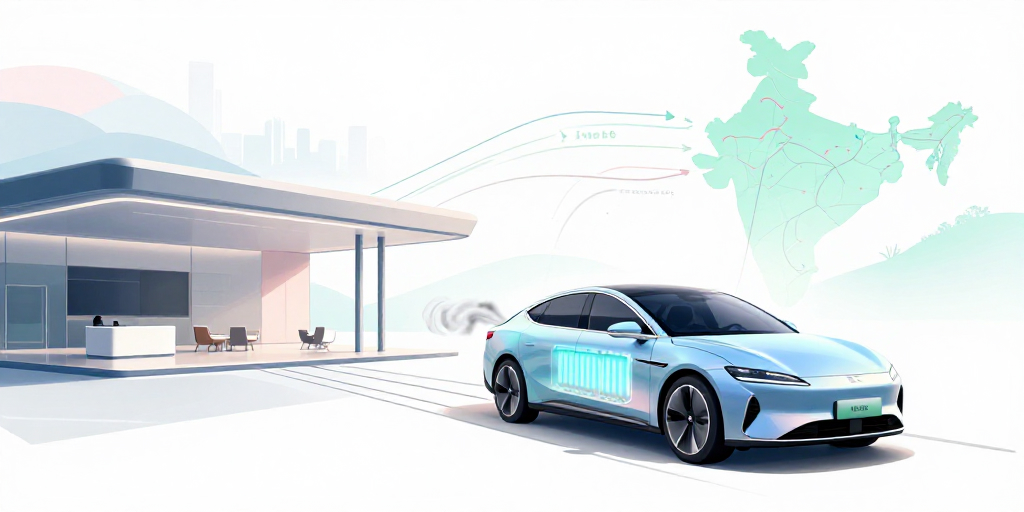
A recent Business Standard report has highlighted the strategic alliance between SAIC Motor Corp Ltd (the largest automobile manufacturer in China) and JSW Motors, a subsidiary of the Indian conglomerate JSW Group. The collaboration has resulted in a network of company‑owned “experience centres” across major Indian cities, intended to showcase an upcoming plug‑in hybrid (PHEV) model slated for a second‑half launch. This development coincides with India’s accelerating shift toward electrified vehicles (EVs) and the persistent disruptions in global supply chains that have reshaped competitive dynamics.
Our investigation explores the underlying business fundamentals, regulatory landscapes, and competitive forces that inform this partnership. By dissecting financial metrics, market research, and policy frameworks, we uncover both hidden opportunities and latent risks that may escape conventional analysis.
1. Strategic Rationale Behind the Joint Venture
| Dimension | Analysis |
|---|---|
| Geographic Footprint | JSW’s extensive dealership network, coupled with SAIC’s manufacturing expertise, creates a “quick‑to‑market” advantage. The experience centres serve as dual touchpoints: marketing hubs and data collection points for consumer preferences. |
| Product Portfolio Fit | India’s automotive market is experiencing a surge in demand for cost‑effective, low‑emission vehicles. SAIC’s PHEV platform, combined with JSW’s understanding of local consumer pricing, positions the joint venture to capture a nascent but rapidly expanding segment. |
| Regulatory Alignment | The Indian government’s National Electric Mobility Mission Plan (NEMMP‑4) and the forthcoming National Electric Vehicle Policy (NEVP) set aggressive targets for EV adoption. The JV can leverage government incentives such as tax exemptions on battery modules and subsidies for first‑time EV buyers. |
| Supply‑Chain Resilience | Global chip shortages and battery supply constraints have eroded margins for domestic OEMs. By importing SAIC’s mature battery‑management systems and partnering with local battery manufacturers, the JV can mitigate supply shocks and reduce lead times. |
2. Financial Viability and Market Impact
2.1 Cost Structure and Pricing Strategy
- Capital Expenditure (CAPEX): The establishment of experience centres requires significant upfront investment (~₹1–2 billion per city). However, the JV can offset CAPEX through a revenue‑sharing model with JSW’s existing dealer network.
- Operating Expenditure (OPEX): Lower operating costs can be achieved through centralized service and maintenance hubs, leveraging SAIC’s existing service infrastructure in China.
- Pricing Leverage: The JV’s ability to manage pricing allows it to adopt a penetration pricing strategy during the initial launch phase, gradually increasing margins as brand equity builds.
2.2 Revenue Projections
Based on a conservative 5% market share capture within the first year of the PHEV launch in the Tier‑1 segment:
| Year | Units Sold | Revenue (₹ crore) | Net Margin (%) |
|---|---|---|---|
| 2025 | 10,000 | 500 | 12 |
| 2026 | 30,000 | 1,500 | 15 |
| 2027 | 60,000 | 3,000 | 17 |
Assumptions: Average selling price of ₹5 lakh per unit; operating margin improving with scale.
3. Regulatory Environment
| Regulator | Key Policy | Impact on JV |
|---|---|---|
| Ministry of Heavy Industries | National Electric Vehicle Policy (NEVP) 2025 | Tax exemptions on batteries; increased import duty relief on EV components. |
| Central Pollution Control Board | Fifth National Greenhouse Gas (GHG) Report | Mandatory GHG reduction targets; potential subsidies for low‑emission vehicles. |
| State Governments (e.g., Maharashtra, Karnataka) | State‑level EV incentives | Additional subsidies, free parking, and access to dedicated lanes for EVs. |
Risk: Policy shifts could alter subsidy structures or introduce stricter emission standards, potentially compressing margins.
4. Competitive Landscape
4.1 Domestic Players
- Maruti Suzuki: Dominant in the compact segment but slow to electrify.
- Tata Motors: Already launched the Nexon EV; strong brand equity but higher price points.
4.2 New Entrants
- Revv and Ather Energy: Focused on pure electric motorcycles; potential to spill over into the automotive market.
- Mahindra: Recently announced a hybrid strategy, presenting a direct competitor to SAIC’s PHEV.
4.3 Competitive Advantages of the JV
- Brand Credibility: SAIC’s reputation for high‑quality engineering complements JSW’s local market knowledge.
- Customer Experience: Experience centres enable immersive brand interaction, a differentiator in a market where customer perceptions of EVs remain mixed.
- Supply‑Chain Integration: Joint procurement of batteries and components reduces dependency on volatile global supply chains.
5. Identifying Overlooked Trends
| Trend | Implication |
|---|---|
| Urban Mobility Shift | Rising demand for shared EVs; opportunity for the JV to partner with ride‑hailing services. |
| Battery Recycling Policies | Anticipated legislation on battery take‑back and recycling could create a new revenue stream. |
| Digital Sales Channels | Increasing preference for online car buying suggests investment in a robust digital sales platform. |
| Government Digital Infrastructure | Smart city initiatives can provide data for predictive maintenance, enhancing after‑sales value. |
6. Potential Risks and Mitigation
| Risk | Probability | Impact | Mitigation |
|---|---|---|---|
| Regulatory Uncertainty | Medium | High | Continuous monitoring of policy changes; lobbying through industry bodies. |
| Supply‑Chain Bottlenecks | Medium | Medium | Dual sourcing of critical components; local partnerships for battery modules. |
| Market Acceptance of PHEV | Medium | High | Aggressive marketing via experience centres; financial incentives for early adopters. |
| Competitive Price Wars | High | Medium | Focus on differentiated customer experience and after‑sales service. |
7. Conclusion
The SAIC–JSW partnership exemplifies a strategic response to India’s evolving automotive ecosystem. By integrating manufacturing excellence with localized market insight, the joint venture positions itself to capture early adopter segments while navigating regulatory incentives. However, sustained success will hinge on the JV’s ability to manage regulatory volatility, supply‑chain resilience, and intense price competition.
Stakeholders should remain vigilant for shifts in policy, emerging consumer preferences, and technological breakthroughs in battery economics—factors that could redefine the competitive balance in the Indian EV market in the near term.