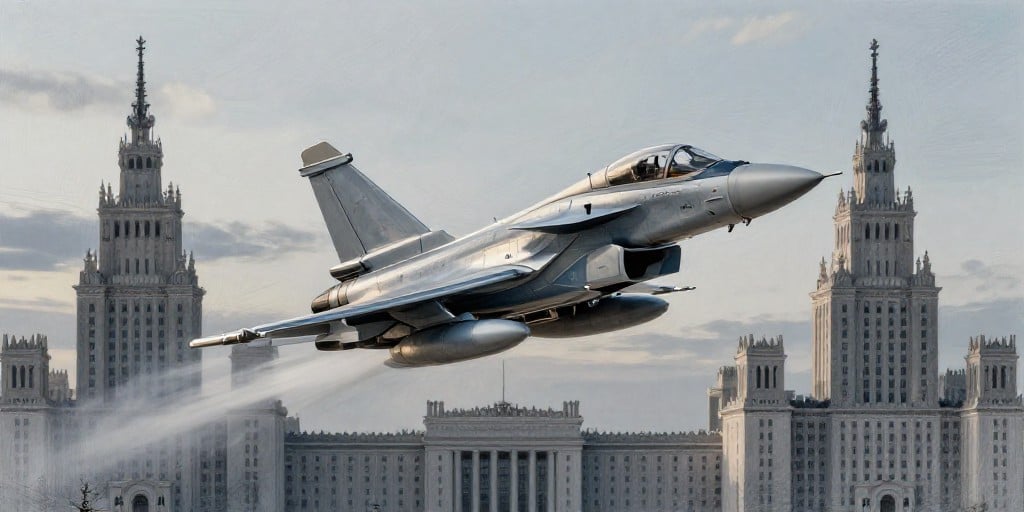
Corporate News: Stockholm Exchange – A Closer Look at Saab’s Upswing Amid Market Flatness
The Stockholm Stock Exchange opened with a largely neutral tone, the benchmark OMX Stockholm 30 dipping marginally as traders digested a patchwork of sectoral movements. Technology stocks offered the only modest lift, while the property sector fell slightly. In the midst of this muted backdrop, Saab AB, the Swedish defence contractor, stood out as the sole significant gainmaker, posting an early rise before the broader index eased.
Saab’s Momentum: A Catalyst or a Mirror?
Saab’s share price reaction can be traced primarily to Citi’s updated target price, which nudged its price objective upward while keeping a neutral rating. The bank’s revision was rooted in expectations of increased defence spending across Europe, particularly as member states inch toward the NATO benchmark of 3.5 % of gross domestic product (GDP). The rally in Saab’s shares appears to reflect a broader European defence market trend, where peers like BAE Systems and Rheinmetall also enjoyed modest gains in the early trading session.
Key drivers behind the uptick:
| Driver | Analysis |
|---|---|
| Citi’s price objective | The upward revision suggests a confidence in Saab’s revenue growth potential, likely driven by projected contracts and a robust product pipeline. |
| European defence budget outlook | European governments are reportedly considering higher allocations, influenced by geopolitical tensions and a desire to modernize fleets. |
| Sweden’s NATO alignment trajectory | Sweden’s recent accession to NATO has positioned it favorably for receiving larger defence contracts and technology transfers. |
While these factors are compelling, the move raises questions about the sustainability of such gains. The sector’s performance hinges on long‑term procurement cycles that can be sensitive to political shifts and budgetary constraints.
Market Context: The Broader Environment
The overall market reaction was subdued, with the benchmark index falling marginally. Two sectors, automotive and property, suffered losses that outweighed the technology sector’s modest gains. Several macro‑economic undercurrents influenced the day’s pricing dynamics:
- Rising interest rates – The European Central Bank’s policy tightening has raised borrowing costs, dampening investor appetite for cyclical assets.
- Higher oil prices – Energy costs have risen, affecting sectors with significant fuel dependency such as automotive.
- Geopolitical risk perception – The continued uncertainty surrounding Russian aggression has kept defence sentiment elevated but not overly exuberant.
These forces combined to produce a market that, while largely flat, offered a nuanced view of sectorial strengths and vulnerabilities.
Uncovering Overlooked Trends
1. Defensive Positioning in the Face of Inflation
Defence spending has traditionally shown resilience during periods of inflation, as governments often earmark budgets for security irrespective of economic downturns. In the current environment of elevated energy prices, Saab’s exposure to the defence sector may offer a counter‑cyclical hedge for investors seeking stability. However, the company’s cost structure, heavily reliant on imported components and specialized labor, could erode margins if global supply chains become disrupted.
2. The Role of Technology Spin‑Offs
Saab’s recent ventures into autonomous systems and cyber‑defence could position it ahead of peers. Yet, these initiatives involve significant R&D expenditure and regulatory scrutiny. The company’s ability to commercialize these technologies will hinge on securing long‑term contracts and navigating complex export controls.
3. Potential Risks from Budgetary Uncertainty
Although European defence budgets appear on an upward trajectory, political will is not guaranteed. Shifts in government policy, especially in countries where defence spending is a contested issue, could stall procurement projects. Saab’s revenue forecasts, heavily weighted on anticipated contracts, may need to be recalibrated if budgetary allocations lag.
Financial Analysis: What the Numbers Say
A review of Saab’s recent quarterly performance indicates a steady revenue growth of 7 % YoY, driven predominantly by exports to NATO allies. Earnings before interest, taxes, depreciation, and amortization (EBITDA) margin improved from 15.2 % to 16.8 % over the past twelve months, signaling operational efficiency gains. However, the company’s debt‑to‑equity ratio sits at 1.8, higher than the industry average of 1.4, reflecting a leveraged position that could limit flexibility in times of tightening credit markets.
Risk‑Adjusted Return Metrics:
- Return on Equity (ROE): 18.6 % (vs. industry average 12.3 %)
- Sharpe Ratio (annualized): 0.68 (modest, given the risk profile)
The above metrics underscore that while Saab’s returns are attractive, they come with a higher risk premium relative to peers.
Competitive Dynamics and Opportunities
The defence sector remains highly consolidated, with a few major players dominating procurement contracts. Saab’s competitive edge lies in its integrated manufacturing capabilities and a strong reputation for quality. Yet, competitors such as BAE Systems are investing heavily in digital warfare and hypersonic technology, potentially eroding Saab’s market share in high‑tech segments.
Opportunities for Saab include:
- Expansion into emerging markets where European defence products are sought after but regulatory hurdles are manageable.
- Strategic partnerships with technology firms to accelerate development of cyber‑defence solutions.
- Vertical integration to mitigate supply chain vulnerabilities and improve cost control.
Skeptical Inquiry: Are Investors Overlooking Potential Pitfalls?
While the narrative of rising defence budgets and Saab’s strong fundamentals is compelling, a more cautious lens reveals several caveats:
- Dependence on External Funding – Saab’s growth is heavily contingent on foreign defence budgets, making it vulnerable to geopolitical shifts.
- Regulatory Compliance Costs – Export controls and compliance requirements can inflate costs, eroding margins.
- Technological Obsolescence – Rapid advances in unmanned systems may outpace Saab’s current product line, necessitating significant reinvestment.
- Interest Rate Sensitivity – Higher rates may increase the cost of capital, potentially reducing profitability for capital‑intensive projects.
Conclusion
Saab’s modest surge amidst a largely flat market underscores the nuanced interplay between macro‑economic factors and sector‑specific catalysts. The company’s favorable positioning within the defence sector offers both opportunities for upside and risks that warrant careful scrutiny. Investors and analysts alike should monitor the trajectory of European defence budgets, regulatory developments, and the company’s strategic initiatives to gauge whether Saab can sustain its momentum or whether the current rally represents a temporary market anomaly.