Corporate News – Detailed Analysis
Saab AB, the Swedish defence manufacturer, has confirmed the acquisition of a substantial multi‑hundred‑million‑euro contract with Ukraine’s Ministry of Defence for the production and delivery of the Giraffe 1X radar systems. The agreement stipulates that the systems will be delivered by 2027, marking a significant escalation in Saab’s commercial presence within Eastern European defence markets.
Manufacturing Processes and Production Capacity
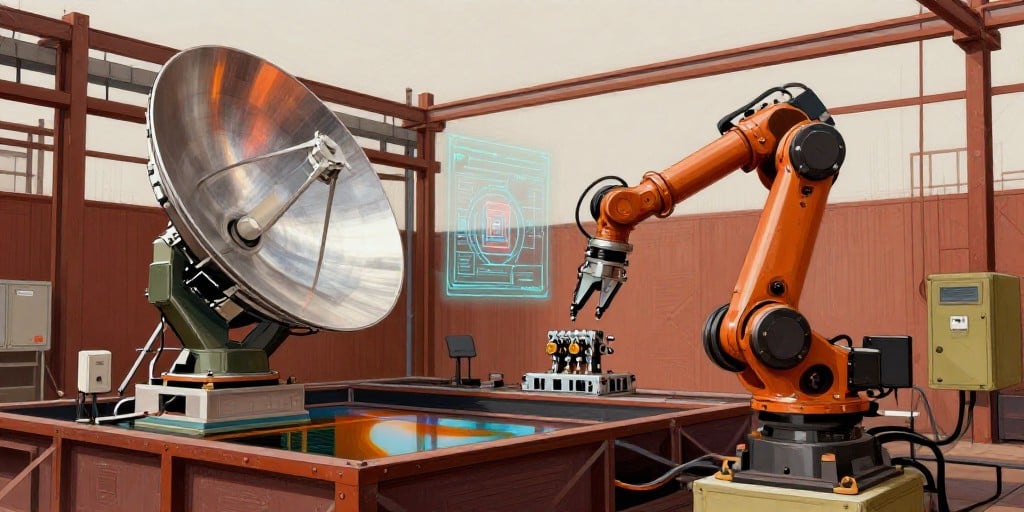
The Giraffe 1X is a compact, high‑performance three‑dimensional (3‑D) radar platform. Its design incorporates advanced phased‑array antenna modules and digital beam‑forming processors that enable continuous 360‑degree air surveillance. Saab’s production line for the Giraffe 1X leverages additive manufacturing for critical antenna elements and precision machining for the radar’s chassis. This hybrid approach reduces lead times and improves component reliability, essential for the rapid deployment scenarios required by Ukraine’s air‑defence networks.
The production schedule for the 2027 delivery window necessitates a scaling of Saab’s existing manufacturing throughput. Engineers predict an incremental increase of approximately 15 % in annual production capacity, which will be accommodated by the acquisition of two additional high‑speed machining centers and the integration of an automated inspection system based on machine‑vision and AI analytics. These upgrades will enhance yield rates and reduce the mean time to repair (MTTR) across the production cycle.
Technological Innovation and Product Differentiation
The Giraffe 1X’s modular architecture is a strategic innovation that enables rapid re‑configuration between platforms—airborne, naval, ground‑based, or mobile. Each module can be swapped out in less than an hour, significantly reducing operational downtime. This flexibility directly translates into higher system utilisation rates, thereby improving the overall return on investment (ROI) for end‑users.
From an engineering perspective, the radar’s signal‑processing pipeline is built on a state‑of‑the‑art digital front‑end that supports real‑time target classification across a wide spectrum of airborne threats, including aircraft, missiles, rockets, artillery, mortar rounds, and unmanned aerial vehicles (UAVs). The system achieves target update intervals of one second, a critical capability for modern air‑defence scenarios where decision latency can be a matter of seconds.
Capital Expenditure Trends and Economic Drivers
Saab’s procurement of additional manufacturing equipment represents a calculated capital expenditure (CAPEX) aligned with current industry trends favouring digital transformation and modular production. Global defence budgets have shown a 4 % year‑over‑year increase in the past three fiscal years, driven by geopolitical tensions in Eastern Europe and heightened focus on cyber‑physical security. This macro‑economic backdrop provides a favourable environment for Saab’s capital investment plans.
The €200‑plus‑million contract not only reinforces Saab’s revenue forecast but also supports its capital allocation strategy by justifying the upfront investment in advanced manufacturing infrastructure. The projected pay‑back period for the new equipment is estimated at 3.5 years, based on the additional production throughput and the anticipated cost‑per‑unit reduction achieved through economies of scale.
Supply Chain Impacts and Regulatory Compliance
Saab’s supply chain for the Giraffe 1X incorporates a multi‑tier network of suppliers for critical components such as high‑frequency ASICs, precision‑grade RF amplifiers, and composite structural panels. To mitigate supply‑chain disruptions, Saab has secured long‑term supply agreements with two major semiconductor manufacturers, ensuring a stable feed of ASICs that meet stringent electromagnetic interference (EMI) specifications.
The announcement was issued in strict compliance with market‑abuse regulations. By disclosing the contract through a formal press release and a Nasdaq‑listed information service, Saab ensures transparency while protecting sensitive commercial details. No additional financial specifics were disclosed, consistent with regulatory requirements that prevent the inadvertent release of market‑material information.
Infrastructure Spending and Regulatory Landscape
On the infrastructure front, Saab will invest in an expanded data‑center facility to host the real‑time analytics and command‑control software that supports the Giraffe 1X’s threat‑classification capabilities. This data‑center will be compliant with the EU’s Cybersecurity Act and the Swedish Defence Act’s security protocols, ensuring that data sovereignty and protection standards are upheld.
Regulatory changes in the European Defence Industrial Policy (EDIP) now emphasize rapid procurement and joint‑development agreements. Saab’s engagement with Ukraine aligns with the policy’s goal of fostering cross‑border industrial collaboration, thereby strengthening the European defence industrial base and supporting domestic employment in high‑skill manufacturing sectors.
Market Implications
From a market perspective, the Giraffe 1X contract signals a shift toward higher‑resolution, modular radar solutions in the global defence arena. Competing manufacturers will need to accelerate their own platform modularity initiatives to remain competitive. Additionally, the contract underscores the importance of robust supply chains and digital manufacturing capabilities, prompting industry players to evaluate their own CAPEX strategies.
In summary, Saab AB’s new contract with Ukraine not only reinforces its position as a leading supplier of advanced radar technology but also exemplifies the convergence of manufacturing excellence, technological innovation, and strategic capital investment. The company’s proactive approach to scaling production, safeguarding supply chains, and complying with regulatory frameworks positions it well to capitalize on emerging defence procurement trends in the coming years.