
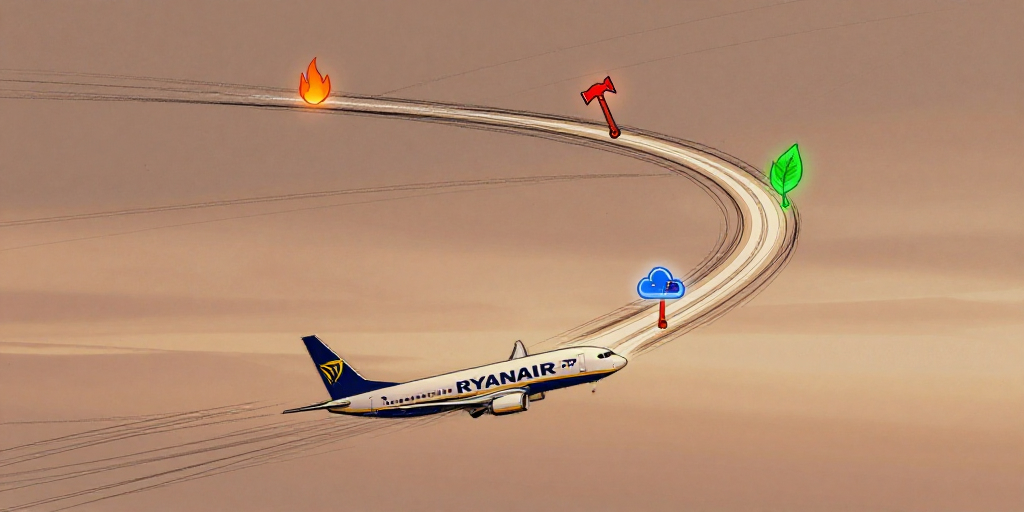
Corporate Update on Ryanair Holdings plc – Regulatory Compliance and Market Outlook
Regulatory Compliance Confirmation
Ryanair Holdings plc, a scheduled air transport company incorporated in Dublin, submitted a 6‑K filing on 14 April 2026. The filing confirms that, as of the financial year‑end on 31 March 2026, 30 % of the company’s issued share capital is held by EU nationals. Under the EU ownership and control regime that came into force on 1 January 2021, these shareholders possess full voting rights. The disclosure satisfies the company’s regulatory obligations to inform the Irish Securities and Exchange Commission, the United Kingdom’s Financial Conduct Authority, and other relevant authorities about its compliance with the European Union’s ownership and control requirements.
The 6‑K filing is part of Ryanair’s ongoing commitment to transparency, ensuring that investors and regulators receive timely information on the company’s governance structure and adherence to the latest regulatory standards. No amendments to the company’s share‑holding structure or voting arrangements were announced.
Forward‑Looking Statement: Market Drivers and Risk Landscape
While the filing does not provide new financial metrics, it contains a comprehensive forward‑looking statement that outlines a range of factors capable of affecting Ryanair’s future performance and the price of its securities. The statement highlights the following key risk drivers:
| Category | Potential Impact | Implications for Ryanair |
|---|---|---|
| Fuel Cost Volatility | Price swings in jet fuel can erode margins | Requires dynamic hedging strategies |
| Competitive Landscape | Intensification of price wars, especially in low‑cost segments | Potential dilution of market share |
| Regulatory Actions | Changes in UK, EU, and Irish aviation policy | Operational adjustments, compliance costs |
| Post‑Brexit Uncertainties | Variations in air‑traffic rights, tariff regimes | Re‑negotiation of bilateral agreements |
| Weather‑Related Disruptions | Flight cancellations, route delays | Increased operational costs, customer dissatisfaction |
| Airport Charges | Variable fees, congestion surcharges | Impact on route profitability |
| Labour Issues | Strikes, wage negotiations | Service disruption, reputational risk |
| Currency & Interest‑Rate Movements | Exchange rate fluctuations, borrowing costs | Translation and financing impacts |
| Macro‑Economic Conditions | GDP growth, disposable income trends | Demand elasticity in leisure travel |
| Ownership & Voting Rights Changes | Potential shifts in corporate governance | Altered shareholder influence, strategic direction |
| Global Events | Pandemics, geopolitical tensions, security incidents | Disruption to travel demand, operational safety |
These factors collectively paint a picture of a complex operating environment that transcends the aviation sector, touching on broader economic and geopolitical trends. For instance, the interrelation between fuel cost volatility and macro‑energy markets underscores how energy policy shifts can ripple through airline profitability. Similarly, the post‑Brexit regulatory landscape illustrates how sovereignty issues and international trade agreements can redefine operational parameters for airlines operating across EU borders.
Cross‑Sector Implications and Macro‑Economic Context
Ryanair’s exposure to fuel costs aligns it with other commodity‑dependent industries, such as shipping and freight. Fluctuations in oil prices not only impact operating expenditures but also influence the wider financial markets, where investors often re‑balance portfolios between energy stocks and travel-related equities. The company’s sensitivity to currency and interest‑rate movements places it within the same risk category as multinational corporations that manage foreign‑currency exposure and leverage.
Labour dynamics are another commonality with sectors such as hospitality and retail, where employee strikes can trigger cascading supply‑chain disruptions and customer sentiment swings. In the aviation context, a strike involving cabin crew or ground staff can lead to immediate route cancellations, amplifying the cost of lost revenue and potential reputational damage.
Furthermore, Ryanair’s regulatory environment mirrors the challenges faced by technology firms navigating data‑privacy and antitrust scrutiny. Regulatory actions in the UK, EU, and Irish markets can impose compliance costs that affect capital allocation and strategic prioritization across sectors.
Conclusion
The 6‑K filing by Ryanair Holdings plc serves primarily as a compliance update, reaffirming the company’s adherence to EU ownership and control standards. The forward‑looking statement, while devoid of new financial data, offers a nuanced overview of the multifaceted risks and market forces that could shape the airline’s future operations. By mapping these drivers against broader economic and cross‑industry trends, stakeholders gain a clearer understanding of the forces that could influence Ryanair’s strategic trajectory and shareholder value.