
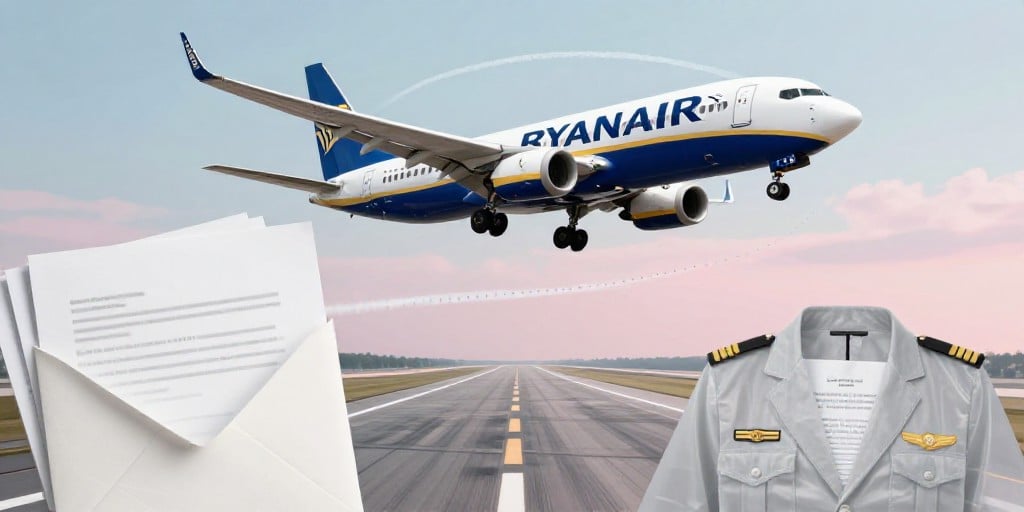
Corporate News: Legal Scrutiny of Pilot Employment Models
The recent lawsuit filed by former Ryanair pilot Richard Phillips, joined by 261 other ex‑pilots, has thrust the airline’s employment structure into a courtroom spotlight. The case, lodged in the London Court of Trade, challenges Ryanair Holdings PLC’s classification of many of its pilots as independent contractors—a practice that has long been a cornerstone of the airline’s cost‑management strategy.
Business Fundamentals at Stake
Ryanair’s business model prioritises operational flexibility and low fixed costs. By engaging pilots through agency contracts rather than direct employment, the airline avoids obligations that typically accompany full‑time staff: holiday and sick pay, statutory pension contributions, and other benefits. This arrangement has been justified as a means to keep fares competitive in an increasingly price‑sensitive market.
Financial analysts note that Ryanair’s latest earnings report reflected a sharp decline in profitability, driven primarily by surging fuel expenses and a muted demand for air travel in the wake of global economic uncertainty. In response, the carrier lowered fares to stimulate demand, a move that has already correlated with a steady erosion of its share price since the beginning of the year. The lawsuit could exacerbate these financial pressures if it leads to a shift in the airline’s employment costs.
Regulatory Context and Precedent
The plaintiffs argue that the London Court’s prior ruling, which determined that a pilot had been an employee rather than a contractor, sets a critical legal precedent. The case also cites a German court decision that classified Ryanair’s pilots as employees, thereby subjecting the airline to social security contributions. These rulings raise the question of whether the UK’s legal framework is aligned with the European Union’s approach to employment classification, despite the United Kingdom’s post‑Brexit autonomy.
If the court accepts the plaintiffs’ argument, it may compel Ryanair to re‑classify its pilot workforce, thereby imposing significant new costs. Moreover, it could trigger a domino effect, prompting other low‑cost carriers that rely on agency‑based pilot staffing to review and potentially revise their own employment arrangements to avoid similar litigation.
Competitive Dynamics and Market Implications
The airline industry is already grappling with heightened competition from both traditional carriers and newer entrants that operate on hybrid models. A ruling that redefines the status of pilots could erode the competitive advantage of airlines that depend on contractor arrangements for cost savings. Conversely, it could level the playing field, ensuring that all carriers provide comparable employee benefits and thereby improving industry-wide labor standards.
Investors and analysts will likely monitor the case closely, as it could influence not only Ryanair’s valuation but also broader market expectations regarding labor costs, operational flexibility, and risk management strategies. Companies that have historically capitalised on flexible staffing models may find themselves compelled to adapt their contractual frameworks to mitigate legal exposure.
Potential Risks and Opportunities
| Risk | Opportunity |
|---|---|
| Increased labor costs if pilots are re‑classified, affecting profit margins. | Improved brand perception for airlines that proactively offer full employee benefits, potentially attracting top talent. |
| Investor uncertainty stemming from potential regulatory changes. | Regulatory clarity could streamline compliance and reduce litigation risk for industry participants. |
| Operational disruptions while transitioning contracts. | Innovation in staffing solutions (e.g., hybrid employment models) that balance flexibility and compliance. |
Conclusion
The lawsuit spearheaded by 262 former pilots is more than a dispute over employment classification; it is a litmus test for the sustainability of low‑cost airline staffing models in a rapidly evolving regulatory landscape. As the court deliberates, stakeholders across the aviation sector will watch for signals that could redefine how pilots are employed, how airlines manage cost structures, and ultimately how the industry balances competitive agility with legal compliance.