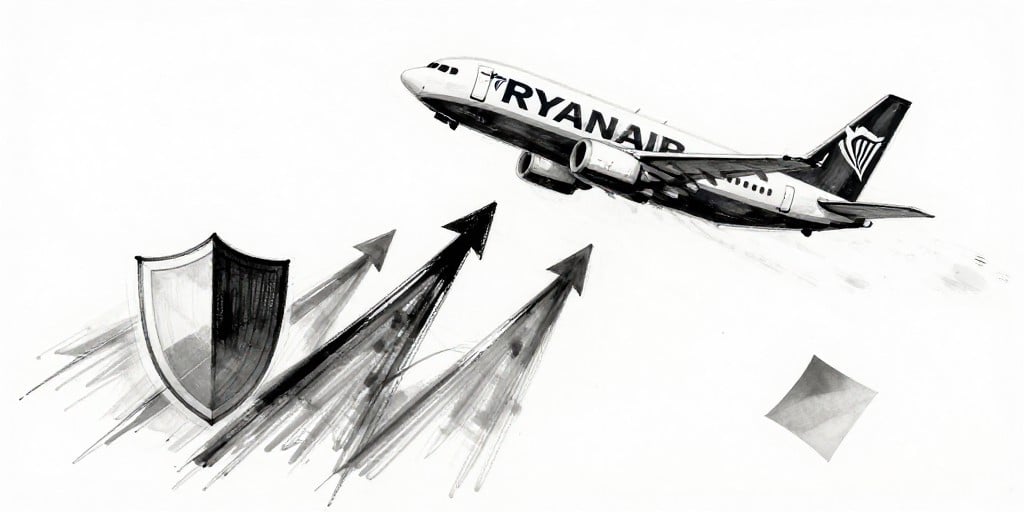
Ryanair’s Fuel‑Price Strategy and its Implications for the European Airline Market
Overview
Ryanair Holdings Plc announced that it will not impose a fuel surcharge despite the recent surge in jet‑fuel prices. The decision stems from a hedging position that covers the airline’s fuel exposure through the summer of 2026, coupled with a broader strategy to absorb the cost shock without raising fares. While the carrier maintains a cautious outlook on passenger numbers for the 2026/2027 financial year, it recognizes that competitors may adopt higher surcharges in the near future, potentially accelerating consolidation within the European low‑cost carrier sector.
Hedging Position and Cash‑Flow Implications
- Hedging Coverage: Ryanair’s senior management confirmed that the majority of its fuel contracts are locked in through 2026, shielding the airline from price volatility until the end of next summer.
- Cash‑Flow Protection: This hedging framework preserves operating margins during periods of rapid fuel price escalation, reducing the need for fare adjustments.
- Financial Impact: Preliminary analysis of Ryanair’s recent quarterly earnings indicates that the hedging strategy has mitigated a potential $45‑million hit to operating costs, a figure that would have been significant given the airline’s thin margins.
Competitive Dynamics and Market Consolidation
- Surge Pricing by Competitors: The chief executive noted that rivals are likely to introduce fuel surcharges ranging from 10 % to 20 % next summer. This is consistent with observed price‑setting behavior among other European low‑cost carriers that lack robust hedging programs.
- Consolidation Pressure: Elevated fuel costs intensify operating leverage constraints, especially for airlines already operating at or near breakeven. Ryanair foresees that carriers with higher cost bases may be forced into mergers or exit the market entirely.
- Regulatory Environment: The European Commission’s ongoing scrutiny of airline mergers—particularly concerning market concentration—could either slow or accelerate consolidation, depending on policy developments.
Capacity Constraints and Revenue Forecast
- Passenger Forecast Revision: Ryanair has modestly lowered its 2026/2027 passenger forecast by approximately 3 %. The adjustment reflects anticipated capacity reductions due to higher operating costs, which may limit the airline’s ability to add new routes or increase flight frequencies.
- Load Factor Stability: Despite the forecast downgrade, Ryanair’s high-density 737 MAX 8 fleet and existing route network should preserve load factors above 85 %. The introduction of 737 MAX 10 aircraft is expected to maintain, if not improve, seat‑capacity efficiency.
- Revenue Management: The airline will likely rely on dynamic pricing and ancillary revenue streams to offset any shortfall in fare‑based income.
Fleet Renewal and Strategic Asset Acquisition
- 737 MAX 10 Integration: Ryanair has secured delivery of its first batch of 737 MAX 10 aircraft in spring 2025, following the type’s certification. These aircraft will replace older 737‑800s and augment the existing MAX 8 fleet, enhancing passenger capacity by up to 30 % on comparable routes.
- Operational Synergies: The new aircraft maintain commonality with current fleet maintenance, training, and crew operations, thereby limiting incremental costs.
- Long‑Term Cost Advantages: Higher fuel efficiency of the MAX 10 series (up to 5 % per seat) directly offsets the current jet‑fuel price escalation, providing a strategic hedge against future fuel volatility.
Risks and Opportunities
| Risk | Opportunity |
|---|---|
| Fuel Price Volatility – Future price spikes could outpace current hedging coverage. | Fleet Modernisation – New MAX 10s offer better fuel efficiency, reducing per‑seat fuel costs. |
| Consolidation – Loss of market share if competitors collapse. | Competitive Pricing – Ryanair’s no‑surcharge policy may attract price‑sensitive travelers, boosting market share. |
| Regulatory Hurdles – Potential antitrust scrutiny of consolidation moves. | Ancillary Revenue Growth – Increased ancillary services can cushion revenue dips from ticket price constraints. |
| Operational Disruption – Delays in MAX 10 certification or delivery. | Market Leadership – Maintaining low operating costs may position Ryanair as the benchmark in European low‑cost aviation. |
Conclusion
Ryanair’s decision to forgo a fuel surcharge, while maintaining a cautious passenger outlook, reflects a deliberate strategy to shield its margins from short‑term jet‑fuel price swings. The airline’s hedging position, coupled with an aggressive fleet renewal plan, positions it to navigate an environment where fuel costs remain elevated. However, the broader competitive landscape—characterised by potential surcharges from rivals and the looming threat of consolidation—demands vigilant monitoring. Stakeholders should watch for regulatory developments that may influence consolidation trajectories and assess how Ryanair’s pricing discipline could become a double‑edged sword, offering short‑term market share gains but exposing the airline to longer‑term competitive pressure if fuel prices persistently rise.