Corporate Announcement Contextualized Within Germany’s Energy Transition Landscape
The recent completion of RWE Aktiengesellschaft’s employee share‑buy‑back programme, executed between early October and mid‑November, underscores a corporate strategy that intersects financial stewardship with the broader imperatives of Germany’s power system modernization. While the company repurchased 313,424 shares—averaging €58 each and totaling roughly €18.1 million—the transaction’s significance extends beyond shareholder value. It reflects a corporate confidence that allows capital to be redirected toward the critical infrastructure investments required to sustain grid stability and accommodate the accelerating influx of renewable resources.
Grid Stability in a Renewable‑Rich Era
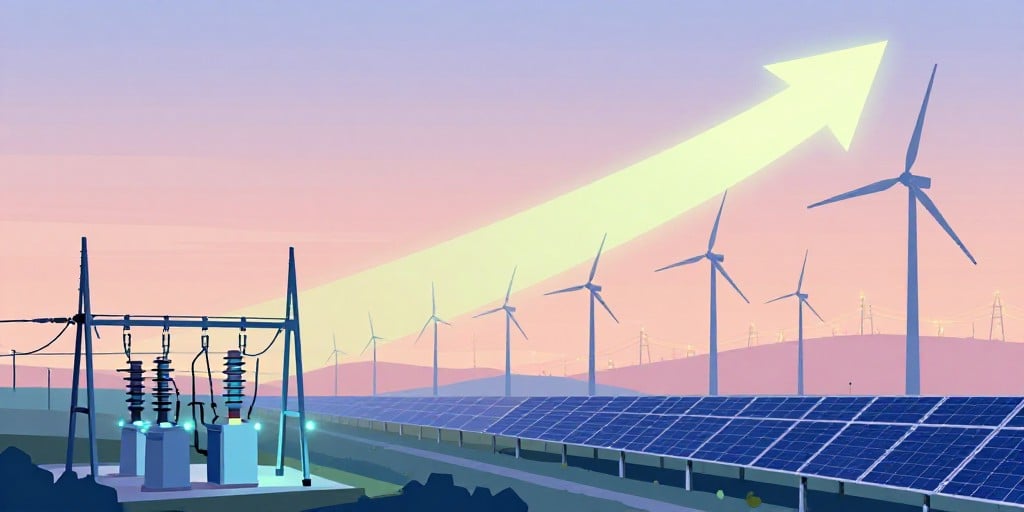
Germany’s 2030 renewable energy targets demand that wind and solar capacity increase from the current 70 % to over 80 % of the total generation mix. Such a shift amplifies the intermittency profile of the system, challenging frequency and voltage regulation mechanisms traditionally managed by fossil‑fuel baseload units. RWE’s financial position—enhanced by the buy‑back—may enable accelerated deployment of advanced control technologies, such as high‑capacity FACTS (Flexible AC Transmission System) devices and energy storage systems, which are pivotal for damping transient oscillations and maintaining power quality.
Moreover, the integration of distributed energy resources (DERs) necessitates enhanced meshing capabilities and robust protection schemes. Investments in digital twins and real‑time monitoring platforms can provide operators with the predictive insight required to preempt cascading failures. The capital freed by the buy‑back may thus be earmarked for such high‑value engineering solutions, bolstering grid resilience against both conventional load fluctuations and the stochasticity of renewable outputs.
Renewable Energy Integration Challenges
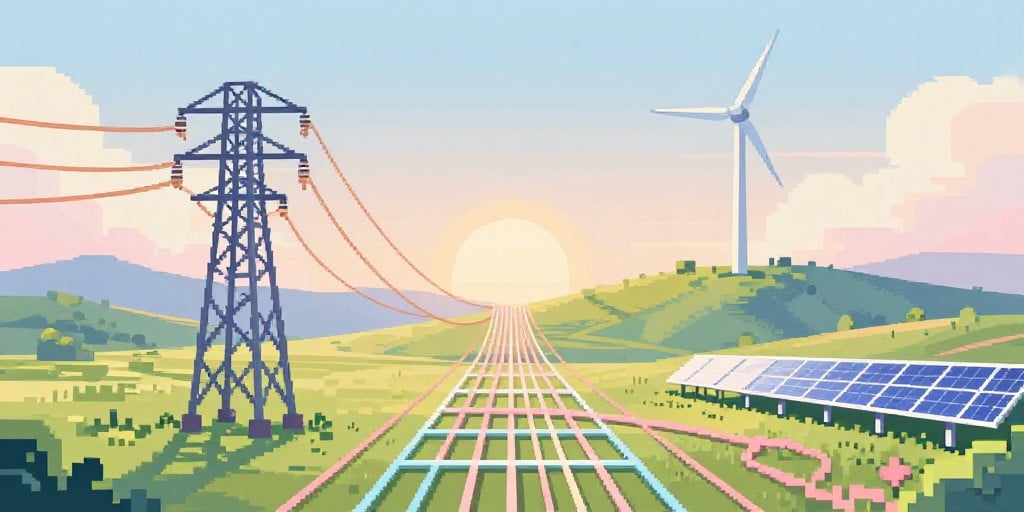
The coexistence of high‑penetration renewables and conventional generation creates a non‑linear power flow landscape. The reactive power demands fluctuate markedly across the network, often exceeding the provision capacity of existing transmission corridors. Upgrading to higher‑voltage DC (HVDC) lines, with their superior controllability and reduced losses, can alleviate congestion and improve system inertia. RWE’s investment appetite—reflected in the buy‑back’s financial health—could facilitate the procurement of HVDC converters and converter stations, essential for connecting offshore wind farms to the continental grid.
Furthermore, the intermittency of wind and solar introduces forecast uncertainty, which propagates into market clearing and balancing markets. The introduction of more granular, probabilistic forecasting models, combined with dynamic pricing signals, can help balance supply and demand with higher precision. Corporate financial resources enable the adoption of such advanced analytics platforms, fostering a more responsive market architecture.
Infrastructure Investment Requirements
Achieving the targeted renewable share necessitates a multi‑tiered infrastructure strategy:
- Transmission Expansion – Upgrading existing 380 kV lines to 400 kV or deploying 500 kV HVDC links can mitigate bottlenecks, particularly in the north‑south corridor connecting wind farms to load centers.
- Grid Flexibility Enhancements – Battery storage, pumped‑hydro projects, and demand response programs increase system flexibility. The deployment of grid‑scale energy storage is estimated to require €15–20 billion annually over the next decade in Germany alone.
- Digitalization of Operations – Advanced SCADA systems, AI‑driven fault detection, and real‑time asset management reduce operating costs and improve reliability.
RWE’s buy‑back, while modest in absolute terms relative to the utility’s asset base, signals confidence in the company’s balance sheet—an essential precondition for accessing both equity and debt markets needed for such capital‑intensive projects.
Regulatory Frameworks and Rate Structures
The German regulatory regime—governed by the Federal Network Agency (Bundesnetzagentur) and aligned with EU directives—mandates transparent market operations and grid access principles. The 2017 “Energie- und Klimapolitik” act, alongside the 2022 “Elektrizitätsversorgungsgesetz” reforms, introduces incentive structures for renewable integration, such as the Einspeisevergütung (feed‑in tariff) and the Marktanteilsvergütung (market share incentive). These mechanisms influence the economic calculus of investing in grid upgrades versus curtailment avoidance.
Rate structures have evolved to reflect the cost of network upgrades. The Netzentgelte (network charges) are determined by the Tarifnetzordnung, which requires utilities to justify price increases through detailed cost‑allocation studies. As RWE considers further investments, it must navigate this regulatory landscape to avoid unjustified rate hikes that could erode consumer goodwill.
Economic Impacts of Utility Modernization
Modernizing the grid yields both direct and indirect economic benefits. Directly, improved reliability reduces the frequency and severity of blackouts, translating into measurable cost savings for industrial users. Indirectly, higher grid capacity supports industrial expansion and job creation in the renewable sector. The European Commission’s Fit for 55 package estimates that investments in grid infrastructure can generate up to €120 billion in EU GDP growth over the next decade.
From a financial perspective, the buy‑back enhances shareholder returns by reducing the share count, thereby increasing earnings per share (EPS). Simultaneously, the retained capital positions RWE favorably to pursue capital‑intensive projects that deliver long‑term value to both the company and its stakeholders. This dual benefit—short‑term financial performance coupled with strategic asset enhancement—aligns with the expectations of institutional investors increasingly focused on climate‑related risk metrics.
Engineering Insights into Power System Dynamics
The transition to a renewable‑heavy grid modifies fundamental power system dynamics. Key engineering concepts include:
- Inertia Management – Traditional thermal plants provide physical inertia that stabilizes frequency. With their decline, synthetic inertia from battery storage and wind turbine gearboxes must be carefully calibrated to match system needs.
- Voltage Control – Reactive power support, historically supplied by synchronous condensers, now relies on power electronics, necessitating more sophisticated voltage regulation algorithms.
- Load Forecasting – Advanced machine learning models improve short‑term load predictions, critical for ensuring that supply meets demand in real time.
Understanding these dynamics is crucial for utility planners, as misaligned control strategies can exacerbate oscillations or lead to voltage collapse. RWE’s investment in research and development, possibly financed in part by the capital freed through the buy‑back, can mitigate such risks.
Conclusion
The employee share‑buy‑back completed by RWE Aktiengesellschaft is more than a fiscal maneuver; it represents a strategic allocation of financial resources that can accelerate Germany’s pursuit of a resilient, renewable‑centric power system. By aligning corporate financial health with engineering imperatives—grid stability, renewable integration, and infrastructure investment—RWE positions itself to navigate the complex regulatory landscape, manage rate structures effectively, and deliver sustained economic benefits to consumers and investors alike.