
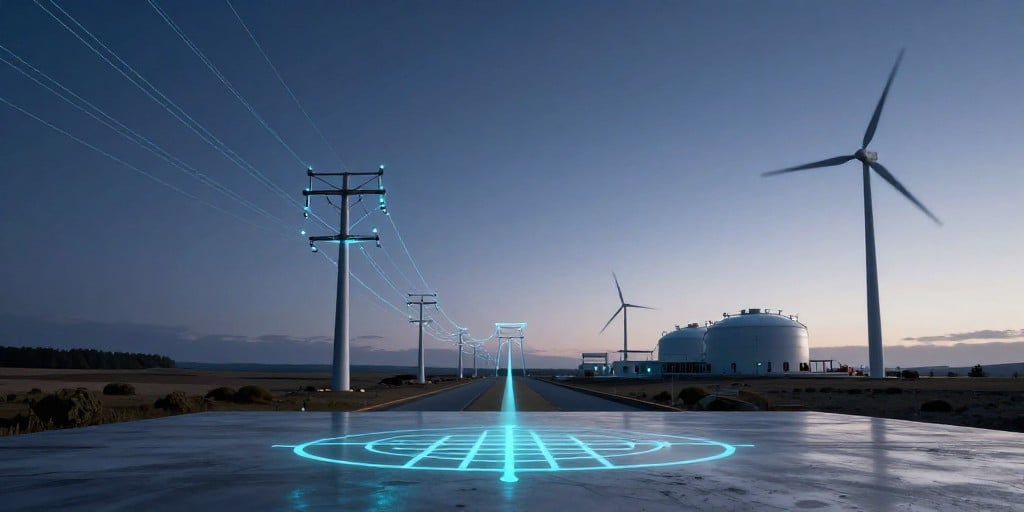
Corporate Dynamics and Technical Implications in Germany’s Energy Transition
RWE AG’s recent performance in the DAX underscores the complex interplay between market sentiment, regulatory evolution, and the technical demands of modernizing the German electric grid. While the company’s share price reflected a modest uptick amid a 3 % weekly rise in the index, the underlying drivers are rooted in power‑system engineering, grid stability, and large‑scale renewable integration.
Grid Stability in an Era of Variable Generation
Germany’s 2024–2026 grid strategy hinges on maintaining frequency stability despite an increasing penetration of intermittent renewable sources such as wind and solar. The rapid ramp‑up of photovoltaic capacity in the south and wind farms in the north has amplified the need for dynamic reactive power support and fast‑acting voltage regulation. Grid operators employ synchronous condensers and static VAR compensators to mitigate voltage sag and swell, while power‑electronic converters embedded in renewable plants provide synthetic inertia. RWE’s investment portfolio reflects this shift: the company has deployed grid‑connected storage units with high power‑to‑energy ratios to buffer short‑term fluctuations, enabling a smoother transition to a 80 % renewable mix by 2035.
Renewable Integration Challenges
The technical challenges of integrating renewables extend beyond frequency control. Curtailment risk, bi‑directional power flows, and the need for robust protection schemes have prompted widespread deployment of Phasor Measurement Units (PMUs) and wide‑area monitoring systems. RWE’s LNG logistics role complements renewable deployment by offering a flexible, low‑emission backup that can be dispatched on demand. The company’s expanded contractual LNG volume demonstrates how gas can bridge gaps left by variable renewables, providing a controllable carbon‑efficient source for peak‑load management.
Infrastructure Investment Requirements
To support the envisioned transition, Germany must invest approximately €200 billion in grid upgrades by 2026. Key projects include:
- High‑Voltage Direct Current (HVDC) links to connect offshore wind farms in the North Sea with continental load centers, reducing losses and enhancing inter‑regional dispatchability.
- Smart‑grid enablement through advanced metering infrastructure (AMI) and automated demand response (ADR) platforms that align consumption with supply flexibility.
- Substation hardening to withstand increased fault currents from inverter‑based resources, necessitating adaptive protection relays and fault‑locating systems.
RWE’s recent €1.5 billion share‑buyback programme, completed through a credit institution on Xetra, signals confidence in the company’s capacity to fund such large‑scale investments while maintaining shareholder value. The buy‑back, executed at a weighted average price slightly below the initial tranche, reflects an efficient use of capital to offset dilution from the continued issuance of LNG‑related bonds.
Regulatory Frameworks and Rate Structures
The German Federal Network Agency (BNetzA) has introduced the “Grid Infrastructure Development Act” (NetzINF) to streamline permitting and accelerate transmission projects. Under this framework, utilities receive capacity remuneration for building and maintaining grid assets, thereby incentivizing timely upgrades. RWE’s participation in LNG supply chains aligns with the “Clean Power” directive, which offers reduced taxes on low‑carbon fuels, fostering an economic environment conducive to renewable and gas integration.
Rate structures are evolving to reflect the cost of flexibility. The “Dynamic Tariff Model” (DTM) introduced in 2025 allows consumers to pay variable rates based on real‑time grid stress. Utilities, including RWE, must therefore balance revenue generation against the need for transparent billing mechanisms. This shift may lead to modest increases in consumer costs in the short term but is projected to yield long‑term savings by curbing the need for expensive peaking plants.
Economic Impacts of Utility Modernization
Modernizing the grid has a dual economic effect: upfront capital expenditure is counterbalanced by long‑term operational savings and reduced price volatility. The adoption of smart‑grid technologies can lower system losses by up to 5 %, translating into savings of €10 million annually for large utilities. Furthermore, increased grid resilience mitigates the risk of blackouts, protecting industrial productivity and consumer confidence.
For RWE, the integration of LNG as a flexible resource not only diversifies revenue streams but also reduces exposure to oil price volatility—a critical consideration given current Middle Eastern geopolitical tensions. By balancing renewable penetration with gas flexibility, RWE positions itself to meet both regulatory mandates and market demand for reliable, low‑carbon electricity.
Technical Outlook
From a systems engineering perspective, the next decade will see a heightened emphasis on:
- Grid‑based energy storage with hybrid chemistries (e.g., Li‑ion paired with flow batteries) to meet both frequency regulation and long‑term energy shifting.
- Digital twins of the grid to simulate contingency scenarios, enhancing decision‑making for both operational control centers and investment planning.
- Machine‑learning algorithms for predictive maintenance of high‑voltage components, reducing unplanned downtime and extending asset lifespan.
RWE’s strategic initiatives in LNG logistics, share buy‑back, and infrastructure investment collectively illustrate a holistic approach to navigating the technical, regulatory, and economic challenges of Germany’s energy transition. As the sector evolves, continued collaboration between engineers, regulators, and financiers will be essential to achieve a resilient, low‑carbon grid that serves both consumers and the broader economy.