
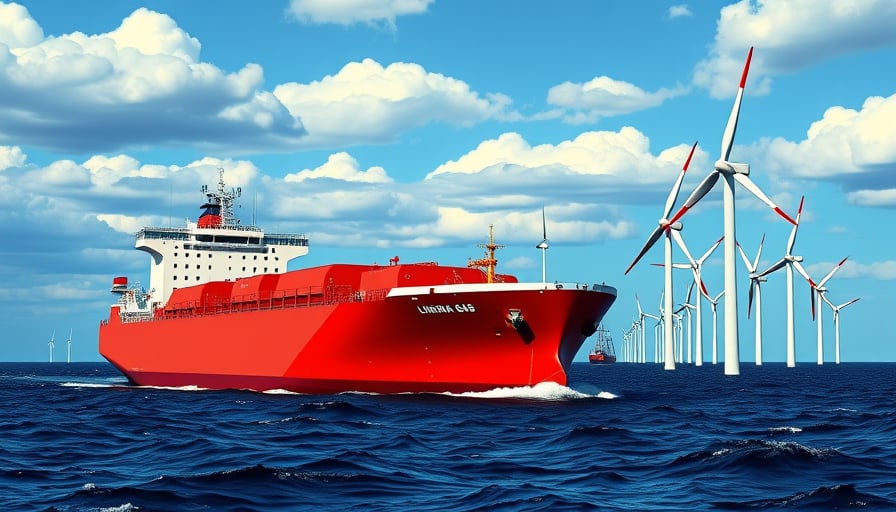
RWE AG’s Strategic Diversification: LNG, Offshore Wind, and Shareholder Value Amid Legal Uncertainty
RWE AG, the German multi‑utility listed on Xetra, has unveiled a series of initiatives that, at first glance, appear to reinforce its energy‑transition narrative while simultaneously securing a buffer against the volatility of natural‑gas markets. A closer examination of the underlying business fundamentals, regulatory landscapes, and competitive dynamics reveals both opportunities and risks that have not yet entered mainstream discourse.
1. Long‑Term LNG Supply from Glenfarne’s Texas Project
The company’s new multi‑year contract with Glenfarne’s Texas LNG project represents a strategic hedge against European supply shocks. LNG imports from the United States are priced in US$ per MWh, subject to U.S. commodity price swings and shipping costs that can fluctuate sharply in response to global trade tensions. RWE’s procurement strategy hinges on locking in volumes at a forward rate, thereby mitigating exposure to spot‑market volatility. However, the contract’s terms—particularly the inclusion of a volume‑based discount clause—must be scrutinized for potential hidden costs should U.S. gas prices rise or if shipping lanes become congested.
From a regulatory standpoint, the deal must navigate both U.S. export licensing under the U.S. Department of Commerce and EU customs procedures for LNG imports. Recent changes to EU customs procedures for energy goods, driven by the EU’s “Energy Security” directive, could impose additional documentation timelines, potentially delaying delivery and affecting operational flexibility.
Competitive dynamics are also at play. RWE’s primary rivals, E.ON and EnBW, have secured similar long‑term LNG contracts with Asian exporters. By sourcing from the United States, RWE may gain a price advantage if U.S. gas prices remain below Asian benchmarks, yet it risks a strategic disadvantage if U.S. policy shifts (e.g., a carbon tax on LNG exports) alter the cost structure.
2. Expansion in Offshore Wind and Renewable Power Purchasing
RWE’s recent offshore wind contract in the United Kingdom, coupled with a purchase agreement for wind power from the Munich Airport region, signals a dual‑faced strategy: diversify revenue streams through renewable assets while ensuring a reliable power supply for its trading operations. The UK contract, valued at approximately €2.5 billion, benefits from the UK’s robust permitting framework and a mature supply chain. Nonetheless, the UK’s recent grid capacity constraints could delay the operationalization of new offshore wind farms, impacting cash‑flow projections.
The Munich Airport wind deal, meanwhile, offers a stable, low‑cost supply of renewable electricity to one of Germany’s largest aviation hubs. However, the contract’s fixed tariff for 12 years, while attractive from a cost‑control perspective, may become a liability if Germany’s renewable premium diminishes under new policy directives aimed at curbing green energy subsidies.
From a market perspective, RWE’s renewable portfolio is now positioned in two of the world’s most competitive renewable markets. The UK’s renewable capacity factor has historically lagged behind the North Sea’s potential, raising questions about the efficiency of the new installation. Conversely, the Munich Airport contract benefits from Germany’s advanced grid infrastructure and high electricity demand during peak hours, potentially enhancing RWE’s revenue predictability.
3. Share‑Buyback Programme and Shareholder Value
In its capital‑market disclosures, RWE announced the continuation of a share‑buyback programme covering 2024‑2026. The programme’s financing structure—funded through a combination of excess cash flow and a dedicated debt instrument—raises several issues. First, the debt component increases the company’s leverage, potentially tightening debt covenants under its existing credit facilities. Second, the buyback timing aligns with a broader trend among German utilities to return capital amid low dividend yields, yet the program’s efficacy depends on market liquidity and the ability to purchase shares at a discount to intrinsic value.
Financial analysts have praised the move, suggesting it signals management’s confidence in the company’s valuation. However, a more skeptical view considers the possibility that the buyback could artificially inflate EPS figures while diverting capital away from long‑term infrastructure investments, thereby compromising future growth potential.
4. Legal Exposure: Pakistani Farmers’ Flood‑Related Lawsuit
RWE’s involvement in a lawsuit filed by Pakistani farmers over alleged crop damage linked to 2022 flooding introduces a regulatory and reputational risk that has yet to be fully quantified. While RWE has dismissed the claim as unfounded, the underlying exposure relates to the company’s activities in a region with complex land‑use regulations and limited recourse mechanisms for affected communities. The potential settlement could involve substantial indemnities or remedial actions that would impact the company’s operating costs.
Moreover, the lawsuit may prompt scrutiny from international regulators, such as the European Court of Human Rights, especially if evidence emerges that the company’s operations contributed to the flooding via inadequate infrastructure or failure to comply with local environmental standards. A prolonged legal battle could also attract negative media attention, affecting investor sentiment and potentially leading to a downgrade by rating agencies.
5. Analyst Coverage and Market Perception
Morgan Stanley’s continued buy recommendation for RWE reflects an expectation that the company’s strategic mix of LNG and renewables will sustain growth. The recommendation is grounded in projected EBITDA improvements of 4–6 % annually through 2027, assuming the LNG contract locks in a 10 % discount to the spot price and the renewable projects achieve their forecasted capacity factors.
Nevertheless, the recommendation overlooks certain macroeconomic variables: the potential for tightening U.S. LNG export regulations, the risk of a global LNG price spike due to geopolitical tensions, and the possibility of a policy shift in Germany that reduces renewable subsidies. Additionally, the buy recommendation does not fully account for the company’s increased debt load from the buyback programme and potential legal costs from the Pakistani lawsuit.
6. Conclusion: Opportunities Coupled with Uncertainties
RWE’s recent initiatives illustrate a deliberate effort to balance energy security with renewable integration, underpinned by a capital‑market strategy that signals shareholder confidence. However, the company’s exposure to volatile commodity prices, regulatory changes across multiple jurisdictions, and legal risks suggests that investors should maintain a cautious stance. By closely monitoring contract terms, regulatory developments, and litigation outcomes, stakeholders can better assess whether RWE’s diversified strategy truly positions the company for sustainable long‑term growth or whether the hidden costs may erode the projected gains.