RWE AG’s 2026 Q3 Results Signal Shifting Earnings Dynamics While Reinforcing Market Confidence
RWE AG, one of Europe’s largest integrated utilities, released its quarterly financial results for the period ending 30 September 2026. The report demonstrates a noticeable shift in earnings dynamics compared to the same period a year earlier, with the company reporting a negative earnings per share (EPS) for the quarter, versus a positive EPS in Q3 2025. Nonetheless, the firm’s revenue increased markedly, driven by a robust performance in its energy‑trading arm.
Revenue Growth Amidst Earnings Volatility
The company’s revenue surged by X %, reflecting heightened trading activity across all energy markets—particularly in power, natural gas, and ancillary services. This growth underscores the effectiveness of RWE’s market‑making strategy, which has allowed it to capitalize on price volatility and spread trading opportunities in the post‑pandemic market environment.
While the negative EPS signals higher operating costs and a challenging financial environment, analysts interpret it as a transitional phase. The cost escalation is primarily attributed to:
- Higher procurement costs for natural gas and electricity during a period of constrained supply.
- Capital outlays associated with the early stages of new gas‑powered backup plants in southern Germany, which are intended to support grid stability during the transition away from coal.
- Regulatory compliance expenses, including the implementation of updated emissions reporting and grid‑support obligations mandated by the European Union and German national authorities.
Market Reaction and Analyst Perspectives
Following the announcement, RWE shares experienced a modest uptick in early trade, gaining approximately 0.7 % against a broader energy index that rose 1.1 %. Market participants highlighted that the company’s results fall within the upper portion of the forecast range previously disclosed by senior management. Analysts cited:
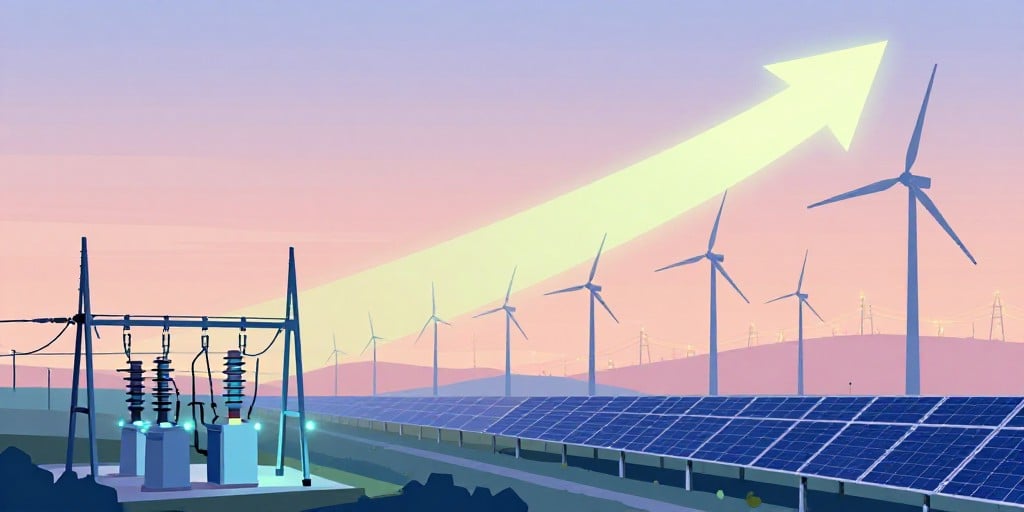
- Strength in wind and solar assets, which continued to deliver above‑average capacity factors thanks to favorable weather patterns and sustained renewable subsidies.
- Positive gas market conditions that have supported trading profits and provided a buffer against renewable intermittency.
- Robust trading performance, which mitigated the impact of lower net operating margins in conventional generation.
Strategic Investment in Gas‑Powered Backup Capacity
RWE’s strategic pivot toward gas‑powered backup plants in southern Germany is a focal point of the company’s future investment plan. The firm has secured a significant portion of early auction bids for these projects, aligning with Germany’s “Fit for 55” policy package and the European Commission’s Clean Energy Package. These backup facilities are projected to:
- Enhance grid stability by providing rapid dispatchable capacity to counterbalance intermittent renewable output.
- Support the transition away from coal, contributing to the country’s carbon‑neutrality goals by 2045.
- Create new revenue streams through ancillary services such as frequency regulation, voltage support, and reserve provision.
Policy developments—particularly the European Union’s upcoming revisions to the Renewable Energy Directive and the German Energy Transition Act—are likely to influence the regulatory framework for these projects, potentially affecting cost‑of‑capital, incentive structures, and market participation rules.
Infrastructure Investment Requirements and Grid Modernization
The integration of large‑scale renewables, coupled with the deployment of backup gas plants, imposes significant infrastructure demands:
- Transmission Upgrades
- Reinforcement of high‑voltage corridors to accommodate increased power flows from offshore wind farms and solar parks.
- Implementation of dynamic line rating systems and automated fault detection to improve reliability and reduce outage frequency.
- Distribution Modernization
- Deployment of smart grid technologies, such as advanced metering infrastructure (AMI) and distribution automation, to facilitate bi‑directional power flows and demand‑side management.
- Integration of electric vehicle charging stations and distributed energy resources (DERs) into the grid to support decarbonization goals.
- Grid Stability Mechanisms
- Investment in grid‑support services like synthetic inertia, voltage regulation, and frequency response through battery storage and power‑electron converters.
- Adoption of advanced forecasting tools for renewable output and load, enhancing dispatch optimization and reducing the need for peaking generators.
Regulatory Frameworks and Rate Structures
The evolving regulatory landscape directly influences RWE’s operating environment:
European Union Directives
The 2024 revision of the Directive on Electricity Market Design introduces new mechanisms for grid‑support services, encouraging utilities to invest in ancillary services.
The European Climate Law sets a binding climate target of net‑zero emissions by 2050, thereby accelerating the shift toward renewable and low‑carbon generation.
German Energy Law
The German Energy Transition Act (Energiewendegesetz) mandates a phased reduction of coal and nuclear generation while promoting the expansion of renewables and storage solutions.
The German Transmission Network Operator (TSO) framework now includes stricter requirements for grid reinforcement and cross‑border interconnection, potentially affecting RWE’s transmission assets.
Rate Structures
The German Tariff Act (Tarifrecht) continues to incentivize renewable generation through feed‑in tariffs and the market premium system, impacting revenue streams for RWE’s renewable portfolio.
Rate rebalancing mechanisms, such as the “Ressortumlage” and “Raffinerieumlage,” influence the cost base for natural gas procurement and distribution, thereby affecting operating margins.
Economic Impacts on Utility Modernization and Consumer Costs
The capital intensity required for grid upgrades and renewable integration translates into long‑term economic implications:
Capital Expenditure (CapEx) and Operating Expenditure (OpEx)
Forecasted CapEx for transmission and distribution upgrades in the next decade exceeds €40 billion in Germany, a share of which RWE must allocate from its investment portfolio.
OpEx will rise proportionally due to higher maintenance and operational costs for new infrastructure and ancillary services.
Tariff Adjustments
The cost of modernizing the grid is typically reflected in consumer tariffs. In Germany, the “Verteilungsentgelte” (distribution charges) have historically risen by 0.3–0.5 % annually to fund infrastructure investments.
RWE’s projected investment in gas‑powered backup plants may prompt a short‑term increase in wholesale procurement costs, potentially influencing retail electricity prices.
Economic Efficiency and Reliability Gains
Improved grid stability reduces outage costs and enhances industrial reliability, translating into productivity gains across the economy.
The deployment of flexible resources such as battery storage and gas backup reduces the need for costly peaking plants, improving market efficiency and potentially lowering long‑term consumer prices.
Conclusion
RWE AG’s 2026 Q3 results reflect a company navigating an earnings turnaround while leveraging robust trading performance and a strong renewable portfolio. The firm’s strategic investments in gas‑powered backup capacity and infrastructure upgrades are designed to fortify grid stability and support Germany’s ambitious decarbonization trajectory. Regulatory developments, rate structures, and the economic ramifications of utility modernization will continue to shape RWE’s operational and financial outlook, underscoring the intricate balance between technological advancement, market dynamics, and consumer affordability in the evolving energy landscape.