Corporate Update: RWE Aktiengesellschaft Expands Share Repurchase Program Amid Energy Transition Dynamics
RWE Aktiengesellschaft (RWE) announced the acquisition of an additional tranche of its own shares as part of its German employee share programme for 2026. Between 12 and 16 October, 55,000 shares were bought on the XETRA market by a commission‑appointed financial institution. Transactions were executed in daily blocks of approximately 11,000 shares, with the purchase price exhibiting a slight upward trend over the five‑day period. This activity represents the second interim report for the programme, which was launched in late August following a regulatory filing. Since the inception of the reporting window, the company has purchased a cumulative total of 110,000 shares under this scheme.
While the German equity indices recorded modest declines on the day of the announcement—LUS‑DAX down 0.36 % and DAX falling roughly 1.24 %—RWE’s share price dropped by about 3.15 %. The share buyback is positioned as a strategic tool to strengthen RWE’s capital structure and deliver value to employees and shareholders alike.
Implications for Power Generation, Transmission, and Distribution
Grid Stability in an Era of Renewables
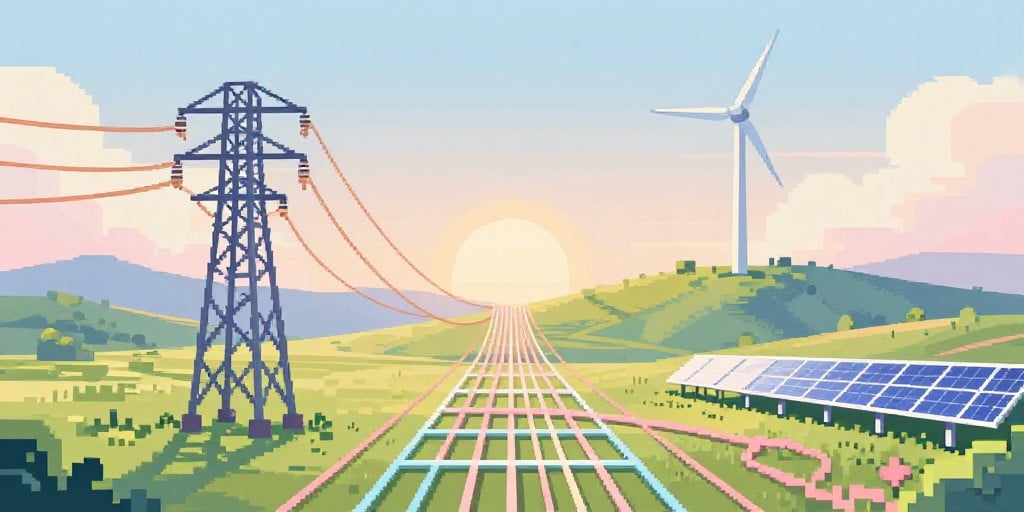
RWE’s continued investment in its share base coincides with the company’s broader commitment to modernizing power generation, transmission, and distribution infrastructure. The integration of variable renewable energy sources—wind, solar, and emerging storage technologies—places significant demands on grid stability. Fluctuating generation profiles require enhanced flexibility, real‑time monitoring, and adaptive control strategies to prevent frequency deviations and voltage excursions.
From an engineering perspective, the transition to higher renewable penetration necessitates the deployment of advanced power electronics, such as static synchronous compensators (STATCOMs) and flexible AC transmission systems (FACTS), to regulate reactive power and support voltage levels. Grid operators must also upgrade protection schemes to accommodate the asymmetric fault currents introduced by inverter‑based resources.
Infrastructure Investment Requirements
Modernizing the transmission network entails substantial capital expenditures. RWE and its peers must upgrade high‑voltage corridors, construct new sub‑stations, and integrate distributed energy resources (DERs) with robust cyber‑physical controls. Investment in high‑capacity, long‑distance transmission lines mitigates congestion and enhances the dispatchability of renewable generation located in remote regions.
Additionally, distribution systems must evolve to manage bidirectional power flows and ensure resilience against cascading failures. Smart grid technologies—advanced metering infrastructure, dynamic line rating, and automated fault isolation—are essential for maintaining reliability while accommodating higher DER penetration.
Regulatory Frameworks and Rate Structures
The German regulatory environment, governed by the Federal Network Agency (Bundesnetzagentur), plays a pivotal role in shaping the economic incentives for grid modernization. Feed‑in tariffs, net‑metering policies, and the upcoming “Ausgleichsrahmen” (balancing framework) influence the profitability of renewable assets and the cost of grid services. RWE must navigate these frameworks to optimize its investment portfolio and secure favourable tariff structures.
Rate structures, particularly the “Strompreissystem” (electricity pricing system), directly impact consumer costs. As RWE undertakes infrastructure upgrades, it must balance the need for system reliability with the financial burden on end‑users. Transparent cost allocation mechanisms, such as “Netzzugangsgebühren” (grid access charges), help distribute investment costs fairly among consumers while preserving affordability.
Economic Impacts of Utility Modernization
Utility modernization carries significant macroeconomic implications. Investments in grid upgrades stimulate job creation, enhance energy security, and foster technological innovation. However, the associated costs may translate into higher consumer tariffs over the long term. RWE’s share buyback strategy can mitigate the impact on shareholders by reinforcing the company’s financial position and potentially reducing the need for dividend payouts.
From a market perspective, robust grid infrastructure supports the efficient integration of renewables, which can lower wholesale electricity prices by increasing supply elasticity. Conversely, rapid deployment of grid assets may temporarily inflate capital costs, influencing long‑term price trajectories. Regulators must therefore adopt balanced policies that encourage investment while safeguarding consumer interests.
Conclusion
RWE’s ongoing share repurchase program underscores the company’s commitment to strengthening its capital structure amid a rapidly evolving energy landscape. The technical challenges of grid stability, renewable integration, and infrastructure investment demand sophisticated engineering solutions and strategic regulatory engagement. As Germany accelerates its transition to a low‑carbon economy, RWE’s actions—both financial and infrastructural—will play a decisive role in shaping the resilience and affordability of the national power system.