RWE AG’s Surprising Re‑Engagement with Uniper Raises Strategic Questions
The German power giant RWE AG has re‑entered the conversation around the acquisition of Uniper, the state‑owned gas and power firm, after partnering with private‑equity house KKR to submit an indicative bid. Bloomberg reported that the offer was filed before the last‑minute deadline, placing RWE in direct competition with Norway’s Equinor and a consortium of Brookfield Asset Management and the Canada Pension Plan Investment Board. This development comes on the heels of RWE CEO Markus Krebber’s earlier public statement that the company had no interest in buying Uniper—a stance that now appears contradictory and raises concerns about RWE’s strategic direction and capital discipline.
RWE’s Past Positioning and the Current Turnaround
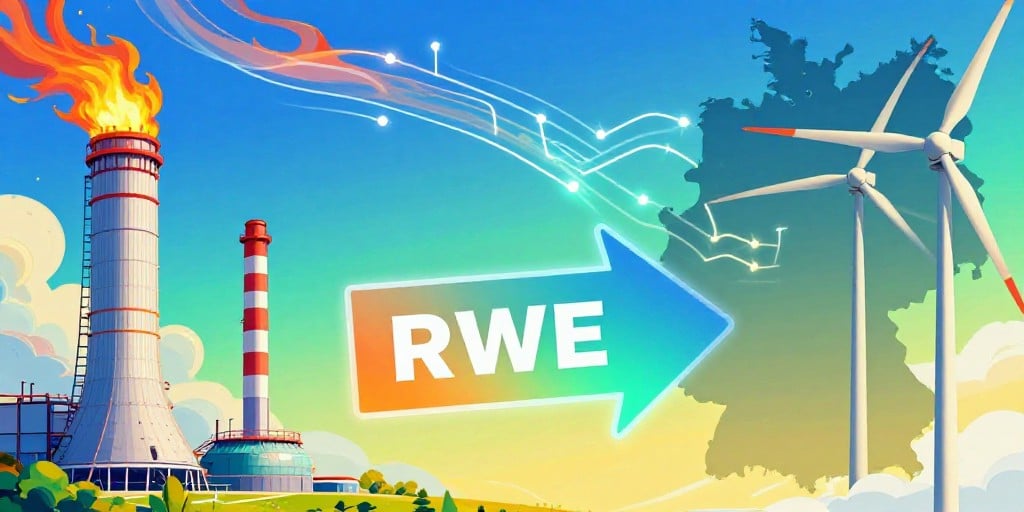
RWE’s historical narrative has been one of gradual transformation from a coal‑centric utility into a renewable‑energy leader. The company has aggressively divested coal assets, invested in offshore wind, and entered into several joint ventures aimed at expanding its solar portfolio. Against this backdrop, the sudden pivot to an acquisition bid for a gas‑heavy entity like Uniper feels discordant. It suggests either a reassessment of the firm’s core assets or a potential tactical play to secure a foothold in Germany’s gas supply chain during a period of heightened geopolitical tension.
Financial analysts note that the bid, though indicative, was structured to reflect a premium of approximately 15 % over Uniper’s closing price on the day of the offer. RWE’s balance sheet, which carries a debt‑to‑equity ratio of 1.3:1, has historically relied on low‑cost borrowing to finance large-scale renewable projects. An acquisition of Uniper would therefore require either a substantial equity injection or the deployment of a significant portion of existing cash reserves, potentially impacting RWE’s dividend payout or share‑buyback commitments.
Uniper’s Strategic Value and Market Implications
Uniper remains a critical node in Germany’s energy security architecture. Its primary operations involve gas imports from a diverse set of suppliers and power generation through a mix of coal, gas, and nuclear plants. The firm’s recent long‑term supply contract with Equinor—worth €5 billion—underscores its role as a conduit for Norwegian gas, a key alternative to Russian supplies.
The competitive landscape for acquiring Uniper is intense. Equinor’s presence, backed by its own robust upstream portfolio, lends it an advantage in terms of integration possibilities and long‑term gas supply security. Meanwhile, the Brookfield‑CPPIB consortium brings a wealth of infrastructure investment experience and access to global capital markets. RWE’s bid, therefore, must be evaluated in the context of these stronger competitors and their respective strategic fit.
Market Reception and Share Price Impact
RWE’s stock reaction to the bid announcement was muted, with the shares slipping by roughly 1.8 % on the day of the report. Market observers attribute this cautious response to uncertainty surrounding the feasibility of the deal, the impact on RWE’s capital allocation strategy, and the potential dilution of shareholder value. In contrast, Uniper’s shares experienced a modest upside of about 2 % as investors priced in the likelihood of a transaction that could unlock value for the gas‑heavy company.
The broader German benchmark index (DAX) continued to reflect macro‑economic pressures, with rising oil prices and widening U.S. Treasury yields exerting downward pressure, while technology names provided modest support. RWE’s position within the index—already heavily weighted towards renewable energy—means that a shift to a gas‑centric acquisition could alter its risk profile and attract a different investor base, potentially affecting its beta.
Regulatory and Competitive Dynamics in the European Energy Sector
The European energy market is grappling with a persistent squeeze on gas storage capacity, primarily due to disrupted pipeline supplies from Russia and the Middle East. Lower summer‑winter price spreads have reduced the profitability of commercial storage operations, prompting calls for strategic reserves and state‑backed stockpiling initiatives. While the current market‑based model for storage remains largely intact, the necessity for a new equilibrium is widely recognized.
From a regulatory perspective, the European Commission’s “Fit‑for‑5” framework and the European Green Deal impose stringent emissions reduction targets on member states. Any acquisition that increases a firm’s fossil fuel exposure—such as Uniper’s gas operations—must navigate complex compliance pathways. RWE would need to demonstrate how the integration aligns with its decarbonization roadmap and how it mitigates regulatory risk.
Potential Risks and Opportunities
Risk of Dilution and Capital Constraint RWE’s balance sheet already reflects high leverage due to renewable investments. An acquisition could strain liquidity and potentially dampen future capital expenditure on clean energy projects.
Strategic Diversification Owning Uniper would grant RWE control over a substantial portion of Germany’s gas imports, providing leverage in negotiating future supply contracts and potentially creating synergies between gas and renewable portfolios.
Regulatory Exposure The gas operations of Uniper may expose RWE to higher emissions penalties under forthcoming EU climate regulations, potentially eroding the expected synergies.
Market Positioning A successful acquisition could reposition RWE as a more balanced energy provider, potentially appealing to investors seeking diversified energy exposure. Conversely, failure could erode investor confidence and trigger a reassessment of RWE’s strategic narrative.
Conclusion
RWE AG’s unexpected engagement in the Uniper acquisition race invites a deeper scrutiny of its strategic intent and financial prudence. While the bid could unlock immediate value and strengthen Germany’s gas supply security, it also introduces significant financial and regulatory risks. The market’s tepid reaction underscores a prevailing skepticism, and only time—along with the unfolding of the competitive dynamics—will reveal whether this move marks a calculated pivot toward a more integrated energy portfolio or an ill‑timed detour that undermines RWE’s long‑term transformation agenda.