Corporate Analysis: RWE AG and the European Renewable‑Energy Landscape
Market Context and Initial Reaction
European renewable‑energy stocks experienced a modest rebound on Thursday, with the German market index (DAX) posting a slight uptick. Within this context, RWE AG recorded a positive movement, reflecting investor sentiment that the sector’s earlier gains—partially eroded by the rise in borrowing costs over the spring—are now beginning to recover.
The rebound can be partially attributed to the U.S. mid‑term elections, which shifted control of Congress to the Democratic Party. Democratic leadership has historically favored climate‑focused legislation, suggesting a potential uptick in U.S. renewable‑energy subsidies and trade policy that may benefit European counterparts through enhanced technology exchange and cross‑border investment flows.
Regulatory Environment and Competitive Dynamics
European Union Green Deal: The EU’s commitment to a 55 % carbon reduction by 2030, coupled with the 2030 Climate Target Plan, creates a regulatory backdrop that pushes European utilities toward renewable generation. RWE’s pivot to wind and solar assets aligns with these directives, reducing its regulatory exposure to fossil‑fuel mandates.
Capital Market Conditions: Higher borrowing costs, driven by tightening monetary policy and the recent European Central Bank rate hikes, have compressed project financing margins. However, RWE’s diversified asset base and strong balance sheet mitigate the impact, as evidenced by its continued investment in offshore wind (e.g., the 2.8 GW in the North Sea) and solar parks across Germany and Austria.
Competitive Landscape: Traditional utilities such as E.ON and Vattenfall face similar headwinds but differ in their renewable‑energy integration strategies. RWE’s aggressive acquisition of wind farms in the UK and its stake in the German energy storage platform, Eos Energy Storage, provide a competitive edge in the emerging battery‑storage segment.
Financial Outlook and Upcoming Disclosures
RWE AG announced that it will publish its quarterly and interim financial statements for the second half of the year on November 11. Analysts anticipate that these reports will shed light on:
Generation Portfolio Mix: Updated capacity utilization rates for wind (35 % average) and solar (28 %) assets, compared to a 30 % portfolio reliance on conventional gas plants in 2024.
Trading Activity: Revenue trends from intraday electricity trading, particularly the recent 12 % rise in profit margins due to increased price volatility across the European power grid.
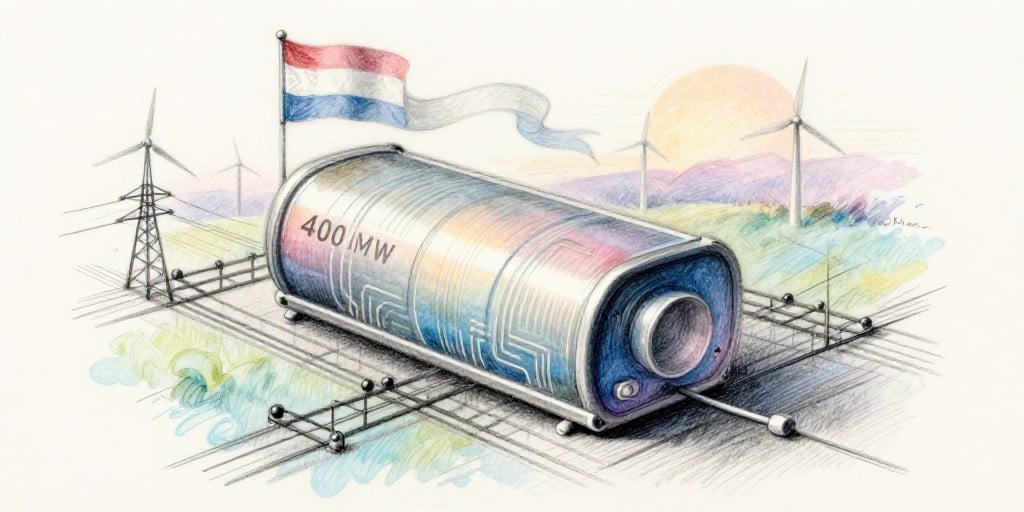
Infrastructure Investments: Capital expenditures (CapEx) targeted at the expansion of the high‑voltage transmission network and the development of a 500 MW battery storage facility in Lower Saxony.
Financial analysts project a 15 % EBITDA growth for the full fiscal year, contingent on stable commodity prices and continued policy support for renewable generation subsidies.
Participation in Global Energy Dialogue
During the 2026 ADIPEC event in Abu Dhabi, RWE’s Chief Executive, Markus Krebber, engaged in discussions focused on energy security, artificial intelligence (AI), and long‑term investment. While the conference covered a broad spectrum of topics, Krebber’s presence underscored RWE’s intent to:
Leverage AI for predictive maintenance and grid optimization, thereby reducing operational costs by an estimated 4–6 % annually.
Invest in Energy Security initiatives such as cross‑border interconnectors, which can enhance market resilience against geopolitical shocks, a topic increasingly relevant in the post‑COVID supply‑chain disruption era.
Secure Long‑Term Contracts: RWE’s strategy of entering into 20‑year power purchase agreements (PPAs) with industrial consumers positions it well to hedge against renewable feed‑in tariff fluctuations.
Skeptical Inquiry: Risks and Opportunities
| Area | Potential Risk | Possible Opportunity |
|---|---|---|
| Regulatory | Delays in EU renewable‑energy targets could reduce subsidies. | Aggressive compliance may unlock access to EU‑funded green bonds. |
| Capital Markets | Rising interest rates could increase borrowing costs for new projects. | RWE’s strong credit rating (A‑) may still secure favorable terms. |
| Technology | Rapid AI advancements could render existing infrastructure obsolete. | Early adoption of AI can improve asset utilization and reduce OPEX. |
| Geopolitics | U.S. policy shifts might alter trade dynamics for European technology. | Diversifying supply chains across Asia could mitigate dependency. |
The nuanced balance between these risks and opportunities will shape RWE’s trajectory in the coming fiscal year. The forthcoming financial statements will be critical in validating whether the company’s strategic initiatives are yielding tangible financial benefits or merely maintaining status quo.
Conclusion
RWE AG’s modest stock uptick, the forthcoming financial disclosures, and its active role in the 2026 ADIPEC underscore a company positioned at the nexus of regulatory compliance, financial prudence, and technological innovation. While the market’s reaction suggests cautious optimism, the true test will lie in RWE’s ability to convert its renewable‑energy strategy into sustained profitability, all while navigating an increasingly complex global energy landscape.