
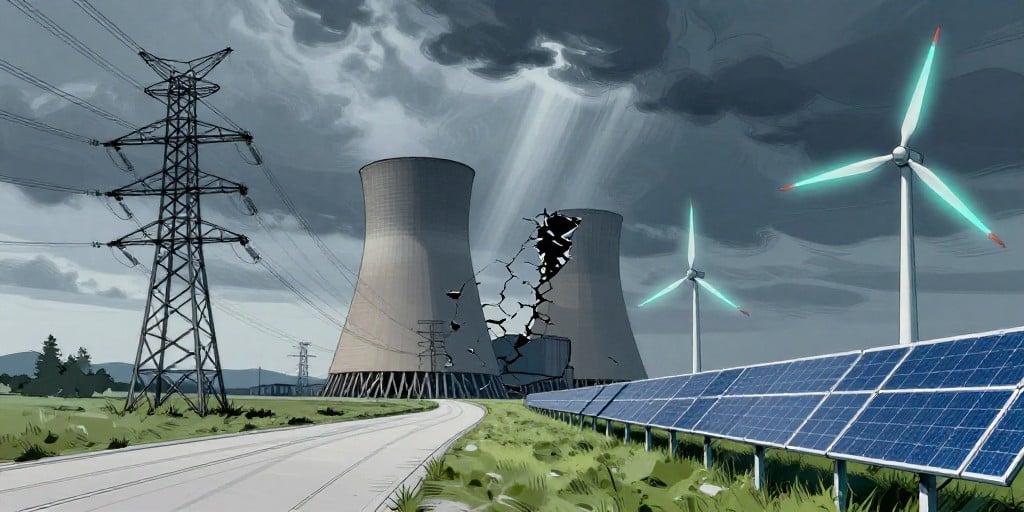
RWE AG’s Lignite Power Operations Disrupted by Grid Incident
RWE AG’s lignite-fired power units in the industrial heartland near the Rhine were taken offline following a second grid incident on Tuesday evening. Five coal‑fired units located at Niederaußem and Neurath were affected by a deliberate act that authorities are treating as a criminal offence. At the time of the event, the units had been supplying power to the national network.
Amprion, the transmission network operator responsible for the substation involved, reported that the general electricity supply remained stable and that system reliability was maintained. RWE indicated that most of the affected units would be restored the following day, with the remainder expected to come back online over the weekend. The incident has heightened concerns about the vulnerability of critical energy infrastructure in Germany, following a series of attacks on the country’s grid and other utilities earlier in the year.
The outage led to a significant temporary imbalance in the market, with preliminary prices for corrective balancing rising sharply in the hours immediately after the units went offline. RWE’s statement confirmed that the company was actively working to reintegrate the units into the network, with the aim of restoring the majority of its lignite capacity by the end of the week.
Industry Context and Market Implications
The lignite sector remains a pivotal component of Germany’s energy mix, providing a substantial share of the country’s baseload power while also representing a significant source of CO₂ emissions. RWE AG, one of the largest lignite producers and generators in Europe, operates a diversified portfolio that spans conventional thermal generation, renewable energy, and grid infrastructure. Disruptions to its lignite operations therefore reverberate across several fronts:
Supply Chain Stability Lignite plants are typically integrated with dedicated transport infrastructure. An outage not only curtails power generation but also impacts the logistical chain that supplies raw coal to the site. In the broader context of European energy security, any interruption to lignite supply can trigger cascading effects on downstream industries that rely on steady electricity feeds.
Market Pricing Dynamics The sudden loss of five units, each capable of delivering hundreds of megawatts, created a short‑term supply shortfall. In the European electricity markets, such gaps are mitigated through corrective balancing services. The spike in balancing prices immediately after the outage underscores the sensitivity of market mechanisms to grid reliability. While the impact was temporary, it signals the fragility of market equilibrium when faced with unexpected capacity losses.
Regulatory and Security Concerns Germany has been actively enhancing its critical infrastructure protection regime, particularly after a series of cyber‑physical attacks on grid assets. The classification of the incident as a criminal offence reflects a tightening regulatory stance. Operators like RWE are now compelled to invest in resilience measures that may include redundant systems, improved cybersecurity protocols, and real‑time monitoring capabilities.
Transition to Renewable Energy The lignite sector is under scrutiny as Germany accelerates its transition toward a low‑carbon energy mix. While lignite continues to play a role in maintaining grid stability, its long‑term viability is increasingly questioned. The incident adds pressure on policymakers to accelerate the deployment of renewable capacity, coupled with storage and demand‑response solutions that can absorb intermittent supply without compromising grid reliability.
Comparative Analysis Across Energy Sectors
The vulnerabilities exposed by the RWE incident echo challenges observed in other critical infrastructure domains:
Water Supply Systems Recent cyber incidents targeting water treatment plants have highlighted the cross‑sector risk posed by interconnected digital systems. Both sectors now recognize the necessity of adopting a holistic cyber‑physical resilience framework.
Telecommunications Infrastructure As 5G networks roll out, there is a growing convergence between energy and telecom infrastructures. Shared control systems and data analytics platforms create new attack vectors that must be secured concurrently.
Transportation Networks The electrification of transport—particularly electric vehicle charging grids—depends on stable, high‑capacity electricity supply. Disruptions in lignite generation can, therefore, ripple into mobility services, illustrating the economic interdependence of energy and transport sectors.
These parallels reinforce the principle that robust grid security is not a siloed concern but a foundational element of national economic resilience.
Strategic Outlook for RWE AG and the Broader Energy Market
Investment in Grid Resilience RWE’s response signals a potential shift toward greater investment in redundancy, such as backup generation capacity or advanced grid management tools. These measures will likely involve collaboration with transmission operators and regulators to align security protocols across the network.
Accelerated Renewable Integration The incident may serve as a catalyst for RWE to accelerate its renewable portfolio expansion. By diversifying its generation mix, the company can mitigate reliance on lignite and reduce exposure to similar incidents.
Policy Engagement RWE, alongside other industry stakeholders, is expected to engage policymakers on the necessity of updated regulations that balance security requirements with market competitiveness. This may involve advocating for incentives that support infrastructure hardening and digital transformation initiatives.
Market Participation Strategies To cushion against future supply shocks, RWE may explore enhanced participation in ancillary services markets, such as frequency response and reserve capacity. These services not only provide revenue streams but also contribute to grid stability.
Conclusion
The Tuesday evening incident involving RWE AG’s lignite operations underscores the inherent fragility of energy infrastructure when confronted with deliberate sabotage. It serves as a stark reminder of the interconnectedness of modern industrial systems and the cascading economic impacts that can arise from targeted disruptions. For RWE and the wider European energy sector, the event signals an imperative to fortify grid security, accelerate the transition to resilient renewable systems, and foster cross‑sector collaboration to safeguard national energy reliability.