
Corporate Update from RWE AG
On 2 December 2025, RWE AG released a series of market‑relevant disclosures that underscore its strategic trajectory in the renewable energy sector and its broader energy trading operations. The key developments announced on that day are summarized below, followed by an analytical assessment of their implications for the company and the wider energy market.
1. Share‑Buyback Programme
RWE has initiated a share‑buyback programme, signalling management’s confidence in the firm’s intrinsic value and the underlying fundamentals of its business model. The programme is expected to be executed over the next twelve months, subject to regulatory approval and market conditions. The buyback will be financed through a combination of cash reserves and short‑term debt, preserving the company’s liquidity position while returning value to shareholders.
Implications
- Capital Structure: A reduction in diluted share count is likely to lift earnings per share and improve return‑on‑equity metrics.
- Signal to Markets: The buyback can be interpreted as a bullish stance on long‑term profitability, potentially strengthening investor sentiment amid a volatile energy market.
- Tax Considerations: Depending on jurisdiction, dividends and buybacks may have different tax ramifications for shareholders, which could influence the timing of future capital allocation decisions.
2. Executive Transaction Disclosure
Senior executive Hauke Stars completed a transaction involving RWE shares, disclosed in accordance with the German Securities Trading Act (Wertpapierhandelsgesetz). The transaction was reported promptly, maintaining compliance with regulatory transparency requirements. No insider trading concerns have been raised.
Implications
- Governance: The timely disclosure reaffirms RWE’s adherence to corporate governance best practices.
- Market Perception: While individual transactions can be interpreted variably, the fact that the transaction was reported at the earliest opportunity mitigates potential reputational risk.
3. Amphibious Offshore Turbine Maintenance Vessel
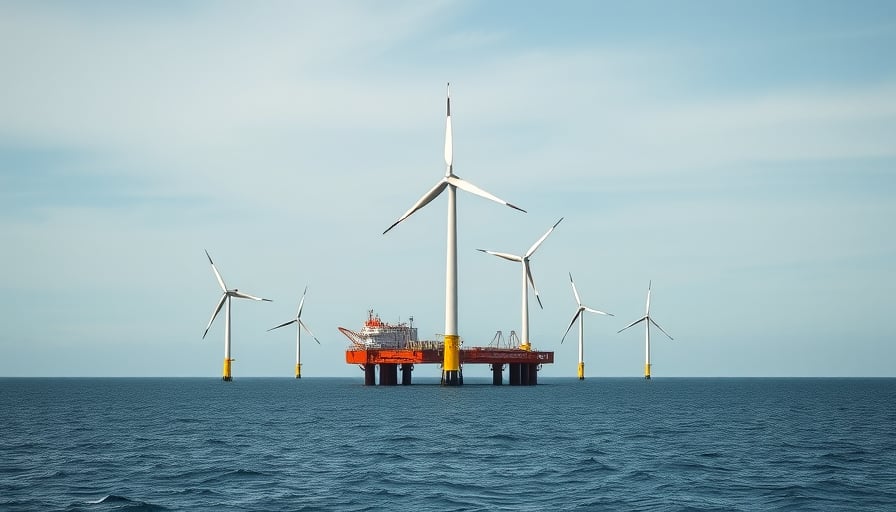
RWE has unveiled a new amphibious vessel designed for maintenance of offshore wind turbines. The vessel is equipped with advanced robotics, AI‑driven inspection systems, and a modular support deck, enabling rapid response to turbine servicing needs across the North Sea and beyond.
Implications
- Operational Efficiency: The amphibious design allows for direct deployment to floating wind farms and traditional fixed‑suction platforms, reducing transit times and operational costs.
- Competitive Positioning: By investing in state‑of‑the‑art maintenance infrastructure, RWE strengthens its service portfolio against competitors who rely on third‑party logistics.
- Environmental Impact: Improved maintenance turnaround can enhance turbine uptime, contributing to higher energy output and lower lifecycle emissions.
4. Battery‑Storage Project in the United Kingdom
The firm confirmed a sizeable battery‑storage installation in the United Kingdom, aligning with the UK’s aggressive net‑zero targets and the expansion of its green energy mix. The project will comprise multiple 100 MW battery modules, integrating with existing offshore wind farms and providing grid‑balancing services.
Implications
- Diversification: Entry into the UK’s battery market diversifies RWE’s renewable portfolio beyond generation into storage, a critical enabler for high‑penetration renewables.
- Revenue Streams: Grid services such as frequency regulation and peak shaving can generate additional revenue, offsetting variability in wind generation.
- Synergy with European Projects: Lessons learned from UK deployment can inform similar projects across the EU, particularly under the European Green Deal framework.
Broader Market Context
The above announcements reflect RWE’s strategic emphasis on three intertwined pillars: renewable generation, energy trading, and infrastructure expansion. This triad aligns with macro‑economic trends such as:
- Energy Transition Momentum: Global policy shifts toward decarbonisation are creating demand for renewable assets and ancillary services, including storage and maintenance solutions.
- Commodity Price Volatility: Energy trading remains a critical hedge against fuel price fluctuations, and RWE’s enhanced trading capabilities are positioned to exploit arbitrage opportunities across European markets.
- Capital Allocation Discipline: The share‑buyback demonstrates prudent capital management amidst a backdrop of high borrowing costs and regulatory scrutiny over ESG compliance.
By integrating advanced technology into its service offering and expanding its geographical footprint, RWE is well‑positioned to navigate the evolving energy landscape. The company’s moves suggest a proactive approach to capitalizing on regulatory incentives while mitigating operational risks inherent in offshore wind and storage deployment.
This article presents an objective analysis of RWE AG’s recent corporate disclosures and their implications within the broader energy sector.