RWE AG’s Share Performance Amid Sector‑Wide Volatility: A Technical Perspective on Power System Dynamics
RWE AG’s shares recorded a modest decline during the latest trading session, dipping below the level logged the previous day. The German energy group was listed among the weaker performers within the broader DAX index, which finished slightly lower than its prior close. While several high‑profile names—SAP SE, Fresenius Medical Care, Bayer, Deutsche Börse, and Siemens Healthineers—posted gains, RWE lagged behind, reflecting broader volatility within the utilities sector.
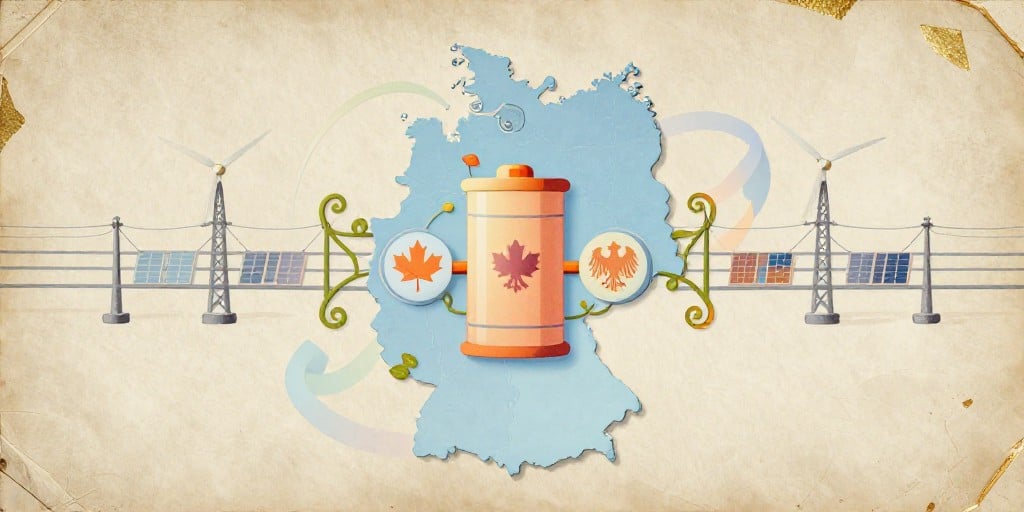
Although the price movement was small, it underscores the sensitivity of utility valuations to both market sentiment and underlying power‑system considerations. RWE’s shares, representing one of the largest market capitalisations in the index, attracted moderate trading volume but maintained high liquidity relative to many other listed utilities. Industry analysts note that this continued focus on the energy transition and infrastructure investment shapes the company’s outlook. RWE’s involvement in the Canada‑Germany Strategic Partnership Agreement—aimed at strengthening resource security and supporting the development of batteries and renewable energy infrastructure—highlights its long‑term strategic planning. The partnership seeks to reduce reliance on Asian supply chains for critical minerals and energy resources, potentially influencing RWE’s supply‑chain and investment decisions.
Grid Stability in an Expanding Renewable Mix
The German grid, like many modern power systems, is undergoing a rapid transition from a fossil‑fuel‑centric base to one dominated by variable renewable energy (VRE) sources. This shift introduces stochasticity in generation profiles, challenging the traditional mechanisms that maintain frequency and voltage stability. RWE’s operational footprint spans generation, transmission, and distribution, placing the company at the nexus of these technical challenges.
Key stability issues include:
- Frequency Regulation: The loss of synchronous inertia from fossil plants requires fast frequency response from inverter‑based resources (IBRs). RWE’s portfolio of solar and wind farms must be coupled with energy storage or demand‑response capabilities to provide ancillary services.
- Voltage Control: High penetrations of VRE can lead to voltage rise issues during low load conditions. RWE’s distribution networks employ smart inverter functionalities (dynamic reactive power support) to mitigate these effects.
- Transient Stability: Sudden loss of a large generation source can trigger cascading faults. Grid codes now mandate advanced protection schemes, and RWE’s grid operators must continually update protection settings to account for new renewable interconnections.
Integrating these technologies demands substantial investments in both hardware (e.g., power electronics, battery systems) and software (advanced forecasting, real‑time monitoring). Regulatory bodies such as the German Federal Network Agency (Bundesnetzagentur) have introduced incentive mechanisms—like the “Grid Expansion and Integration” funding—to accelerate these upgrades.
Renewable Energy Integration Challenges
The energy transition imposes several constraints on utility planning:
- Spatial Mismatch: Wind and solar resources are often geographically distant from demand centers, requiring extensive transmission infrastructure. RWE’s strategic positioning in the North Sea wind hub and the German continental grid necessitates long‑distance high‑voltage direct current (HVDC) links to convey power efficiently.
- Temporal Mismatch: Renewable output peaks often occur during low demand periods, leading to curtailment risks. RWE’s investment in flexible generation (e.g., gas turbines with rapid ramp‑rate capabilities) and demand‑side management is critical to absorbing surplus energy.
- System Protection: IBRs can introduce harmonics and flicker, challenging existing protection schemes. RWE’s engineering teams are deploying adaptive protection algorithms and power‑quality monitoring to preserve system reliability.
The company’s participation in the Canada‑Germany Strategic Partnership Agreement positions it to secure critical mineral supplies (lithium, cobalt, nickel) necessary for large‑scale battery deployment. By diversifying supply chains, RWE mitigates geopolitical risks and aligns its asset portfolio with the projected growth of VRE and storage.
Infrastructure Investment Requirements
The projected growth trajectory for renewable capacity in Germany—targeting 80 GW of wind and 70 GW of solar by 2035—necessitates a total transmission investment of approximately €400 billion over the next decade. Key investment components include:
- High‑Voltage Transmission: Construction of 380 kV and 800 kV lines to interconnect wind farms, especially in the north‑east and north‑west regions.
- HVDC Backbones: Implementation of submarine and terrestrial HVDC links to facilitate cross‑border power exchange with neighboring countries.
- Grid Modernization: Deployment of smart grid technologies (advanced SCADA, Phasor Measurement Units, and distributed energy resource management systems) to enable real‑time balancing.
- Energy Storage: Large‑scale battery installations (≥10 GW) to provide frequency regulation and grid‑stabilizing services.
RWE’s capital allocation strategy is aligned with the European Union’s Net Zero Emissions by 2050 framework, emphasizing modular, scalable storage solutions and flexible generation. The company’s financial performance, however, remains sensitive to the pace of infrastructure deployment and the availability of financing instruments.
Regulatory Frameworks and Rate Structures
Germany’s energy policy framework—encompassing the Energy Industry Act (EnWG) and the Renewable Energy Sources Act (EEG)—establishes the regulatory environment in which RWE operates. The EEG’s feed‑in tariff mechanism, which guarantees a fixed price for renewable electricity, has been gradually phased out in favor of auction‑based markets. This shift introduces market volatility but also drives cost efficiency.
Key regulatory factors influencing RWE’s economics include:
- Tariff Design: Transition from guaranteed feed‑in tariffs to competitive auctions reduces revenue certainty for renewable assets. RWE must balance risk by diversifying its portfolio and engaging in long‑term power purchase agreements (PPAs).
- Grid Fees: The “Net Grid Contribution” (Nettomengeabgabe) and “System Contribution” (Systembeitrag) levied by the Bundesnetzagentur affect operating costs. These fees are increasingly adjusted to reflect the grid’s demand for stability services.
- Renewable Integration Charges: In regions with high VRE penetration, additional charges (e.g., “Flexibility Fees”) are imposed to fund the acquisition of ancillary services.
From a rate‑setting perspective, the Bundesnetzagentur’s “Tariff Regulation” mandates that transmission system operators (TSOs) ensure that tariffs reflect the true cost of infrastructure investments, while maintaining affordability for end‑users. RWE’s dual role as a generator and a distribution operator necessitates careful alignment between generation revenue streams and distribution tariffs to maintain financial viability.
Economic Impacts on Consumer Costs
The interplay between infrastructure investment, regulatory fees, and renewable integration translates into measurable impacts on consumer electricity prices. Key dynamics include:
- Infrastructure Costs Transfer: Capital expenditures on new transmission lines and grid upgrades are recovered through regulated tariffs. Studies estimate that for every €1 of grid investment, residential prices increase by €0.05–€0.10 over a 20‑year horizon.
- Renewable Curtailment Costs: When renewable output exceeds demand and grid constraints prevent dispatch, curtailment costs are absorbed by consumers through higher tariffs.
- Ancillary Service Fees: The cost of frequency regulation and voltage support from IBRs is allocated to end‑users, albeit partially mitigated by subsidies and incentive mechanisms.
RWE’s strategic focus on grid modernization and storage deployment is intended to reduce curtailment frequency and enhance the provision of ancillary services, thereby stabilizing consumer costs in the long term.
Conclusion
RWE AG’s modest share price decline is a reflection of broader sector volatility rather than a fundamental shift in its operational or financial footing. Technically, the company stands at the forefront of addressing grid stability challenges, renewable integration hurdles, and infrastructure investment imperatives. Its involvement in international strategic initiatives, particularly the Canada‑Germany partnership, underscores a proactive approach to securing critical resources for the energy transition.
In an evolving regulatory landscape that increasingly rewards flexibility and decarbonization, RWE must continue to align its investment strategy with the grid’s technical needs and consumer price sensitivities. The company’s performance will ultimately hinge on its ability to navigate the complex interplay of power‑system dynamics, regulatory frameworks, and economic forces driving the global shift toward a sustainable, resilient energy future.