
Corporate Update: RWE AG’s Portfolio Reallocation and Strategic Long‑Term Agreements
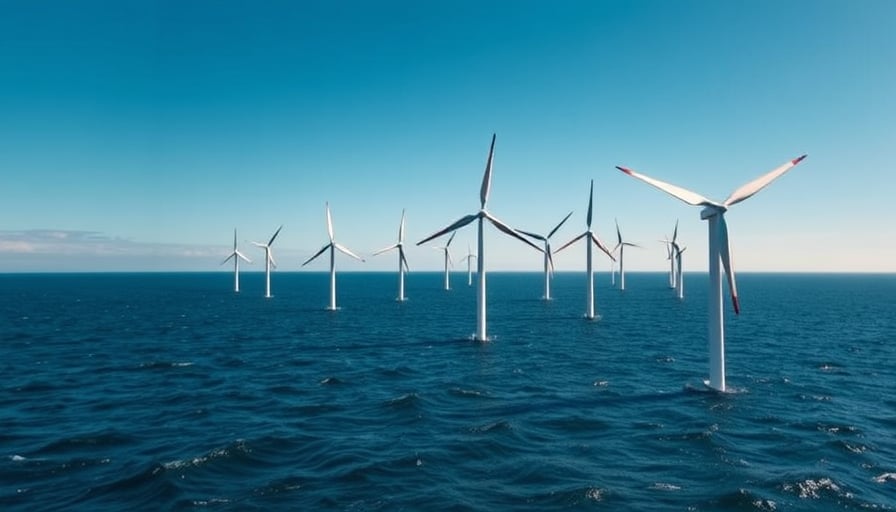
RWE AG has confirmed a deliberate rebalancing of its renewable asset portfolio, announcing the divestiture of a prominent offshore wind installation situated in the Polish Baltic Sea. The transaction is positioned to liberate substantial capital that will be re‑allocated toward expansion initiatives in the United Kingdom and the United States, a maneuver that Deutsche Bank analysts have characterized as an advancement toward a “quality over quantity” strategy.
Portfolio Optimisation and Capital Deployment
The Polish offshore wind asset, which contributed significantly to RWE’s offshore output, has been earmarked for sale. By excising this project, RWE aims to consolidate its focus on higher‑yield, lower‑risk renewable sources that can deliver stable cash flows through long‑term power purchase agreements (PPAs). The proceeds are slated to underwrite the development and acquisition of new generation facilities in regions where grid integration and market structures are perceived to be more favorable for renewable penetration.
Long‑Term Agreements in the United Kingdom
In the United Kingdom, RWE has secured a five‑year PPA with Thames Water. Under this arrangement, the company will supply renewable electricity to meet a defined portion of the water utility’s operational demand. The contract exemplifies a utility‑to‑utility model that can reduce inter‑sectoral carbon footprints and create synergies between water and energy infrastructures. From a grid stability perspective, the integration of renewable supply into a large, demand‑side managed customer such as Thames Water offers opportunities for demand‑response participation and ancillary services that enhance system resilience.
Long‑Term Agreements in the United States
Across the Atlantic, RWE has partnered with Indiana Michigan Power Company (IMPC) to deliver the output of its Prairie Creek 200‑MW project to the state of Indiana under a long‑term contract. The Prairie Creek facility, located within a region experiencing growing electricity demand, will provide a steady supply of wind‑generated power that can offset variable fossil‑fuel generation. The contract structure, incorporating fixed pricing and performance guarantees, aligns with the regulatory framework of the Midwest Independent System Operator (MISO) and supports the state’s renewable portfolio standards.
Implications for Grid Stability and Renewable Integration
The divestiture and subsequent re‑investment strategy underscore RWE’s intent to maintain a portfolio that is not only generation‑dense but also strategically positioned to bolster grid stability. By focusing on PPAs with large, stable consumers, RWE reduces exposure to wholesale market volatility and aligns generation dispatch with predictable demand curves. This alignment facilitates the provision of ancillary services such as frequency regulation and voltage support, which are essential for accommodating higher shares of intermittent renewable resources.
From an engineering perspective, the integration of offshore and onshore wind projects with utility‑scale PPAs creates a balanced load profile, mitigating the variability that can strain transmission and distribution systems. The long‑term nature of the contracts ensures that investment in grid upgrades—such as enhanced substation capacity, high‑capacity transmission corridors, and advanced energy‑storage solutions—is economically justified.
Regulatory and Rate‑Structure Considerations
The UK’s regulatory environment, governed by the Office of Gas and Electricity Markets (Ofgem) and the Department for Business, Energy & Industrial Strategy, has recently introduced incentives for renewable generation procurement by large utilities. These incentives are reflected in the tariff structures that Thames Water can offer to RWE, potentially lowering the levelized cost of electricity (LCOE) for the wind asset. In the United States, the Indiana MISO framework provides a transparent market mechanism for dispatching wind generation and compensating for grid services, which can improve the financial returns of projects like Prairie Creek.
Furthermore, both regions are moving toward decoupling of utility revenues from sales volumes—a shift that encourages utilities to prioritize renewable procurement and grid reliability over traditional revenue models. RWE’s PPAs, therefore, dovetail with the evolving regulatory landscape, positioning the company favorably as utilities adopt more consumer‑centric rate structures.
Economic Impact on Utility Modernization
The capital reallocation and long‑term contracting strategy support utility modernization in several key ways:
- Cost Predictability: Fixed‑price PPAs reduce exposure to fuel‑price volatility, allowing utilities to forecast energy costs more accurately and potentially lower consumer tariffs.
- Infrastructure Investment: The certainty of long‑term supply contracts justifies investment in transmission upgrades, such as reinforcement of inter‑regional corridors and deployment of smart‑grid technologies.
- Renewable Portfolio Standards Compliance: By ensuring a stable supply of wind power, utilities can meet renewable portfolio standards more efficiently, avoiding costly curtailment penalties or reliance on fossil‑fuel backups.
- Grid Resilience: Enhanced renewable generation coupled with grid upgrades improves resilience against extreme weather events, reducing outage durations and associated economic losses.
Conclusion
RWE AG’s strategic asset reshuffle—divesting a Polish offshore wind project to fund new opportunities in the UK and the US—demonstrates a sophisticated approach to balancing portfolio risk and return in an era of rapid renewable adoption. By securing long‑term PPAs with major utilities, the company not only secures stable revenue streams but also contributes to grid stability, regulatory compliance, and the broader objective of decarbonizing the power system. These moves are poised to have a meaningful impact on the economic landscape of utility modernization, shaping consumer costs and the future trajectory of the energy transition.