
Corporate Update: RWE AG’s First‑Quarter Performance and its Implications for Power System Modernization
RWE AG’s first‑quarter financial release, issued on 12 May, reinforced the company’s 2026 earnings outlook. Adjusted earnings per share (EPS) and net income largely aligned with consensus forecasts, while a substantial one‑off benefit—stemming from a Dutch coal‑compensation settlement—propelled the firm toward the upper end of its full‑year net‑income guidance. Barclays reiterated its overweight rating and maintained a price target in the mid‑sixties, whereas Deutsche Bank upgraded RWE to a buy recommendation with a comparable target range.
Capital Expenditure and Renewable Integration
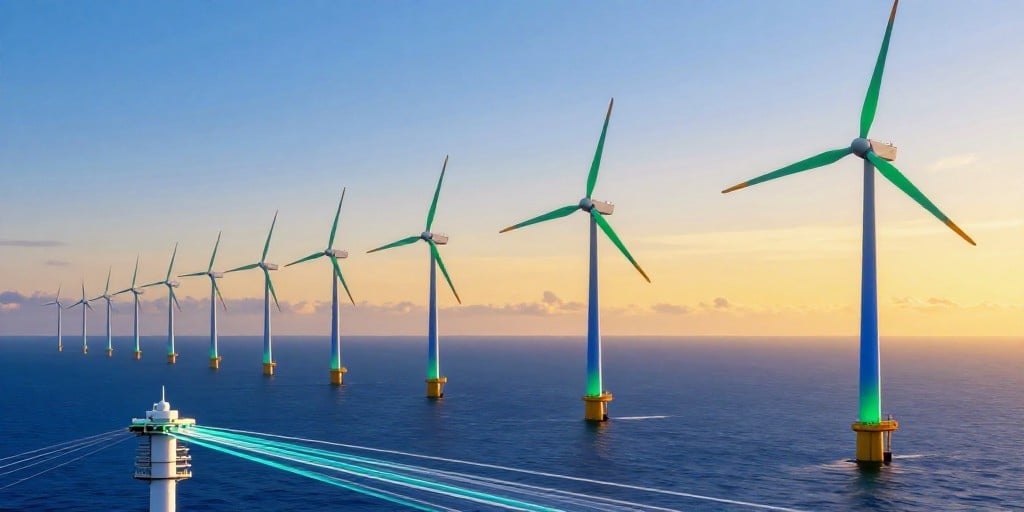
The quarter’s results underscore the impact of RWE’s capital‑expenditure (CapEx) programme, particularly the commissioning of offshore wind projects in the North Sea. The German energy group secured development consent for two large offshore wind farms, each expected to supply an output equivalent to several million UK households. These assets are part of a broader European strategy to increase renewable penetration and are viewed as a key driver of RWE’s future earnings.
From an engineering perspective, the integration of such large offshore wind farms presents several grid‑stability challenges. High‑capacity wind generation introduces significant inertia loss, which can affect frequency regulation. To mitigate this, RWE is investing in synchronous condensers and digital grid‑management systems that enable fast‑acting frequency response. Moreover, the company is deploying advanced power‑electronics‑based converters to enhance voltage support and reactive power control across the transmission network.
Grid Stability and Infrastructure Investment
Grid stability in a high‑renewable regime requires a resilient transmission and distribution architecture capable of handling bidirectional power flows and rapid power‑quality fluctuations. RWE’s strategic investments in high‑voltage direct current (HVDC) links to the North Sea and in smart‑grid substations aim to increase network flexibility. These upgrades reduce the need for costly frequency‑regulation ancillary services by providing inherent inertia through HVDC converters and allowing remote control of reactive power.
Infrastructure investment also addresses the “last‑mile” distribution challenge. As distributed energy resources (DERs) proliferate, RWE is deploying modular micro‑grid solutions and battery storage at the distribution level. This not only stabilizes local voltages but also facilitates peak shaving, which can lower overall system losses and defer the need for new transmission corridors.
Regulatory Frameworks and Rate Structures
European regulatory bodies are increasingly mandating grid upgrades and renewable integration. The European Commission’s “Grid Code” revisions now require utilities to provide grid‑support services such as inertia, frequency response, and voltage control, with penalties for non‑compliance. RWE’s investment portfolio is designed to meet these evolving standards, ensuring both regulatory compliance and competitive advantage.
From a rate‑payer perspective, the cost implications of these upgrades are mediated by the structure of electricity tariffs. RWE’s tariff design separates a fixed distribution charge from a variable generation cost component. The fixed charge absorbs a large portion of CapEx, allowing the company to spread the financial burden of grid infrastructure over a longer period. However, the variable component is sensitive to fuel and renewable subsidy fluctuations. Analysts project that the increased investment in renewables will ultimately reduce variable costs due to declining wind and solar levelized costs of electricity (LCOE), offsetting the higher CapEx.
Economic Impacts of Utility Modernization
The modernization of power systems carries significant economic implications for both the utility and its consumers. For RWE, the upfront CapEx is high, but the long‑term operational cost savings—through lower fuel expenses, reduced transmission losses, and minimized need for spinning reserve—enhance profitability. The one‑off benefit from the Dutch settlement further improves the short‑term balance sheet, providing additional liquidity to fund future projects.
For consumers, the transition to a renewable‑heavy grid can translate into lower average cost of electricity (COE) in the medium term. Nevertheless, the interim period may witness a modest uptick in distribution charges as utilities amortize the cost of grid upgrades. Policymakers and regulators are exploring mechanisms such as cost‑allocation rules and renewable energy tariffs to ensure that the benefits of clean energy are equitably distributed.
Market Reception and Outlook
European equity indices ended the week on a modestly positive note, buoyed by earnings reports and a cautiously optimistic outlook following the U.S.–China summit. Within the utilities sector, RWE’s share price advanced slightly, reflecting confidence in its first‑quarter performance and the projected trajectory of its renewable portfolio. The combination of solid quarterly results, a significant one‑off benefit, and the acceleration of renewable projects positions RWE favorably for the remainder of the year.
In summary, RWE’s strategic focus on offshore wind, grid‑stabilization technologies, and compliant tariff structures illustrates a comprehensive approach to power system modernization. The company’s actions are aligned with the broader European transition toward a resilient, low‑carbon electricity network, and they are expected to generate long‑term value for shareholders, regulators, and end‑users alike.