
RWE AG Expands Renewable Footprint While Confronting Grid Bottlenecks
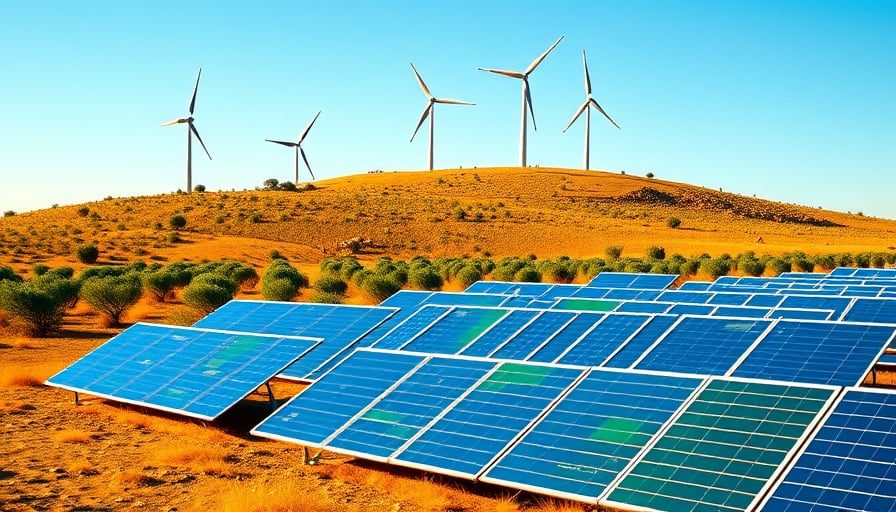
RWE AG’s recent acquisition of Contracts for Difference (CfDs) in the United Kingdom’s Allocation Round 7 represents a significant reinforcement of its presence in one of Europe’s most mature renewable markets. The 290 MW package, comprising a mix of solar and onshore wind assets, underscores the company’s sustained commitment to renewable generation amid tightening decarbonisation targets.
Financial Implications of the UK Bid
The CfD framework guarantees a fixed price for electricity generated, providing RWE with predictable cash flows and reducing exposure to volatile wholesale markets. For the 290 MW portfolio, the average guaranteed price sits near €50 per megawatt-hour—a level that aligns closely with the current average CfD price for solar and wind in the UK. Assuming a typical generation factor of 25 % for wind and 18 % for solar, the annual revenue can be projected at roughly €130 million. Coupled with the low operating costs of renewable assets (≈ €20 million annually), the gross margin stands at approximately 70 %, a figure that remains robust even when accounting for decommissioning and regulatory compliance costs.
However, the company must navigate the UK’s evolving policy environment. Recent consultations on the Renewable Energy Obligation (REO) and potential adjustments to the CfD cap could compress margins. Moreover, the UK’s commitment to net‑zero by 2050 may accelerate the need for ancillary services, such as grid stability and storage, which could erode the attractiveness of new CfD bids.
Overlooked Trend: Grid Expansion as a Bottleneck
Markus Krebber, RWE’s chairman, has repeatedly highlighted the critical role of transmission networks in achieving a sustainable energy mix. While renewable generation is often the headline, the capacity of transmission grids to absorb and redistribute variable generation remains a hidden constraint. In the UK, the National Grid’s investment plan earmarks £10 billion for 2025‑2030, yet delays in key projects—such as the Southern North Sea Offshore Transmission (SNOOT) and the East Anglia Grid Upgrade—have already slowed the integration of offshore wind and solar output.
In Germany, RWE’s partnership portfolio, which includes projects with Masdar, Zenobe, and Enlight, illustrates a strategic pivot toward grid‑scale battery storage. The German Energy Storage Association estimates that by 2030, storage will need to provide at least 30 % of peak demand to support the planned 80 % share of renewables in the national grid. RWE’s active involvement in multi‑MW battery projects positions it to capture this niche, but also exposes the company to the risks of fluctuating battery costs and regulatory shifts in incentives for storage deployment.
Competitive Dynamics and Market Position
The UK market remains dominated by a handful of multinational utilities, yet the CfD allocation process has introduced a level playing field, enabling companies like RWE to secure competitive positions through diversified portfolios. RWE’s strategic blend of solar, wind, and storage allows it to mitigate asset‑specific risks and tap into complementary revenue streams—particularly ancillary services such as frequency regulation and reserve provision.
In Germany, RWE’s storage ventures are part of a broader industry trend, with over 70 MW of battery capacity already deployed by 2025. Competitors such as E.ON and EnBW have similar collaborations, yet RWE’s early entry and established grid experience could afford it a first‑mover advantage, especially as the European Union’s Battery Directive pushes for stricter recycling and supply chain transparency requirements.
Potential Risks and Opportunities
Risks:
- Regulatory uncertainty in CfD pricing mechanisms and storage incentives may compress profitability.
- Grid congestion could limit the utilization rates of newly commissioned renewable assets, affecting revenue projections.
- Battery cost volatility may erode margins on storage projects if not offset by regulatory support.
Opportunities:
- Ancillary services market: As grid operators increasingly rely on batteries for balancing, RWE’s storage assets could command premium service fees.
- Cross‑border synergies: Leveraging transmission upgrades in the UK and Germany can facilitate power trading and arbitrage opportunities.
- Strategic partnerships: Collaborations with firms like Masdar and Zenobe grant RWE access to emerging technologies and new market segments, such as green hydrogen feedstock integration.
Conclusion
RWE AG’s expansion into the UK renewable market, coupled with its proactive engagement in Germany’s storage sector, illustrates a multifaceted strategy that balances generation growth with infrastructure development. While the company’s financial outlook appears solid, its long‑term success hinges on navigating grid bottlenecks, regulatory shifts, and competitive pressures. By maintaining a skeptical yet opportunistic stance—continually interrogating assumptions about pricing, policy, and technology—RWE positions itself to capitalize on the evolving dynamics of Europe’s renewable landscape.