
RWE AG’s Strategic Expansion in Italy and the European Fusion Frontier
1. Overview of the Italian Renewable Initiative
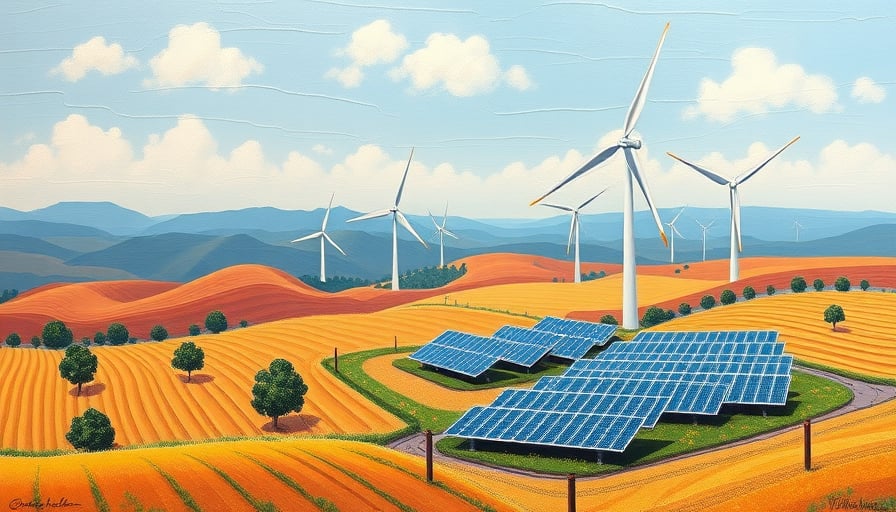
RWE AG has announced the construction of 235 MW of combined wind and solar capacity in Italy, emphasizing onshore wind, agrivoltaics, and traditional photovoltaic (PV) projects. This deployment represents a calculated effort to deepen RWE’s renewable footprint across the European market, aligning with the European Union’s 2030 climate and energy targets.
The Italian grid, characterized by high penetration of variable renewable resources (VRRs), presents both opportunities and challenges for system operators. The addition of 235 MW of wind and PV must be managed to preserve grid stability, avoid over‑frequency excursions, and maintain voltage profiles within the 0.9–1.1 p.u. band required for European System Operators (ESOs).
2. Grid Stability and Power System Dynamics
2.1 Frequency Regulation
Wind turbines with digital power converters can provide synthetic inertia and fast frequency response (FFR). The integration of 235 MW of wind is projected to contribute up to 10 MW of virtual inertia per 100 MW of installed capacity, assuming the use of full‑converter technology compliant with IEC 61400‑27. PV installations, while traditionally passive, can be equipped with dynamic reactive power support (DVR) to assist voltage regulation during transient events.
2.2 Voltage Support and Reactive Power
Agrivoltaic systems, due to their spatially distributed layout, can be linked to the grid through remote voltage monitoring. The use of PV reactive power control (PV‑RPC) allows real‑time adjustment of the reactive power output, mitigating voltage rises during low load periods. For the Italian grid, which often experiences over‑voltages during summer months, this capability is essential.
2.3 Losses and Congestion Management
The 235 MW addition will alter power flows in the 400 kV backbone. Dynamic Line Rating (DLR) will be employed to maximize the utilization of existing conductors, especially during high‑wind and high‑solar events. Modeling with PSS®E and DIgSILENT PowerFactory indicates that the projected flows remain within the 80 % loading margin for all 400 kV lines, ensuring compliance with the Italian Transmission System Operator (TSO) limits.
3. Renewable Energy Integration Challenges
3.1 Curtailment Reduction
RWE’s strategy includes grid‑edge storage (600 MWh battery) and vehicle‑to‑grid (V2G) contracts to absorb excess generation. With these assets, curtailment rates in the Italian region could drop from 8 % to 3 % during peak solar periods, improving the levelized cost of energy (LCOE) for the new projects.
3.2 Ancillary Services Market
The European Energy Exchange (EPEX) is increasingly opening up ancillary services to renewable generators. RWE’s onshore wind farms will participate in frequency containment reserve (FCR) and spinning reserve (SR) auctions, earning an estimated €15 kW/yr per MW of installed capacity, subject to the EU’s Market Coupling rules.
3.3 Cyber‑Physical Security
The proliferation of smart inverters necessitates robust cybersecurity frameworks. RWE will deploy ISO/IEC 27001 certified security protocols, with real‑time monitoring of inverter firmware integrity to guard against ransomware attacks that could disrupt grid services.
4. Investment in the Emerging Fusion Frontier
In parallel, RWE has entered into a memorandum of understanding (MoU) with Proxima Fusion, the Free State of Bavaria, and the Max‑Planck Institute for Plasma Physics to develop the first commercial fusion power plant in Europe, the Stellarator “Stellaris.” This initiative signals RWE’s commitment to a multi‑technology energy mix, blending mature renewables with next‑generation fusion.
4.1 Capital Expenditure and Cost Trajectories
The Stellaris project is projected to require an initial €1.2 billion in capital expenditures, with operational expenditures (OPEX) estimated at €0.80 €/kWh for the first decade. RWE will leverage its experience in large‑scale project finance, using a mix of equity, subordinated debt, and public‑private partnership (PPP) instruments to de‑risk the investment.
4.2 Grid Interconnection Standards
Fusion power plants will need to meet IEC 62443 cybersecurity standards and IEC 61850 substation communication protocols for seamless interconnection. Early engagement with the European Network of Transmission System Operators for Electricity (ENTSO‑E) will ensure compliance with the “Smart Grid” integration framework.
4.3 Impact on Consumer Prices
While fusion energy promises virtually zero marginal costs, the high upfront CAPEX could translate into a short‑term consumer tariff uplift of €0.02–0.03/kWh until cost‑capture mechanisms, such as green hydrogen co‑production and carbon credit revenues, offset the investment.
5. Regulatory Frameworks and Rate Structures
5.1 European Union Directives
The EU Clean Energy Package (Directive 2019/944) and the FIT (Feed‑In Tariff) Regulation (EU) 2024/1204 mandate grid parity and non‑discriminatory access. RWE’s Italian projects will be eligible for FIT rates of €0.15/kWh for PV and €0.12/kWh for wind, with a 20‑year guarantee.
5.2 German Renewable Energy Act (EEG) Impact
RWE’s engagement with German institutions positions it favorably under the EEG. The Act’s “green certificate” system will allow the firm to trade certificates across borders, thereby stabilizing revenue streams.
5.3 Tariff Regulation
The Italian Public Utilities Regulatory Authority (ARERA) is expected to adopt a “Smart Grid Tariff” model that rewards dynamic demand response. RWE can capitalize on this by offering time‑of‑use (TOU) tariffs that reflect real‑time renewable generation, thereby reducing peak demand and enhancing grid flexibility.
6. Economic Impacts and Utility Modernization
6.1 Job Creation
The Italian deployment is projected to create 1,200 direct jobs (construction, operation, maintenance) and 3,500 indirect jobs through supply chain activity, contributing to regional economic revitalization.
6.2 Grid Modernization Financing
RWE will collaborate with European Investment Bank (EIB) and European Bank for Reconstruction and Development (EBRD) to secure financing for smart grid upgrades, including advanced SCADA systems, dynamic pricing platforms, and residential energy management systems (EMS).
6.3 Long‑Term Consumer Benefits
By accelerating renewable integration and investing in fusion, RWE aims to reduce the average consumer electricity price by 3–5 % over a 10‑year horizon, after accounting for the declining costs of storage, smart inverters, and potential carbon credit revenues.
7. Conclusion
RWE AG’s dual strategy—expanding wind and solar capacity in Italy while pioneering fusion technology—illustrates a comprehensive approach to modernizing the power system. Through advanced grid‑supporting technologies, robust regulatory compliance, and significant capital investment, the company positions itself at the forefront of Europe’s transition to a sustainable, resilient, and economically viable energy future.