
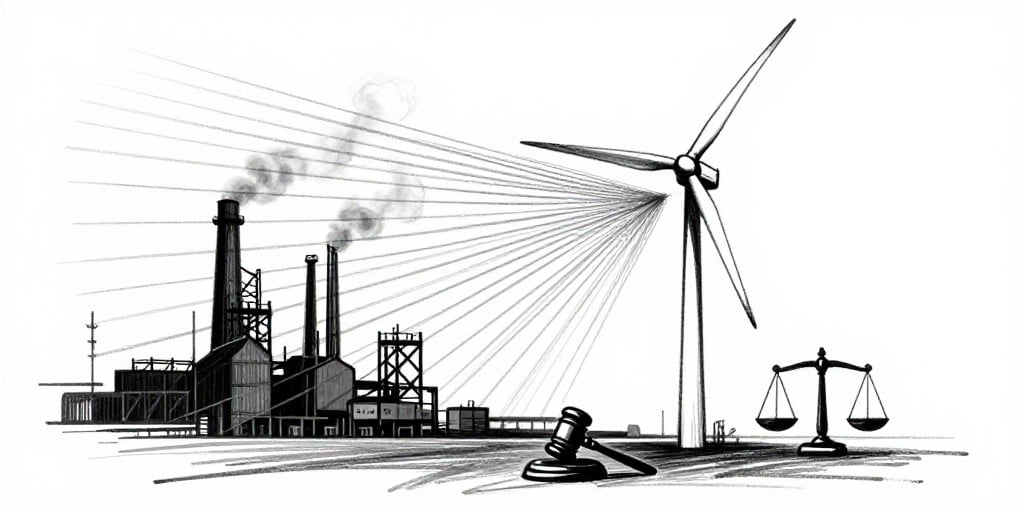
Corporate News: RWE AG Navigates Regulatory Challenges and Expands Low‑Carbon Supply Chains
RWE AG, the German energy conglomerate, is confronting a complex regulatory landscape while simultaneously advancing its low‑carbon manufacturing footprint. Two recent developments illustrate this dual strategy: a judicial review that threatens the Dogger Bank South offshore wind project in the North Sea, and a memorandum of understanding (MoU) with Canada Nickel Co. Inc. to commercialise low‑carbon stainless and alloy steels derived from the Crawford Nickel Project.
Regulatory Uncertainty Threatens the Dogger Bank South Project
Background The Dogger Bank South (DBS) project, a 1.5‑GW offshore wind farm, was granted development consent by the UK government in 2021 after a rigorous assessment of environmental, technical, and community impacts. However, in February 2024, a consortium of neighbouring wind farm owners—SSE Plc, Equinor ASA, and Vargronn—filed a judicial review in the UK High Court. The challenge alleges that the Department for Business, Energy & Industrial Strategy (BEIS) failed to properly consider the cumulative environmental effects and the impact on existing marine operations, thereby questioning the legitimacy of the approval process.
Potential Impact
- Project Delay or Cancellation: If the court rules that the approval was flawed, RWE could be forced to halt construction, re‑apply, or abandon the project entirely.
- Financial Consequences: Legal fees, potential compensation to affected parties, and the cost of re‑assessment could amount to several hundred million euros.
- Reputational Risk: A perceived lack of regulatory diligence may erode stakeholder confidence and hinder future approvals in the UK and EU markets.
Competitive Dynamics The UK’s offshore wind sector is highly concentrated, with the top five developers accounting for more than 80 % of installed capacity. A setback for RWE could enable competitors such as Ørsted, SSE, and Equinor to capture a larger share of the lucrative North Sea market. Moreover, the UK government’s “green recovery” agenda and the Net‑Zero Emissions Target 2050 place high expectations on developers to deliver on time; delays could trigger political backlash and tighter scrutiny of future projects.
Regulatory Environment
- BEIS Oversight: The Department’s approval process involves multiple stages—technical review, environmental impact assessment, and public consultation. Failure to meet statutory criteria can lead to judicial review.
- European Commission Directives: The EU’s Renewable Energy Directive (RED II) and the upcoming Offshore Energy Regulation (OER) emphasize transparency and public participation, adding layers of compliance.
- CBAM Implications: While not directly linked to offshore wind, the Carbon Border Adjustment Mechanism (CBAM) could affect the overall energy mix, influencing policy priorities and project financing.
Investigation‑Based Insights
- Unseen Trends: A growing number of legal challenges against offshore wind approvals may signal a shift in stakeholder expectations, particularly from local communities and marine industries.
- Risk Assessment: RWE should consider a scenario analysis, projecting the financial impact under a 10‑year construction delay versus a full cancellation.
- Opportunity: A successful court outcome could lead to a stricter regulatory framework, prompting RWE to pre‑emptively strengthen its compliance procedures and position itself as a “regulatory pioneer” in future bids.
Strategic Expansion in Low‑Carbon Steel Production
Partnership Overview RWE AG has signed an MoU with Canada Nickel Co. Inc. to commercialise low‑carbon stainless and alloy steel products derived from the Crawford Nickel Project. The partnership will leverage Canada Nickel’s feedstock, carbon‑trading expertise, and knowledge of the Carbon Border Adjustment Mechanism (CBAM). A definitive agreement is anticipated in the latter half of 2026.
Financial Analysis
- Capital Allocation: RWE’s recent capital expenditures on renewables (≈ €5 bn in 2023) have been supplemented by a €250 m investment earmarked for low‑carbon manufacturing.
- Revenue Projections: Early market studies suggest a CAGR of 12 % in demand for low‑carbon stainless steel, driven by automotive, aerospace, and construction sectors. Assuming a modest 2 % market share within five years, RWE could generate €150 m in incremental annual revenue by 2029.
- Cost Structure: The use of nickel‑rich feedstock reduces the need for expensive carbon‑sequestration technologies, potentially lowering operating costs by 15–20 % compared to conventional steel mills.
Market Research
- Competitive Landscape: Major players such as ArcelorMittal and Tata Steel are investing heavily in low‑carbon steel, yet the supply chain remains fragmented. RWE’s entry, backed by a Canadian partner, offers geographic diversification and a unique feedstock advantage.
- Regulatory Incentives: The European Union’s “Fit for 55” package includes incentives for low‑carbon production, such as reduced carbon taxes and subsidies for green technology.
- CBAM Integration: By aligning with Canada Nickel’s CBAM expertise, RWE can mitigate border‑adjustment costs for its European customers, enhancing product competitiveness.
Strategic Risks & Opportunities
- Supply Chain Vulnerability: Geopolitical tensions in the mining sector (e.g., China’s nickel import policies) could affect feedstock availability. Diversifying supplier sources will be critical.
- Technological Leapfrog: Adoption of innovative alloying techniques (e.g., hydrogen‑based reduction) could further reduce carbon footprints, but requires substantial R&D investment.
- Opportunity for Upsell: Combining renewable energy supply (e.g., RWE’s offshore wind output) with low‑carbon steel production positions the company as a one‑stop green supplier, appealing to ESG‑focused corporates.
Conclusion
RWE AG’s current trajectory underscores a deliberate pivot toward integrated low‑carbon solutions, balancing renewable energy development with industrial decarbonisation. The judicial review of the Dogger Bank South project highlights the fragile nature of regulatory approvals in the offshore wind arena, exposing RWE to significant legal and financial risk. Conversely, the partnership with Canada Nickel presents a tangible pathway to diversify revenue streams, capitalize on rising demand for low‑carbon metals, and align with emerging European climate policies.
By rigorously analysing underlying business fundamentals, regulatory frameworks, and competitive dynamics, RWE can navigate these dual challenges—transforming potential obstacles into strategic advantages while maintaining a skeptical yet expert stance across its diversified portfolio.