Corporate News Analysis – RWE AG’s Strategic Transformation
Renewable‑Energy Acceleration and Asset Restructuring
RWE AG, a prominent European multi‑utilities conglomerate, is intensifying its transition toward renewable generation while simultaneously divesting legacy assets within Germany. The company’s latest strategic push is underscored by an increase in voting shares by institutional investor BlackRock, signalling heightened confidence in RWE’s long‑term trajectory.
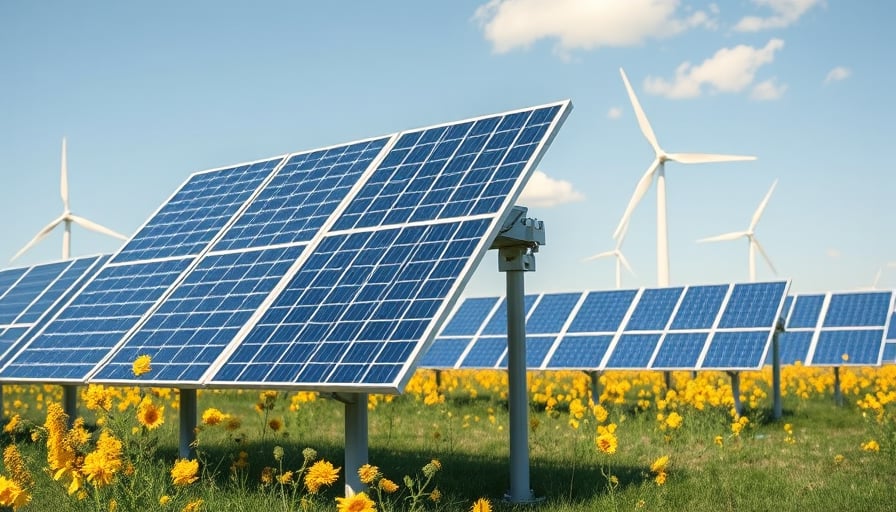
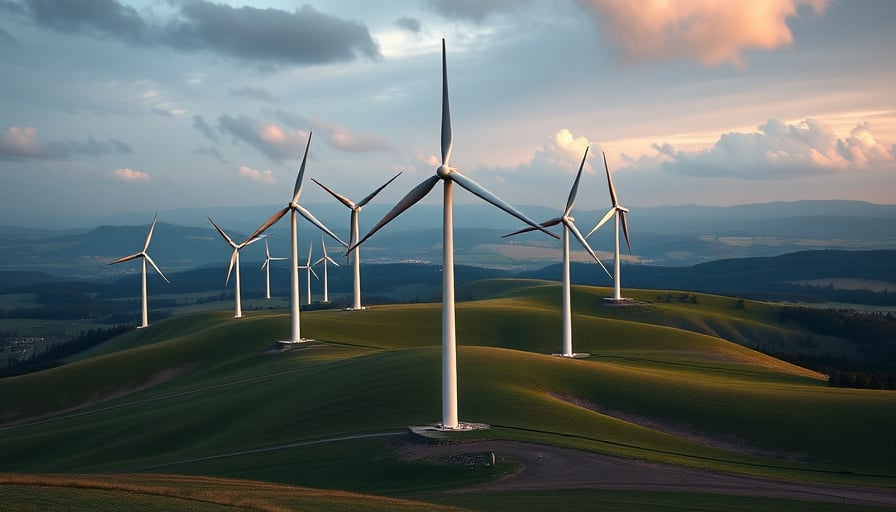
In alignment with Germany’s energy transition goals, RWE is realigning its portfolio toward wind, solar, and emerging technologies, thereby reducing its carbon footprint and meeting regulatory targets set under the Energiewende. The restructuring of older assets serves a dual purpose: it unlocks capital that can be redirected into high‑growth renewable projects and mitigates exposure to declining fossil‑fuel markets.
Regulatory Implications of Dominant Position
The Federal Cartel Office’s recognition of RWE’s dominant position in the German electricity market carries substantial regulatory weight. Such a designation imposes stringent compliance requirements and opens the company to increased scrutiny regarding market conduct, pricing, and potential anti‑competitive practices. RWE’s leadership is therefore actively engaging with regulators to ensure that its expansion strategies—particularly in the renewable domain—are framed within the boundaries of fair competition and public policy objectives.
Solar Support Schemes and Share Buy‑Back Initiative
Anticipating forthcoming reforms to Germany’s solar support schemes, RWE is strategically positioning itself to capitalize on revised feed‑in tariffs and market‑based mechanisms. By aligning its solar development pipeline with projected policy changes, the company aims to maintain a competitive edge while safeguarding investor returns.
Concurrently, RWE is executing a substantial share buy‑back programme. This initiative is designed to enhance shareholder value, signal confidence in the firm’s equity valuation, and support the company’s capital allocation strategy in a market increasingly focused on sustainability and profitability.
International Expansion: Italy and Emerging Fusion Technology
Beyond its core German market, RWE is actively broadening its renewable footprint in Southern Europe. In Italy, the company is developing a significant portfolio of wind and photovoltaic assets, leveraging Italy’s favorable regulatory environment and abundant solar irradiance. This expansion diversifies RWE’s geographic exposure and taps into the European Union’s commitment to a unified renewable energy strategy.
In a forward‑looking move, RWE has entered the nascent fusion power sector through agreements with Proxima Fusion, the Free State of Bavaria, and the Max Planck Institute for Plasma Physics. The objective is to construct Europe’s first commercial fusion plant. By collaborating with leading research institutions and regional authorities, RWE is positioning itself at the forefront of breakthrough energy technology, potentially establishing a long‑term, low‑carbon generation asset that could reshape the European power mix.
Policy Influence on Battery Storage and Gas Generation
Internal strategy documents reveal RWE’s active pursuit of policy influence in battery storage and gas generation. The company advocates for stricter auction criteria and higher price ceilings, aiming to create a market environment that rewards innovation and investment in storage solutions while ensuring the efficient deployment of gas infrastructure. By shaping these regulatory parameters, RWE seeks to secure a favourable competitive position in the evolving energy ecosystem.
Cross‑Sector Connections and Economic Context
RWE’s multidimensional strategy illustrates how core utilities can transcend traditional boundaries by integrating renewable expansion, technological innovation, and regulatory engagement. The company’s focus on battery storage aligns with broader trends in electric vehicle adoption and grid decarbonization. Simultaneously, its investment in fusion technology reflects a willingness to stake claims in breakthrough sectors that promise long‑term systemic shifts.
From an economic perspective, RWE’s actions resonate with the broader European Union directives aimed at achieving carbon neutrality by 2050, supporting the transition to a resilient, low‑carbon economy. The firm’s policy initiatives, asset restructuring, and international expansion are consistent with the EU’s Clean Energy Package and the European Green Deal, positioning RWE as both a beneficiary and a driver of the continent’s energy transformation.
In summary, RWE AG’s strategic manoeuvres—spanning renewable energy acceleration, regulatory compliance, international diversification, and pioneering technology investment—demonstrate a comprehensive approach that balances short‑term financial goals with long‑term sustainability objectives. This multifaceted strategy not only fortifies RWE’s market standing but also contributes to the overarching shift toward a more resilient, low‑carbon European energy landscape.