
Corporate News
RWE AG’s Market Momentum and Strategic Blueprint for a Low‑Carbon Grid
RWE AG’s share price has continued to climb toward a new 52‑week high, a quantitative signal that institutional and retail investors alike are increasingly convinced of the viability of the German utility’s long‑term transformation agenda. The firm’s management, speaking at its investor forum ahead of the upcoming virtual shareholders’ meeting, reiterated a dividend policy that has remained stable for nine years, with a current‑year payout of €1.20 per share and a projected increase to €1.32 for 2026. A steady ten‑percent annual growth in dividends is now codified in the board’s strategic plan, reinforcing investor confidence that RWE will generate a reliable cash‑flow stream even as it undertakes capital‑intensive renewables and grid‑flexibility projects.
1. Operational Focus: The North Sea Offshore Wind Program
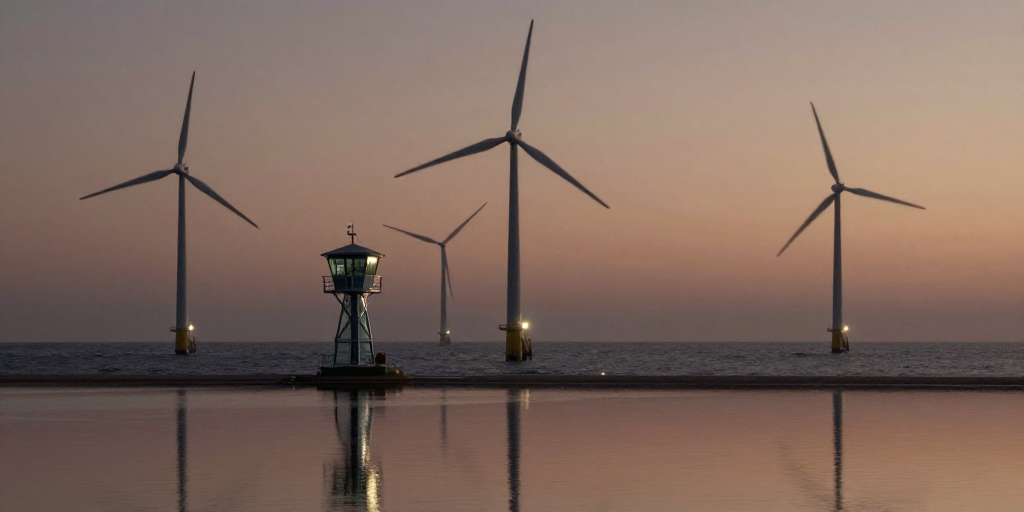
RWE’s operational narrative is dominated by its offshore wind program in the North Sea, which is expected to drive the majority of future growth. The utility has committed billions of euros to new capacity, aiming to lift its adjusted EBITDA to the upper end of the €5.2–5.8 billion range in 2026, and forecast a further rise to €6.8 billion in 2027. The CEO has set an ambitious earnings‑per‑share target of €4.40 by 2031, a compound growth rate of roughly 12 % per year.
From an engineering perspective, the North Sea portfolio is strategically positioned to address the “duck curve” that arises when solar and wind generation peak during periods of low demand. Offshore wind’s large capacity factor—often exceeding 45 % in the North Sea—provides a more predictable renewable supply, but the variability introduced by seasonal wind patterns still necessitates robust grid flexibility. RWE’s commitment to expanding offshore capacity is therefore accompanied by a parallel investment in ancillary services, including frequency regulation and spinning reserve, to mitigate voltage instability and maintain synchronism across the high‑voltage transmission network.
2. Grid Stability Through Distributed Battery Aggregation
In a complementary development, RWE announced a partnership with Polarium to aggregate more than 1,600 distributed battery storage units into a virtual battery. Beginning in late 2026, the aggregated resource will provide approximately 50 MW of power and 135 MWh of storage. This initiative underscores RWE’s broader strategy to diversify its flexibility portfolio and reduce reliance on conventional large‑scale storage.
2.1 Technical Dynamics of a Virtual Battery
A virtual battery is a software‑defined ensemble of physical storage assets, each with its own charge/discharge characteristics, state‑of‑charge constraints, and response latency. The aggregation platform employs advanced real‑time control algorithms—typically based on model predictive control—to synthesize the collective behavior into a single virtual resource that can be bid into ancillary‑service markets or used for grid‑stabilizing operations. The key advantages are:
| Attribute | Conventional Utility‑Scale Battery | Aggregated Virtual Battery |
|---|---|---|
| Response Time | ~1 s (high‑frequency) | 1 s–10 s (depends on constituent units) |
| Scalability | Limited by physical plant size | Virtually unlimited (subject to connectivity) |
| Resilience | Single point of failure | Distributed failure risk |
| Deployment Cost | High (site acquisition, permits) | Lower incremental cost (leveraging existing DER) |
By integrating distributed storage, RWE can dampen short‑term voltage fluctuations and absorb transient renewable spikes, thereby preserving the quality of supply without necessitating massive upgrades to the transmission grid.
3. Infrastructure Investment Requirements for a Renewable‑Heavy Grid
The transition to a high‑penetration renewable system imposes significant capital outlays in the following domains:
- Transmission Line Upgrades
- Expansion of 380 kV corridors to accommodate offshore wind export.
- Installation of series capacitors and FACTS (Flexible AC Transmission Systems) to manage voltage stability under asymmetric loading.
- Substation Modernization
- Digital substation architectures (DIA) for real‑time monitoring.
- High‑voltage DC (HVDC) links to interconnect offshore wind farms with mainland markets.
- Distribution Automation
- Deployment of smart meters and dynamic line rating to support reverse power flow from distributed PV.
- Implementation of micro‑grids for islanded operation during extreme events.
- Grid‑Flexibility Infrastructure
- Investment in virtual batteries, demand‑response platforms, and pumped‑storage integration.
- Development of energy‑to‑gas (EGas) facilities to store excess renewable energy.
RWE’s projected EBITDA growth aligns with a phased investment plan, wherein capital expenditures are expected to rise from €3.5 billion in 2024 to €5.0 billion by 2026, with an eye toward higher returns as grid flexibility assets begin to yield ancillary-service revenues.
4. Regulatory and Rate‑Structure Considerations
4.1 German Energy Transition (Energiewende) Framework
The German Federal Ministry for Economic Affairs and Energy has codified a set of regulatory mechanisms to accelerate the energy transition:
- Renewable Portfolio Standard (RPS): Guarantees a 65 % share of renewables in final consumption by 2030.
- Grid Expansion Grants (Netzentwicklungsprämie): Incentives for transmission upgrades, reducing the burden on utilities.
- Grid-Access Fees (Netzzugangskosten): Structured to reflect the cost of balancing services, encouraging investments in storage and flexible generation.
RWE’s alignment with these policies positions it favorably to receive subsidies and participate in the German renewable energy auction mechanism, which has already allocated over €70 billion to offshore wind projects.
4.2 Rate Structures and Consumer Costs
The shift to a more flexible grid introduces new cost elements that must be recovered through tariffs:
- Capacity Tariff (CapTar): Reflects the cost of maintaining a reliable dispatchable capacity, including the need for large storage assets.
- Service Tariff (ServTar): Captures the value of ancillary services, such as frequency regulation provided by virtual batteries.
- Renewable Energy Surplus Fee (RESF): A small surcharge on net‑metered households that compensates utilities for managing surplus PV output.
Regulators are increasingly adopting performance‑based tariffs, wherein consumers pay for grid services rather than fixed charges. This approach aligns consumer costs with actual grid operational expenses, potentially leading to modest rate increases in the short term but fostering a more equitable cost allocation in the long term.
5. Economic Impacts of Utility Modernization
5.1 Return on Investment (ROI)
RWE’s dividend policy, coupled with its investment trajectory, suggests a target ROI of 8–10 % on capital expenditures invested in renewable and flexibility assets. The integration of virtual batteries, for instance, can deliver revenue streams through ancillary‑service markets, thereby shortening the payback period compared to traditional battery installations.
5.2 Job Creation and Industrial Up‑skilling
The expansion of offshore wind and grid‑flexibility projects is expected to generate approximately 15,000 direct jobs in the medium term, with an additional 5,000 indirect positions in supply‑chain industries. The necessity for advanced control engineers, data scientists, and grid‑management specialists will drive upskilling initiatives across the German power sector.
5.3 Consumer Cost Trajectory
While the immediate effect of grid upgrades and renewable integration may lead to a 2–3 % uptick in average electricity prices, the long‑term outlook is more favorable. The decoupling of generation and transmission costs, along with increased dispatchable flexibility, is projected to stabilize or even reduce consumer bills by 2035, contingent on policy alignment and market maturation.
6. Investor Sentiment and Governance Concerns
Although RWE’s share price remains above its 50‑day moving average and the market reaction has been largely positive, some investors have voiced concerns about the virtual format of the upcoming shareholders’ meeting and potential conflicts of interest arising from the ongoing share‑buyback program. Transparent governance mechanisms—such as independent committee oversight of buyback decisions and clear delineation of fiduciary duties—will be critical to maintaining shareholder trust as the utility navigates its transition.
7. Conclusion
RWE AG’s strategic focus on offshore wind, coupled with innovative distributed battery aggregation, positions it at the forefront of Germany’s grid modernization effort. The company’s commitment to a stable dividend policy, coupled with aggressive investment in renewable and flexibility assets, underpins its market resilience. As regulatory frameworks evolve to capture the true cost of grid stability and renewable integration, RWE’s proactive stance on technology adoption and infrastructure investment will likely sustain investor confidence and facilitate a smoother energy transition for Germany’s consumers.