
RWE AG’s Strategic Expansion Amidst Regulatory and Market Dynamics
RWE AG has recently announced a series of operational milestones that reinforce its commitment to expanding both its transmission infrastructure and renewable asset base. The German utility disclosed a substantial financing package dedicated to grid development, alongside the commissioning of a 200 MW solar plant equipped with a 100 MW/200 MWh battery storage system in Texas. In parallel, the company confirmed the completion of a transaction with Apollo Global Management, which is expected to provide a significant liquidity injection to support its long‑term expansion strategy.
Grid Development Financing and Technological Implications
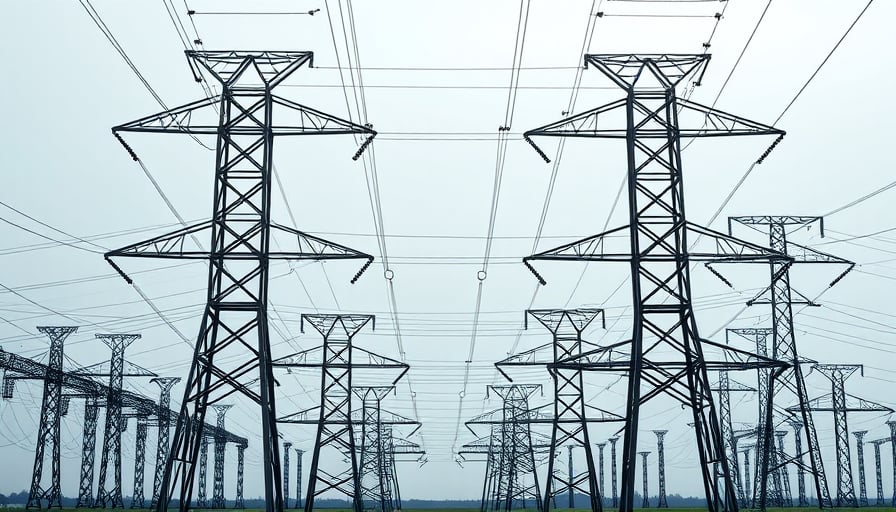
The newly secured financing—amount undisclosed in the press release—will be earmarked for the acquisition and upgrading of high‑capacity transmission corridors, as well as for the deployment of advanced substation automation. From an engineering perspective, the emphasis on grid modernization is essential to accommodate the increasing penetration of variable renewable resources (VRE). Modernizing substations with real‑time SCADA, wide‑area protection, and phasor measurement units (PMUs) enables utilities to detect and isolate faults more rapidly, thereby maintaining system stability as the proportion of wind and solar generation climbs.
Moreover, the investment will likely support the integration of flexible AC transmission system (FACTS) devices such as static synchronous compensators (STATCOMs) and unified power flow controllers (UPFCs). These devices are crucial for mitigating voltage instability and enhancing transfer capability, especially in regions where new renewable generation is geographically remote from load centers.
Solar‑Plus‑Storage Project in Texas
The 200 MW solar facility, coupled with a 100 MW/200 MWh battery storage system, represents a significant addition to RWE’s U.S. portfolio. Texas, governed by the Electric Reliability Council of Texas (ERCOT), offers a competitive environment for distributed generation and storage, thanks to its market‑clearing mechanisms and relatively liberal interconnection rules.
From a grid‑stability standpoint, the combined solar‑plus‑storage plant provides multiple services:
- Frequency Regulation: The battery can deliver rapid response services (on the order of seconds) to counteract frequency deviations caused by sudden load changes or renewable intermittency.
- Peak Shaving and Load Shifting: By charging during periods of excess solar irradiance and discharging during peak demand, the battery smooths the net load profile presented to the transmission system.
- Voltage Support: Battery energy storage systems (BESS) can inject reactive power to support local voltage levels, reducing the need for costly capacitor banks.
The integration of this plant will also necessitate sophisticated energy management systems (EMS) capable of orchestrating the dispatch of both the PV array and the storage asset. Advanced algorithms that forecast irradiance, load, and market prices will be essential to maximize revenue streams while maintaining grid reliability.
Transaction with Apollo Global Management
RWE’s completion of a transaction with Apollo Global Management is viewed as a strategic liquidity injection that will strengthen the company’s balance sheet. From a corporate finance perspective, the infusion of capital is expected to lower debt‑to‑equity ratios and improve credit spreads, thereby reducing the cost of capital for future projects. Additionally, the partnership may enable RWE to negotiate more favorable terms in its upcoming utility and renewable energy contracts, given the enhanced bargaining power associated with a stronger financial position.
Regulatory Frameworks and Rate Structures
In Germany, the Energiewirtschaftsgesetz (EnWG) and the Renewable Energy Sources Act (EEG) govern the operation and remuneration of renewable generators. The European Union’s Green Deal and the Fit for 55 package set ambitious targets for emissions reductions, which directly influence the development of transmission infrastructure through the EU’s “TEN-T” (Trans-European Transport Network) policy. These regulatory frameworks incentivize the deployment of cross‑border transmission lines and the adoption of smart grid technologies.
In the United States, the Texas market operates under ERCOT’s market design, which allows for the participation of distributed energy resources in ancillary services markets. Rate structures in Texas are primarily based on a time‑of‑use (TOU) model, but the recent roll‑out of demand‑response programs offers additional revenue opportunities for storage operators. RWE’s entry into this market will require navigation of both federal and state policies, including the Federal Energy Regulatory Commission (FERC) rules on interconnection and the Texas Public Utility Commission (PUC) oversight of tariffs and interconnection standards.
Economic Impacts on Utility Modernization
The integration of VRE and storage necessitates significant capital outlays for both transmission upgrades and distributed energy resource (DER) deployment. However, the long‑term economic benefits can be substantial:
- Reduced Transmission Losses: Modernized corridors with higher capacity and better voltage control can lower system losses, translating into savings for utilities and consumers.
- Lower System Operating Costs: The ability of storage to provide fast frequency response and peak shaving reduces the need for expensive peaking plants and costly emergency reserves.
- Enhanced Reliability: Improved protection and monitoring systems reduce outage duration and frequency, which has direct economic benefits for end users.
The cost of these investments is typically recovered through rate adjustments or market participation mechanisms. In regulated markets, utilities may seek rate‑payer support through tariff filings that account for capital costs, whereas in deregulated markets, revenue streams from ancillary services and capacity payments can offset capital expenditures.
Market Response and Investor Sentiment
Despite the technical and strategic merits of RWE’s initiatives, the market reaction has been mixed. The share price decline following the announcements suggests that investors are weighing short‑term valuation concerns against the long‑term upside of renewable expansion and infrastructure development. Key investor concerns include:
- Capital Allocation: The large financing package and the cost of the Texas project may increase debt levels or dilute equity, affecting short‑term earnings.
- Regulatory Uncertainty: Potential changes in European and U.S. energy policy could alter the projected returns on renewable investments.
- Competitive Landscape: The proliferation of renewable projects in both Europe and the U.S. intensifies competition for resources, potentially eroding margins.
Nevertheless, the alignment of RWE’s strategy with global decarbonization targets and the increasing demand for clean energy provide a solid foundation for future growth. The company’s commitment to infrastructure investment, coupled with strategic financial partnerships, positions it to capitalize on emerging opportunities in the evolving energy transition landscape.