
RWE AG’s Strategic Transition to a Greener Grid and Robust Capital Management
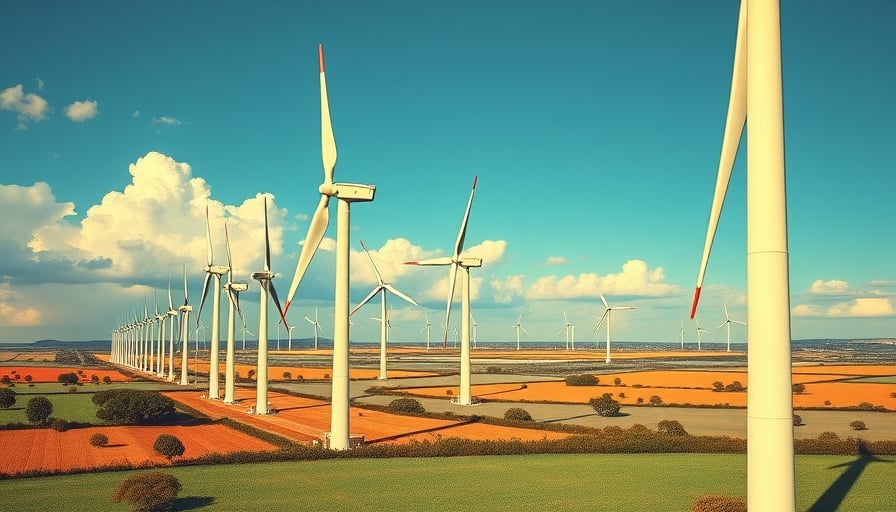
RWE AG has announced the commissioning of its Muel wind farm in Spain, a project that replaces aging turbines with newer, higher‑capacity models. The upgrade is expected to boost the site’s output by several megawatts, enhancing the company’s renewable portfolio and aligning with broader European decarbonisation targets.
Renewable Capacity Expansion in Spain
The Muel facility, situated in a region with strong wind resources, will benefit from modern turbine technology that delivers higher efficiency and lower maintenance costs. By phasing out older units, RWE not only improves operational reliability but also strengthens its position in the Iberian market, where competition for renewable capacity is intensifying. The expansion underscores the firm’s commitment to diversifying its asset base beyond the traditional German and UK markets.
Share‑Price Dynamics and Investor Confidence
Following a robust rally over the past fiscal year, RWE’s share price has experienced a modest correction. Nonetheless, the continued inflow of purchases by insiders and major shareholders signals sustained confidence in the company’s long‑term strategy. This pattern reflects a broader trend in the energy sector, where institutional investors seek companies that balance renewable expansion with prudent financial stewardship.
Share‑Buyback Programme and Equity Support
RWE recently disclosed a new share‑buyback initiative aimed at reinforcing its equity base. Share‑buybacks are a common tool for mature utilities seeking to return value to shareholders while managing dilution. The programme indicates that RWE is confident in its cash‑flow generation capabilities and believes that the current market valuation does not fully capture the intrinsic value of its assets.
Gas‑Fired Generation as a Flexibility Asset
Analysts highlight that RWE’s flexible gas‑fired generation portfolio remains essential for the United Kingdom’s decarbonising grid. Gas plants can provide rapid ramp‑up and ramp‑down capabilities, bridging the intermittency gap left by wind and solar installations. The continued relevance of gas as a transitional fuel is reinforced by the UK’s commitment to reduce net‑zero targets while maintaining grid stability.
Regulatory Impacts on Green Hydrogen in Germany
Simultaneously, regulatory reforms in Germany are expected to lower the cost of green hydrogen production. Streamlined permitting processes, increased subsidies, and carbon‑pricing mechanisms are poised to make green hydrogen more competitive with fossil‑fuel‑derived alternatives. RWE’s involvement in hydrogen projects positions the company to capitalize on these regulatory shifts, potentially expanding its service offerings into energy storage and synthetic fuels.
Cross‑Sector Implications and Macro‑Economic Context
RWE’s activities demonstrate how renewable infrastructure investment can coexist with strategic capital management. The company’s focus on Spain’s wind market, the UK’s gas flexibility needs, and Germany’s hydrogen regulatory environment illustrates the interconnectivity of energy sectors across Europe. This approach aligns with macro‑economic trends such as the transition to low‑carbon economies, the need for resilient grids, and the pursuit of energy security through diversification.
In summary, RWE AG’s commissioning of the Muel wind farm, disciplined equity management, and engagement with both gas flexibility and green hydrogen markets collectively reinforce the company’s role as a pivotal player in Europe’s energy transition.