
RWE AG’s 2025 Dividend Decision and Strategic Outlook Amidst Energy Transition Pressures
RWE AG convened its virtual annual general meeting on 30 April in Essen, where shareholders ratified a €1.20 per‑share dividend for the 2025 financial year. The modest uptick from the previous year signals continuity in the utility’s dividend trajectory, aligning with its broader capital‑allocation strategy that balances shareholder returns against the capital intensity required for the transition to a low‑carbon grid.
Shareholder Engagement and Corporate Governance
The meeting, streamed in its entirety on the company’s website, garnered a 58.9 % voting turnout of the issued share capital—a 5.2 percentage‑point increase over the 53.7 % participation recorded the year prior. This heightened engagement reflects growing investor focus on the firm’s renewable‑energy commitments and its expansion into the United States and United Kingdom markets.
Shareholders endorsed the renewal of the share‑buyback authorisation, approved the remuneration report, discharged both the Executive and Supervisory Boards, and elected a new auditor. Notably, new employee representatives were elected to the Supervisory Board, reinforcing RWE’s governance model that incorporates employee perspectives. The Deputy Chairmanship was retained by Michael Vassiliadis, underscoring continuity in strategic leadership.
Dividend and Buy‑back Dynamics in a Transitioning Market
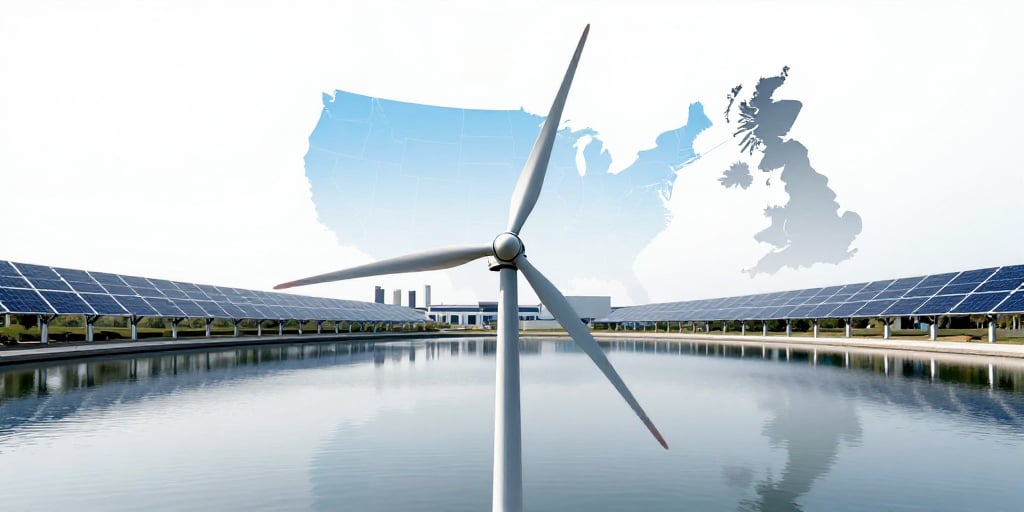
RWE’s share price has advanced steadily from the year‑start level, approaching a recent high while remaining buoyed by an active buy‑back programme. Market observers attribute this resilience to the utility’s announced €17 billion investment in renewable and gas‑based power in the United States through 2031, a commitment that underscores RWE’s ambition to secure a diversified generation mix in a market characterised by both opportunity and geopolitical uncertainty.
From a regulatory standpoint, the U.S. renewable portfolio standards (RPS) and the Federal Energy Regulatory Commission (FERC) mandate for “clean power” are likely to drive further deployment of offshore wind and gas‑fired peaking plants. These developments will influence the utility’s rate structures, as utilities in states with aggressive RPS targets typically adjust price‑setting mechanisms to reflect the higher marginal costs of renewable generation while also benefiting from cost‑savings associated with declining renewable capital costs.
Renewable‑Energy Portfolio and International Partnerships
RWE’s renewable‑energy strategy remains central to its corporate narrative. A newly inked 15‑year wind‑power purchase agreement (PPA) with Breedon will see the German utility deliver 70 GWh of wind electricity annually to UK sites, reinforcing its commitment to decarbonisation projects abroad. Such long‑term PPAs provide price certainty for both producer and consumer, smoothing the impact of volatile market prices and contributing to grid stability by ensuring a predictable generation profile.
Philippa Powell, a senior project director for the Awel y Môr offshore wind farm, was honoured at the Marine Energy Wales Conference. The farm, slated for completion in 2026, will add approximately 500 MW of offshore capacity to the UK grid, bolstering the nation’s ability to meet its net‑zero ambitions by 2050. The inclusion of offshore projects also addresses inter‑regional transmission constraints, as high‑capacity export lines are required to move excess offshore generation to demand centres.
Technical Implications for Grid Stability and Infrastructure Investment
The integration of high penetrations of variable renewable energy (VRE) introduces significant challenges for grid stability. The stochastic nature of wind and solar generation can lead to rapid fluctuations in power output, requiring advanced forecasting, energy storage, and flexible demand‑side management solutions. RWE’s investment plan in the United States includes the deployment of battery storage and the expansion of high‑voltage transmission corridors to facilitate the movement of renewable generation from resource‑rich regions to load centres.
From an engineering perspective, the increased penetration of renewables necessitates upgrades to the power system’s inertia and frequency response characteristics. Traditional synchronous generators provide inertia, but wind farms typically lack this property. Consequently, grid operators are increasingly employing synthetic inertia and fast frequency response services from battery energy storage systems (BESS) and modern inverters. RWE’s focus on integrating these technologies is evident in its recent procurement of 300 MW of BESS capacity in the Midwest, aimed at enhancing frequency support and mitigating the risk of black‑outs during high‑renewable periods.
Transmission and distribution infrastructure must also evolve to accommodate bidirectional power flows associated with distributed generation. Smart grid technologies, including advanced metering infrastructure (AMI) and real‑time monitoring, enable utilities to manage voltage regulation, detect faults promptly, and maintain power quality standards. RWE’s planned capital expenditures include the deployment of digital twins and machine‑learning analytics to predict asset degradation and optimize maintenance schedules, thereby reducing downtime and associated costs.
Regulatory Frameworks, Rate Structures, and Economic Impacts
In Germany, the Energiewende policy framework mandates a gradual phasing out of coal and a transition toward renewable energy sources, influencing both generation mix and investment priorities. The German Renewable Energy Act (EEG) provides feed‑in tariffs and grid access rights for renewable projects, creating a predictable revenue stream but also imposing a cost burden on consumers through the EEG surcharge. RWE’s dividend and buy‑back strategies must therefore balance shareholder expectations against the need to fund renewable investments that incur higher upfront capital costs and potentially higher consumer tariffs.
Similarly, in the United Kingdom, the Clean Growth Strategy and the Net Zero Strategy set clear targets for renewable deployment and carbon intensity reduction. The UK’s Smart Export Guarantee (SEG) and the Renewable Heat Incentive (RHI) offer financial incentives for renewable generation, impacting the economics of offshore wind farms and influencing how utilities structure their tariff models. By securing long‑term PPAs, RWE can mitigate the revenue uncertainty associated with short‑term market price fluctuations, thereby preserving shareholder value while supporting national decarbonisation goals.
Economic Outlook and Investor Sentiment
The convergence of robust dividend payouts, an active buy‑back program, and a diversified renewable portfolio positions RWE favourably in the eyes of investors focused on sustainable growth. However, large shareholders have voiced concerns regarding the political risks inherent in the U.S. market, particularly in light of regulatory uncertainty and potential changes in federal energy policy. These apprehensions underscore the importance of a balanced investment approach that mitigates geopolitical exposure while capitalising on growth opportunities in renewable‑rich regions.
In the medium term, RWE’s strategic moves—expansion in the United States, the 15‑year PPA with Breedon, and the offshore wind project in Wales—are expected to support shareholder returns. The firm’s proactive stance on modernising grid infrastructure, adopting advanced power system technologies, and aligning with regulatory mandates will likely shape its growth trajectory in the coming years, ensuring that RWE remains a pivotal player in the evolving European and global energy landscapes.