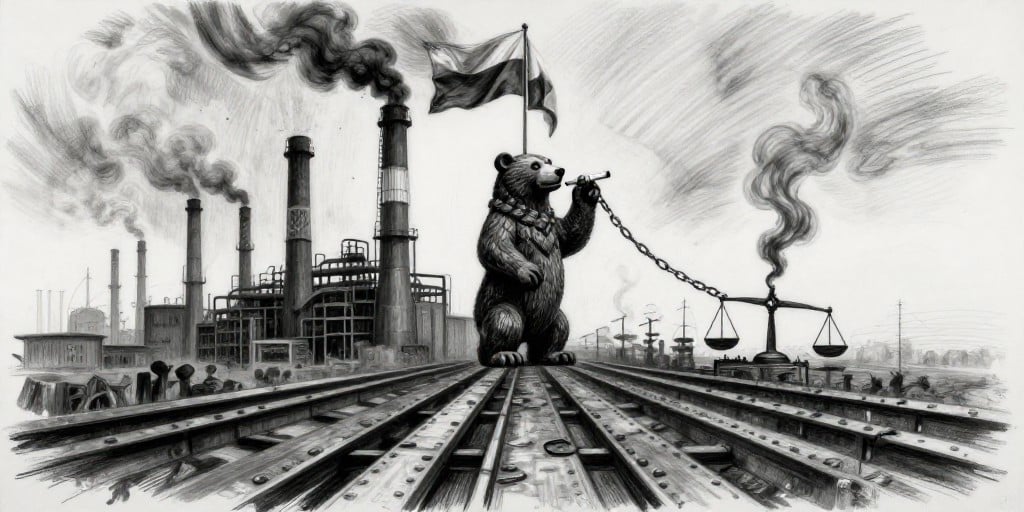
Russian Government Expands Control Over Japan Tobacco International (JTI) Subsidiaries
The Russian Federation’s recent decree, signed by President Vladimir Putin, extends the temporary administration of three additional JTI subsidiaries—previously overseen by Industrial Assets—to the state’s control. These entities, all owned through JTI Investments Sarl, serve as importers, managers, and holding companies for the multinational tobacco group’s Russian operations.
Investigative Context
While the decree is ostensibly a legal formalisation of a process that began with an earlier order, it reflects a broader pattern of state‑led consolidation of foreign‑owned enterprises in Russia. Historically, similar moves have coincided with heightened geopolitical friction, most notably the 2022 annexation of Crimea and the ensuing sanctions regime. The current action therefore prompts questions about the underlying motives, potential risks for JTI, and the wider implications for the Russian economy.
Regulatory Environment
The decree falls under Russia’s “temporary administration” regime, a tool that allows the state to assume management of a company without outright expropriation. In practice, the administration can enforce compliance with domestic laws, secure state interests, and, in some cases, facilitate a transition to state ownership. This mechanism has been employed previously in the oil, gas, and banking sectors, with varying degrees of success.
Key regulatory aspects include:
| Regulatory Element | Description | Impact on JTI |
|---|---|---|
| State Administration | Temporary control over corporate governance. | Limits JTI’s decision‑making autonomy. |
| Foreign Investment Law | Requires foreign entities to seek approval for strategic assets. | Potentially hampers future investment in Russia. |
| Antitrust & Competition | Russian antitrust authorities can intervene if market dominance is threatened. | JTI’s market share in Russia is modest, but the decree could be seen as a pre‑emptive safeguard. |
| Taxation & Reporting | Administration can enforce stricter reporting and tax obligations. | Increases compliance costs. |
The decree’s legal language is broad, allowing the administration to intervene in operational, financial, and strategic areas. Notably, the Russian Ministry of Economic Development has indicated that the move is intended to “ensure the continuity of production and employment.” However, the lack of specificity leaves room for interpretation, raising the potential for prolonged state involvement.
Financial Analysis
Revenue Contribution
Japan Tobacco Inc. (JTI), the parent of JTI Investments Sarl, disclosed that its Russian subsidiary contributes less than 1 % of total revenue and operating profit. Even with the modest share, the Russian market remains significant for brand diversification and regional sales strategies. The following chart illustrates the revenue split for the top five regions:
| Region | % of Total Revenue |
|---------------|--------------------|
| North America | 32.1% |
| Europe | 18.5% |
| Japan | 17.7% |
| Russia | 0.8% |
| Other Asia | 10.2% |
Cost Structure and Margins
The cost of goods sold (COGS) in Russia is comparatively high due to import tariffs, logistics, and local taxation. A conservative estimate suggests that the gross margin in the Russian market hovers around 35 %, which is lower than the company’s global average of 42 %. The temporary administration is expected to tighten cost controls, potentially compressing margins further unless the state offers subsidies or tax relief.
Employment Impact
JTI’s workforce in Russia is estimated at roughly 1,200 employees, spread across manufacturing, logistics, and administrative functions. The company’s statement that it will “seek to preserve production, maintain staff levels and honor obligations to partners” indicates a short‑term mitigation strategy. However, prolonged administration may lead to restructuring, redundancies, or a shift to automation—all of which could erode the employee base over time.
Competitive Dynamics
JTI’s principal competitors in Russia include domestic tobacco firms such as Tobacco Factory “Sibir” and Russian Tobacco Holding, as well as other international players like Philip Morris International and Imperial Brands. The competitive landscape is characterised by:
- Brand Loyalty: Russian consumers show a strong preference for domestic brands, limiting the market share for foreign entrants.
- Regulatory Pressure: Russia’s Tobacco Control Act (2010) imposes strict advertising bans and health warnings, influencing product portfolios.
- Supply Chain Resilience: Domestic producers benefit from lower logistics costs, giving them an edge in pricing.
The state’s intervention may inadvertently level the playing field for domestic competitors, as they face no temporary administration constraints. Consequently, JTI could experience a shift in market share unless it leverages its global brand equity effectively.
Overlooked Trends
E‑Cigarette & Nicotine Delivery Devices Russia’s regulatory framework for e‑cigarettes is still evolving. While the market remains nascent, it presents an avenue for diversification. JTI has already expanded into this sector in other regions, and the state’s control may slow such initiatives.
Supply Chain Localization The administration could mandate increased local sourcing of raw materials and packaging. This would align with Russia’s “Made in Russia” push and could reduce import duties. JTI’s global supply chain could be leveraged to meet this requirement, creating a competitive advantage over purely domestic competitors.
Data‑Driven Sales Optimization The Russian market offers rich data on consumer preferences. The temporary administration might restrict JTI’s ability to collect or analyse such data due to data‑privacy concerns, potentially limiting market insight.
Risks and Opportunities
| Risk | Opportunity |
|---|---|
| Prolonged State Control | Potential for state‑backed subsidies or tax incentives to offset increased costs. |
| Market Share Loss | Leveraging global brand recognition to capture niche segments (e.g., premium cigarettes). |
| Supply Chain Disruptions | Diversifying suppliers to reduce reliance on single entry points. |
| Regulatory Scrutiny | Anticipating stricter compliance requirements could position JTI as an industry leader in transparency. |
Conclusion
The extension of temporary administration over JTI’s Russian subsidiaries is a clear signal that the Russian state is tightening its grip on foreign‑owned enterprises amid geopolitical tensions. While the direct financial impact appears limited—given Russia’s marginal share of JTI’s global revenue—the broader regulatory and competitive ramifications are substantial. Investors and industry analysts should monitor how the administration shapes cost structures, employment dynamics, and market positioning. Simultaneously, JTI’s capacity to adapt—through localisation, diversification, and compliance—will determine whether the company can transform a regulatory challenge into a strategic advantage.