
Strategic Expansion of Production Capabilities in the U.S. Missile‑Defense Ecosystem
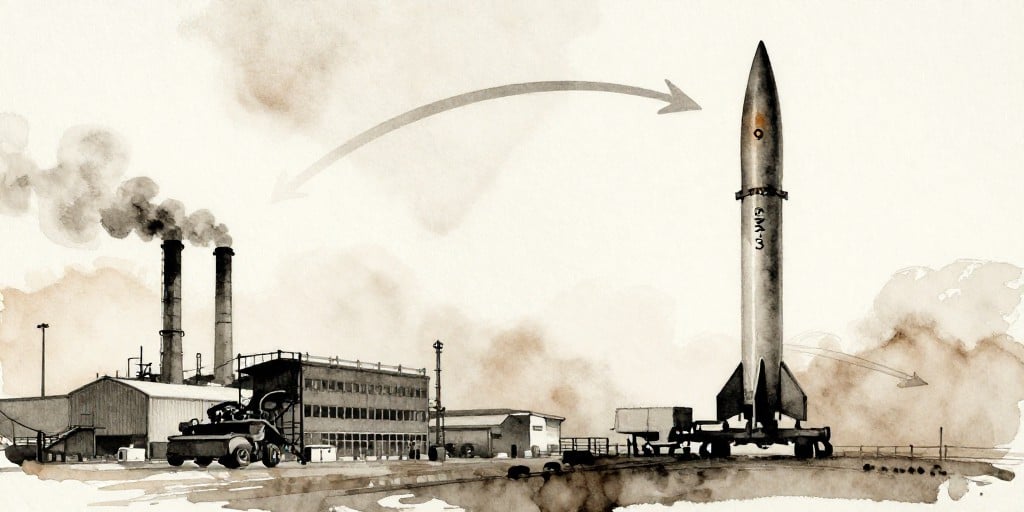
RTX Corp has recently secured two framework agreements with the U.S. Department of Defense (DoD) to expand component manufacturing for the SM‑3 Block IB and SM‑3 Block IIA anti‑ballistic missile (ABM) systems. The agreements are structured to reinforce the supply chain for the Aegis‑based ballistic missile defense network and accelerate the deployment of ship‑mounted missile systems. In parallel, RTX is collaborating with its parent company, Raytheon, to integrate cost‑effective propulsion technology into the Standard Missile‑3 (SM‑3) platform and to broaden the availability of low‑cost counter‑drone solutions such as the Coyote missile.
1. Underlying Business Fundamentals
a. Supply‑Chain Resilience The SM‑3 platform is a critical component of the U.S. ABM architecture, and any disruption in component supply can have cascading effects on national security commitments. By signing framework agreements, RTX secures a long‑term, predictable demand for its manufacturing capacity. This arrangement mitigates the risk of capacity bottlenecks and aligns production with DoD’s fiscal planning, potentially enabling volume‑discount pricing and improved cost efficiencies.
b. Technology Integration and Cost Reduction RTX’s partnership with Raytheon focuses on integrating affordable propulsion technology into the SM‑3 and Coyote platforms. The propulsion subsystem accounts for a significant portion of interceptor cost (approximately 30–35 % of unit cost). By developing a shared propulsion architecture, the companies can achieve economies of scope, reduce R&D duplication, and lower unit costs across multiple missile variants. This strategy positions RTX to compete against high‑end, high‑cost interceptors such as the Standard Missile‑6 (SM‑6) and the Aegis Ashore systems.
c. Dividend Policy and Market Stability RTX maintains a consistent dividend payment schedule, reflecting a mature capital allocation strategy. This policy supports investor confidence amid fluctuating defense budgets and reinforces the company’s reputation as a stable income generator within the sector.
2. Regulatory Environment
a. Defense Production Act (DPA) and Export Controls The framework agreements fall under the auspices of the DPA, allowing the DoD to prioritize domestic manufacturing. RTX’s compliance with the International Traffic in Arms Regulations (ITAR) remains paramount, especially as it expands production for SM‑3 components. Any lapses could trigger penalties and restrict future contract eligibility.
b. Department of Commerce Export Administration Regulations (EAR) The propulsion technology collaboration may involve dual‑use components subject to EAR classification. RTX must navigate the export licensing landscape carefully, especially if any components are destined for foreign end‑users or dual‑use applications.
c. Federal Acquisition Regulation (FAR) Compliance Framework agreements must adhere to FAR clauses on pricing, cost accounting standards, and contractor performance metrics. RTX’s ability to meet these standards will influence contract renewals and future award potential.
3. Competitive Dynamics
| Competitor | Core Offering | Market Share (2024) | Competitive Advantage |
|---|---|---|---|
| Lockheed Martin | SM‑6, PAC‑3, THAAD | 40 % | Integrated launch platform, high‑end R&D |
| Northrop Grumman | Aegis Ashore, SM‑2 | 25 % | Extensive naval integration, legacy contracts |
| Raytheon Technologies | SM‑3, Coyote, RIM-174 | 20 % | Strong propulsion tech, cost leadership |
| RTX Corp | SM‑3 (via partnership) | 15 % | Expanded domestic production, cost‑effective propulsion |
RTX’s recent moves aim to close the cost gap between its offerings and those of high‑end competitors. By leveraging shared propulsion technology and expanding domestic manufacturing, RTX can lower unit costs, thereby improving price competitiveness for both SM‑3 and Coyote missiles. However, the company faces risks from:
- Supply‑Chain Constraints: Global semiconductor shortages or rare‑earth material supply disruptions could hamper production scaling.
- Technological Obsolescence: Rapid advancements in hypersonic missile technology may outpace current SM‑3 capabilities, necessitating further investment.
- Budgetary Cycles: Defense spending is subject to political shifts; reductions in DoD budgets could constrain contract volumes.
4. Market Research and Financial Analysis
Revenue Projections Based on the DoD’s 2025–2030 ABM procurement schedule, the SM‑3 Block IB and Block IIA contracts could contribute an estimated $1.8 billion in incremental revenue over a five‑year horizon. This represents a 12 % increase in the company’s defense‑core revenue stream, assuming a conservative 5 % annual growth in missile production.
Cost‑Benefit Assessment Assuming a 10 % reduction in propulsion component cost per missile, RTX could save approximately $30 million annually across the SM‑3 and Coyote programs. These savings could be reinvested in R&D or returned to shareholders via dividend increases.
Stock Performance RTX’s share price has exhibited modest gains, reflecting investor confidence in its defense contracts and production enhancements. The company’s beta remains close to 1.1, indicating sensitivity to broader market movements rather than defense‑specific volatility.
5. Uncovered Trends and Strategic Opportunities
Domestic Manufacturing as a National Security Imperative The U.S. government’s emphasis on reducing foreign dependency for critical defense components creates a long‑term demand for domestic manufacturers like RTX. Capturing even a modest share of this transition can yield sustained revenue.
Integration of Counter‑Drone Solutions The deployment of the Coyote missile in the Middle East suggests a growing market for affordable, rapid‑deployment interceptors. RTX’s focus on cost‑effective propulsion could position it as a leader in the counter‑drone niche, especially as emerging threats evolve.
Potential for Export Expansion With the U.S. re‑asserting its stance on arms sales to allies, RTX could explore export opportunities for the SM‑3 and Coyote platforms, provided it navigates ITAR and EAR constraints. Such expansion would diversify revenue streams beyond the DoD.
Technology Spin‑Offs The propulsion technology developed in partnership with Raytheon may have civilian applications in space launch systems or commercial propulsion. Identifying and securing licensing agreements could unlock additional revenue channels.
6. Risks That May Be Overlooked
- Geopolitical Shifts: Escalating tensions in regions like the Middle East and the Indo‑Pacific could accelerate demand, but also increase the risk of component diversion or supply chain sabotage.
- Regulatory Changes: Tightening export controls or alterations in defense procurement policy could restrict RTX’s ability to sell domestically or internationally.
- Competitive Entrants: Emerging defense tech firms specializing in low‑cost interceptors could erode RTX’s market share if they achieve superior cost efficiencies.
7. Conclusion
RTX Corp’s recent strategic contracts and collaborative initiatives demonstrate a focused effort to strengthen domestic production capacity and reduce cost barriers within the missile‑defense arena. By aligning with DoD priorities and leveraging shared technology platforms, RTX positions itself to capture a growing share of a defense market increasingly centered on domestic resilience and affordability. Nonetheless, the company must continuously monitor supply‑chain risks, regulatory landscapes, and competitive pressures to sustain its growth trajectory and safeguard its market position.