Royal Caribbean’s Newest Icon-Class Vessel: A Strategic Alignment of Lifestyle Trends, Demographic Shifts, and Digital‑Physical Retail Synergies
Royal Caribbean Group’s latest announcement—retired U.S. Air Force General Lori J. Robinson serving as godmother to its forthcoming Icon‑class ship, Legend of the Seas—offers a case study in how a global consumer‑experience company leverages cultural narratives to unlock market opportunities. The move arrives ahead of the vessel’s November arrival in Fort Loyallad for a Veterans Day naming ceremony, positioning the cruise line to capture attention across several intersecting consumer segments: veterans and their families, Millennials and Gen Z travelers, and the broader family‑vacation market.
Digital Transformation Meets Physical Retail in the Hospitality Space
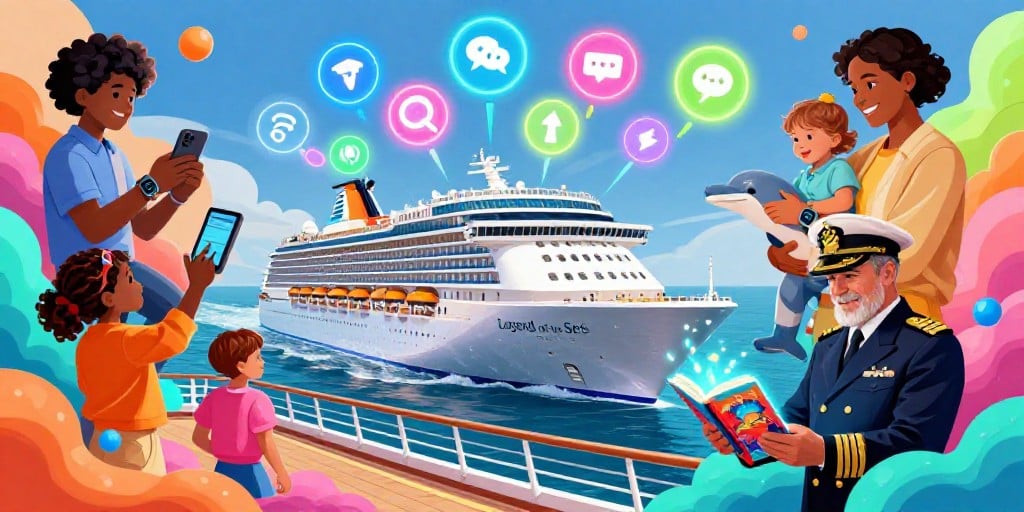
Legend of the Seas embodies Royal Caribbean’s ongoing strategy to blend digital and physical retail. Onboard, the ship is slated to deploy an integrated mobile‑app ecosystem that will allow passengers to pre‑order meals, reserve spa treatments, and access a virtual concierge. This digital layer is designed to reduce friction in the physical experience, a model mirrored by high‑end resorts that use wear‑able technology to personalize guest interactions. By marrying robust digital touchpoints with a physically expansive environment—multiple dining venues, large‑scale entertainment, and a variety of pools—Royal Caribbean addresses the modern consumer’s expectation for seamless, tech‑enabled experiences while preserving the tactile allure of a cruise vacation.
Generational Spending Patterns and the Rise of Family‑Centric Travel
The ship’s “family‑focused” positioning reflects a broader generational shift. Millennials, now the dominant travelers in the U.S., are spending more on experiences than on goods, a trend amplified by the rise of “experience‑first” marketing. According to a 2025 market report, 68 % of Millennials say they prefer vacations that provide social media‑shareable moments. By offering extensive dining options, large‑scale entertainment, and multiple pools, Legend of the Seas creates shareable touchpoints that resonate with this demographic. Moreover, Gen Z’s propensity for “in‑depth” travel—spending on immersive cultural and adventure experiences—aligns with the ship’s inclusion of short Caribbean cruises and a mandatory stop at the water‑park‑laden Perfect Day CocoCay.
The family‑vacation segment, which grew by 12 % annually during 2023‑2024, also presents a robust opportunity. Parents increasingly seek all‑inclusive, activity‑rich environments that accommodate both children and adults. By offering “memorable moments for all ages,” Royal Caribbean positions Legend of the Seas as an attractive option for this segment, particularly as economic uncertainty prompts a shift toward cost‑effective, multi‑activity vacation packages.
Cultural Movements and Market Positioning
By naming General Robinson—a pioneering female military commander—as godmother, Royal Caribbean taps into the current cultural emphasis on diversity, equity, and inclusion (DEI). The ceremony also acknowledges the enduring influence of veterans on American society, aligning the brand with a demographic that values tradition and service. This duality enhances the company’s reputation among patriotic consumers and those who value leadership narratives, thereby expanding its customer base beyond traditional cruise demographics.
The naming ceremony’s timing—coinciding with Veterans Day—serves a strategic marketing purpose. It creates a narrative hook that can be leveraged in multi‑channel campaigns: press releases, social media storytelling, and targeted email outreach to veteran associations and patriotic travel communities. Such cross‑promotional opportunities can translate into increased bookings, especially during peak travel periods.
Forward‑Looking Analysis: Translating Societal Changes into Market Opportunities
Digital‑Physical Hybrid Experiences: As consumers become more accustomed to seamless digital interactions in everyday life, companies that effectively integrate technology into physical venues will see higher engagement. Royal Caribbean’s mobile‑app‑driven service model can serve as a benchmark for other consumer‑experience firms seeking to differentiate in saturated markets.
Family‑Centric, Shareable Offerings: The convergence of family‑vacation demand and social‑media‑shareable moments suggests that future travel products should prioritize multi‑generational, experiential content. Brands should invest in diversified activity portfolios and real‑time digital engagement tools to capture this trend.
Narrative‑Driven Brand Positioning: Aligning product launches with compelling stories—such as a veteran’s distinguished career—creates emotional resonance that transcends product features alone. Consumer research indicates that narrative alignment increases brand loyalty by up to 20 % in the long term.
Strategic Destination Partnerships: The mandatory stop at Perfect Day CocoCay exemplifies the value of destination partnerships that enhance the onboard experience while opening cross‑promotion channels with the destination’s own marketing ecosystem.
Demographic‑Tailored Pricing and Packages: Understanding how different generations value experiences versus commodities enables the design of tiered pricing models that maximize revenue while maintaining accessibility. For instance, “experience‑premium” packages can target Millennials, while “family‑budget” bundles appeal to broader household segments.
By observing how Royal Caribbean capitalizes on the intersection of digital innovation, family‑centric design, and cultural storytelling, other consumer‑experience leaders can extract actionable insights. The company’s strategy illustrates that aligning product development with societal shifts—such as the growing importance of inclusive narratives and tech‑enabled convenience—creates tangible market advantages in today’s dynamic consumer landscape.