Rockwell Automation Secures Braskem’s Global OT Landscape with SecureOT Platform
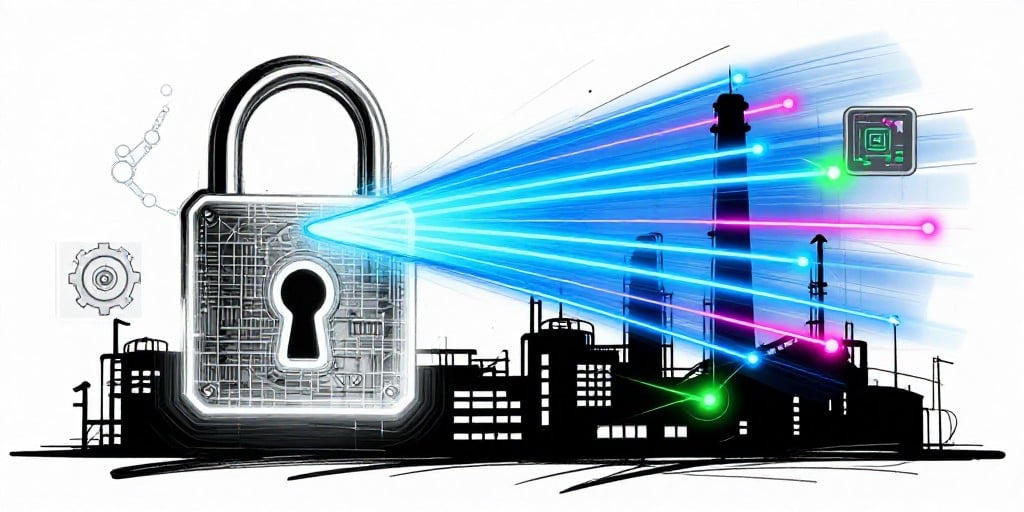
Rockwell Automation’s deployment of its SecureOT platform across Braskem’s polyolefin and biopolymer manufacturing network illustrates the accelerating convergence of cybersecurity and industrial automation. The partnership, which spans more than 39 facilities worldwide, demonstrates how a vendor‑neutral, real‑time asset inventory can drive both operational resilience and compliance in a highly distributed production environment.
1. Manufacturing Context and Capital‑Expenditure Drivers
Brisk growth in the global plastics market—projected to rise at a CAGR of 4.5 % through 2030—has pressured polymer producers to optimize throughput while maintaining strict safety and environmental standards. In response, Braskem has invested heavily in digital twins, predictive maintenance systems, and cloud‑enabled control loops, driving an estimated 15 % increase in capital expenditure on automation technologies in the last fiscal year.
The decision to adopt SecureOT reflects broader industry economics:
- Productivity Metrics: Real‑time visibility of OT assets enables faster fault diagnosis and reduces mean time to repair (MTTR) by up to 30 %, directly translating into higher plant availability.
- Cost of Downtime: Each minute of unplanned downtime in a polymer plant can cost between $50,000 and $150,000, depending on product mix and labor rates. By streamlining vulnerability remediation, Briskem anticipates a 10‑15 % reduction in downtime‑related losses.
- Regulatory Compliance: Tightening of ISO 27001 and IEC 62443 standards, coupled with region‑specific mandates such as the EU Cyber Resilience Act, have increased the cost of audit failures, encouraging proactive security postures.
2. Technological Innovation in Heavy Industry
The SecureOT platform integrates three core capabilities—asset inventory, vulnerability management, and managed detection services—into a unified framework. This holistic approach is particularly suited to the “heavy industry” sector, where legacy equipment from multiple vendors coexists with cutting‑edge digital controls.
- Asset Inventory: Within eight months, Briskem catalogued over 3,000 assets, a 90 % reduction in manual inventory effort. The platform uses low‑impact discovery agents that map network topology, device firmware versions, and communication protocols (Modbus, OPC UA, MQTT).
- Vulnerability Management: Automated scanning of each asset’s software stack against an up‑to‑date vulnerability database allows Briskem to prioritize patches based on criticality and exploitability. In one case, a single unpatched PLC firmware vulnerability could have exposed the entire downstream polymerization line.
- Managed Detection Services: Continuous monitoring of traffic flows and anomaly detection help identify lateral movement, unauthorized access attempts, and potential sabotage. By correlating alerts across multiple facilities, Briskem can deploy incident response teams more rapidly and with better situational awareness.
These technical innovations not only secure the manufacturing floor but also position Briskem to leverage digital twins and advanced analytics for process optimization, aligning with the industry’s push toward “Industry 4.0” maturity.
3. Supply‑Chain and Regulatory Impacts
3.1 Supply‑Chain Resilience
The global semiconductor shortage has exposed vulnerabilities in the procurement of key control chips. A comprehensive OT asset view allows Briskem to track component lifecycles, identify obsolete parts, and negotiate with alternative suppliers. Moreover, the SecureOT platform’s real‑time telemetry facilitates proactive supply‑chain risk monitoring, reducing the likelihood of production disruptions.
3.2 Regulatory Landscape
Recent regulatory developments—such as the U.S. Cybersecurity for Critical Infrastructure Act (2024) and the EU Digital Operational Resilience Act—mandate continuous monitoring, incident reporting, and evidence of secure configuration management. By embedding these requirements into a single, auditable framework, Briskem simplifies compliance and avoids costly fines or operational shutdowns.
3.3 Infrastructure Spending
Public‑private partnerships aimed at upgrading industrial broadband, 5G connectivity, and edge computing resources are gaining traction. Briskem’s investment in SecureOT aligns with these initiatives by ensuring that new communication infrastructures are secure from the outset, thereby justifying higher upfront capital spend with lower long‑term operating costs.
4. Market Implications
- Competitive Differentiation: Firms that secure their OT layer early gain a marketing advantage, as “cyber‑secure” production can be leveraged in B2B sales pitches, especially to energy‑constrained or carbon‑regulated clients.
- Investor Confidence: Transparent, real‑time security metrics provide investors with tangible indicators of risk mitigation, potentially improving credit ratings and lowering capital costs.
- Technology Adoption Curve: The successful deployment of SecureOT in a large polymer plant sets a precedent for other heavy‑industry verticals, such as petrochemicals, steel, and mining, to accelerate similar transformations.
5. Engineering Insight
From an engineering standpoint, the SecureOT platform exemplifies the application of cyber‑physical systems theory to real‑world manufacturing. By treating each piece of equipment as a node in a highly coupled network, the platform applies graph‑based analytics to map dependencies and identify single points of failure. Coupled with machine learning for anomaly detection, it transforms static security best practices into a dynamic, context‑aware defense mechanism.
In conclusion, Briskem’s adoption of Rockwell Automation’s SecureOT platform underscores a critical shift: cybersecurity is no longer an afterthought but an integral component of industrial productivity, cost management, and compliance. The integration of real‑time asset visibility, proactive vulnerability remediation, and continuous threat monitoring provides a scalable blueprint for manufacturers seeking to thrive in an increasingly digitized, regulated, and supply‑chain‑constrained environment.