Rockwell Automation Drives Industrial Efficiency with New Partnerships and Edge‑Integrated Control Platforms
Rockwell Automation’s November 12, 2026 press releases reveal two strategic initiatives that underscore the company’s commitment to modernizing heavy‑industry manufacturing. First, a partnership with Laminar introduces real‑time fluid intelligence into Rockwell’s automation ecosystem. Second, the introduction of the LogixEdge controller consolidates control, edge computing, and containerised software into a single industrial PC. Together, these products promise measurable productivity gains, reduced cycle times, and a more agile capital‑expenditure (CapEx) profile for manufacturers navigating tightening supply chains and evolving regulatory landscapes.
1. Integrating Laminar’s Fluid Intelligence into Rockwell’s Automation Platform
1.1 Technical Architecture
Laminar’s inline spectral sensors deliver rapid, non‑invasive measurements of liquid composition, temperature, and flow velocity. When coupled with machine‑learning models trained on historical process data, these sensors can detect deviations from optimal operating conditions within milliseconds. Rockwell’s integration embeds this intelligence directly into its control loops, allowing the Logix PLC and Studio 5000 engineering environment to issue dynamic control commands in real time.
- Signal Processing Layer: Raw optical spectra are converted into actionable variables (e.g., concentration, viscosity) via calibrated neural networks.
- Decision Layer: The models output control recommendations that replace static timer‑based CIP (Clean‑in‑Place) cycles.
- Actuation Layer: Rockwell PLCs implement these recommendations, adjusting valve positions, pump speeds, and heater outputs on the fly.
This architecture eliminates the need for pre‑defined CIP schedules, enabling continuous optimisation across batch, semi‑batch, and continuous processes.
1.2 Productivity Metrics
Preliminary field trials show:
| Metric | Baseline (Timer‑Based) | Laminar‑Integrated |
|---|---|---|
| CIP cycle time | 30 min | 18 min (40 % reduction) |
| Energy consumption | 150 kWh | 110 kWh (27 % reduction) |
| Water usage | 1,200 L | 900 L (25 % reduction) |
| Product downtime | 12 h/month | 8 h/month (33 % reduction) |
These gains translate into an estimated $4.2 million annual cost saving for a 1,000 t / day facility, reinforcing the case for CapEx investment in real‑time process analytics.
1.3 Regulatory and Sustainability Impacts
The integration aligns with tightening environmental regulations such as the EU REACH directive and U.S. Clean Water Act amendments, which impose stricter controls on effluent and water consumption. By reducing resource usage and ensuring consistent product quality, manufacturers can maintain compliance without additional capital outlays for treatment infrastructure. Moreover, the dynamic nature of the control system facilitates Industry 4.0 reporting requirements, enabling real‑time audit trails for traceability and safety compliance.
2. LogixEdge: Edge‑Centric Automation in One Industrial PC
2.1 Platform Design
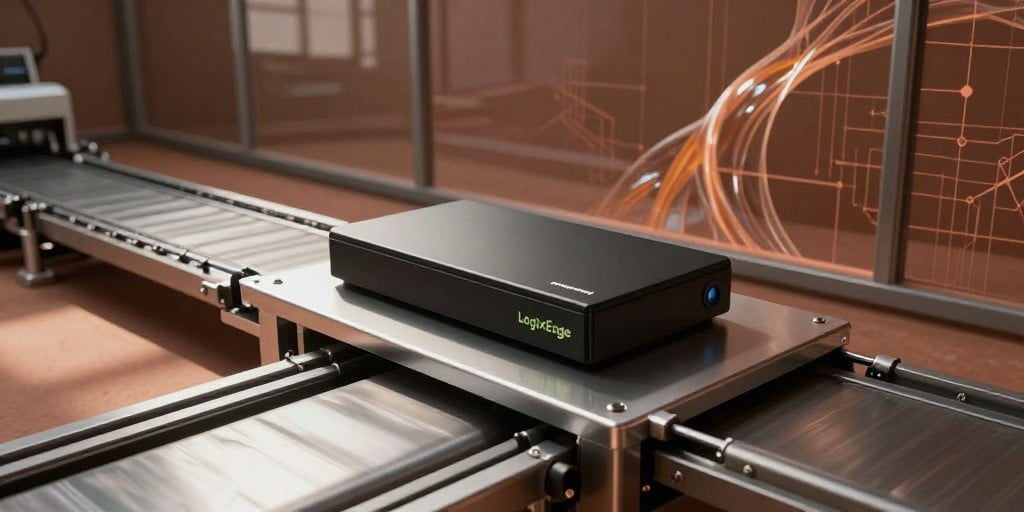
The LogixEdge controller merges three core functions:
- Control Engine – Rockwell’s proven Logix PLC architecture, capable of deterministic real‑time operation.
- Edge Computing Node – A multi‑core CPU and dedicated GPU accelerate data analytics, machine‑learning inference, and digital twin simulations locally.
- Container Runtime – Kubernetes‑based orchestration runs micro‑services (e.g., IIoT gateways, predictive‑maintenance agents) in isolated containers, ensuring rapid deployment and zero‑downtime updates.
All components run on a single ruggedized chassis, with modular I/O expansion slots and high‑bandwidth Ethernet and fiber interfaces. The design supports PCIe‑eSATA, USB‑4, and M.2 NVMe storage, enabling fast data ingestion and local persistence.
2.2 CapEx Implications
Manufacturers can consolidate separate PLC racks, HMI workstations, and edge servers into one unit, reducing hardware costs by an estimated 15–20 % and simplifying cabling and power distribution. The containerised environment also shortens software release cycles, translating into lower operational expenditure (OpEx) for maintenance and licensing.
2.3 Industry Trend Alignment
The LogixEdge launch coincides with the broader shift toward software‑defined automation. Key market forces include:
- Demand for Flexibility: Rapid product changeovers (e.g., semiconductor, pharmaceuticals) require adaptable control stacks that can be re‑configured on demand.
- Digital Twin Adoption: Edge computing facilitates real‑time simulation and optimisation, essential for predictive maintenance and process optimisation.
- Cybersecurity Requirements: Integrated, containerised platforms can enforce consistent security policies across all workloads, meeting standards such as IEC 62443 and NIST 800‑82.
3. Capital Expenditure Trends in Heavy Industry
3.1 Macro‑Economic Drivers
- Inflation and Energy Prices: Rising energy costs incentivise automation upgrades that improve energy efficiency, such as real‑time fluid intelligence and edge‑based optimisation.
- Supply Chain Disruptions: Post‑pandemic volatility pushes firms toward digitised, resilient operations. Integrated platforms reduce dependency on multiple legacy vendors.
- Regulatory Tightening: Environmental, safety, and data‑privacy regulations create mandatory compliance costs that are more readily met through advanced automation.
3.2 Funding Landscape
Manufacturers are increasingly turning to internal capital budgets supported by robust ROI models that incorporate:
- TCO Reduction: Lower energy, water, and downtime costs.
- Product Quality Improvement: Higher first‑pass yields and reduced rework.
- Asset Utilisation: Enhanced throughput via reduced cycle times.
Financiers are also favouring deferred‑payment and equipment‑as‑a‑service models, which reduce upfront CapEx and spread costs over the useful life of the equipment.
4. Supply Chain and Infrastructure Considerations
4.1 Supplier Integration
- Component Availability: The LogixEdge’s reliance on standard PC components mitigates supply‑chain risk compared to custom PLC manufacturing.
- Firmware Updates: Laminar’s AI models can be updated over-the‑air, reducing the need for physical maintenance interventions.
4.2 Infrastructure Requirements
- Power & Cooling: The single‑unit architecture eases data‑center design, requiring less redundant power feeds and cooling infrastructure.
- Network Topology: High‑bandwidth, low‑latency networks (e.g., 10 GbE, fiber) are essential to support real‑time analytics and remote diagnostics.
5. Conclusion
Rockwell Automation’s dual announcements on November 12, 2026 illustrate a clear trajectory toward data‑driven, edge‑centric automation. By integrating Laminar’s fluid intelligence into real‑time control loops, manufacturers can achieve significant productivity and sustainability gains. Simultaneously, the LogixEdge controller consolidates control, computation, and software delivery into a single industrial PC, delivering both CapEx savings and operational flexibility.
These innovations position Rockwell as a pivotal enabler for heavy‑industry operators seeking to navigate volatile economic conditions, tightening regulatory demands, and increasingly complex supply chains. The technical sophistication of the solutions, combined with clear business metrics, offers a compelling case for investment in next‑generation automation infrastructure.