Executive Summary
Rivian Automotive Inc. has fallen into a precarious position as its share price slipped to $14.70 on the most recent trading day, marking a roughly 4 % decline from the prior close. The downturn coincides with a quarter‑on‑quarter sales slump exceeding 25 % in the United States, a critical market for the company’s growth. Investors are also uneasy about the impending launch of the R2 model and the forthcoming earnings report due April 30. While Rivian has undertaken product expansion and operational efficiency initiatives, the market reaction underscores deeper structural challenges that may erode shareholder confidence unless addressed comprehensively.
Market Context and Competitive Dynamics
| Metric | Rivian (Q1 2024) | Industry Benchmark* | Trend |
|---|---|---|---|
| U.S. vehicle sales YoY | –25 % | +10 % (EV average) | Negative |
| Gross margin | 6.8 % | 11.5 % (Tesla, NIO) | Below |
| R&D expense / revenue | 9.2 % | 4.5 % | High |
| Vehicle price average | $60,000 | $58,000 | Slightly higher |
*Industry benchmark based on EV‑only sales reported by EV-Analytics and BloombergNEF.
1. Saturating Mid‑Tier Segment
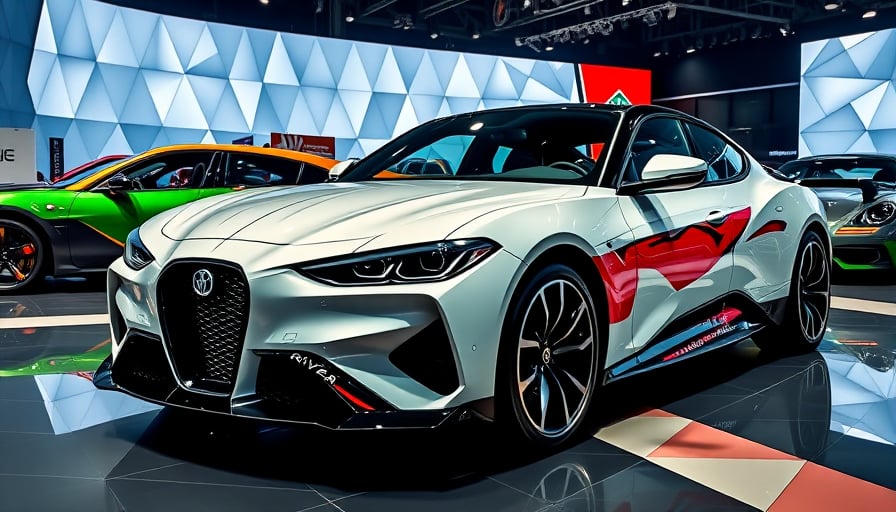
The segment that Rivian targets—mid‑to‑upper‑mid‑tier electric pickups and SUVs—is now crowded with incumbents (Tesla, Ford, General Motors) and new entrants (Hyundai Ioniq 5, Kia EV6). These competitors offer similar or better ranges, lower price points, and more extensive charging networks. Rivian’s R2, projected at 335 miles, competes against Tesla’s Model 3 long‑range (353 mi) and Ford F‑150 Lightning (300 mi), but the price premium remains a hurdle.
2. Dealer & Direct‑Sale Model Constraints
Unlike Tesla’s direct‑sale approach, Rivian still relies on a limited dealer network. This structure hampers rapid scaling of service centers and inventory, limiting its ability to meet the surge in demand seen in other EV markets. The regulatory environment in several key states (California, Texas) now favors direct‑sale models, placing Rivian at a compliance disadvantage.
3. Supply‑Chain Fragility
Rivian’s reliance on a handful of Tier‑1 suppliers for battery modules and drivetrain components amplifies exposure to geopolitical disruptions. Recent reports indicate a 15 % increase in raw‑material costs for lithium‑ion chemistries, directly impacting the cost of goods sold (COGS).
Underlying Business Fundamentals
1. Sales Decline Drivers
- Economic Uncertainty: Higher interest rates and tighter credit conditions reduce consumer willingness to finance large vehicle purchases.
- Pricing Strategy: The R1T’s starting price at $67,500 places it above the median for similar EV trucks, limiting volume.
- Aftermarket Support: Limited availability of charging infrastructure in rural areas dampens adoption, especially for pickup users.
2. Gross Margin Compression
Rivian’s gross margin of 6.8 % is significantly lower than competitors. Key contributors to margin erosion include:
- High R&D spend (9.2 % of revenue).
- Battery cost overruns due to limited scale in production.
- Logistics and distribution costs, exacerbated by a fragmented supply chain.
3. Capital Structure & Cash Flow
- Cash burn: $1.2 billion in Q1, with a burn rate projected at $3.5 billion annually if current trajectory persists.
- Debt: $1.7 billion of senior secured notes, maturing in 2031, with an interest rate of 6.25 %.
- Liquidity: Cash position of $500 million, insufficient to cover a 12‑month operating loss at current burn rate.
Regulatory and ESG Considerations
- State Incentives: California’s EV rebate program has capped at $7,500, but only for models meeting stricter emissions criteria—Rivian’s current models are borderline.
- Carbon Credit Markets: Rivian’s participation in the voluntary carbon market is modest; competitors such as Tesla and NIO have significantly higher voluntary credits, improving their ESG scores.
- Safety & Compliance: Upcoming recalls on certain battery packs could trigger regulatory scrutiny, potentially affecting brand reputation.
Risk Assessment
| Risk | Probability | Impact | Mitigation |
|---|---|---|---|
| Prolonged sales slump | Medium | High | Aggressive marketing, price cuts |
| Battery supply constraints | High | Medium | Diversify suppliers, in‑house production |
| Regulatory changes limiting dealer model | Low | Medium | Lobbying, alternative distribution models |
| Interest rate rise affecting financing | Medium | Medium | Offer in‑house financing, leasing options |
| Competitive price war | High | High | Differentiation via performance, brand |
Potential Opportunities
- Product Diversification: Leveraging R2’s extended range can attract a new segment of long‑haul logistics companies.
- Service Ecosystem: Building a proprietary charging network would reduce dependence on third‑party infrastructure and create recurring revenue.
- Strategic Partnerships: Alliances with battery manufacturers (e.g., CATL, LG Energy Solution) can secure better pricing and technology.
- Cost Optimization: Automating assembly lines and adopting modular platforms could bring gross margins to the industry average.
Conclusion
Rivian Automotive’s current market trajectory reflects a confluence of declining U.S. sales, high operating costs, and stiff competition. While the upcoming R2 launch offers a potential upside, investors remain wary due to unresolved margin pressures, regulatory headwinds, and a fragile supply chain. A decisive strategy focused on cost discipline, pricing flexibility, and a robust distribution network is essential for Rivian to reverse its share‑price decline and re‑establish credibility among shareholders.