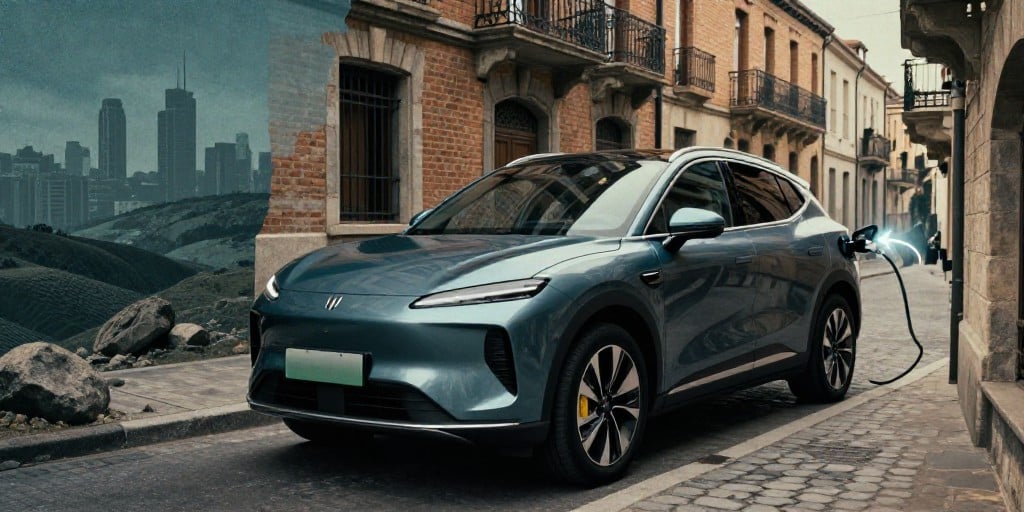
Rivian Automotive Inc. Positions the R2 SUV as a Catalyst for Market Expansion and Financial Resilience
Rivian Automotive Inc. has turned its strategic focus toward the forthcoming R2 SUV, a compact electric vehicle that is expected to serve as a bridge between the company’s flagship R1 pickup and the broader European consumer base. This move marks a deliberate shift toward smaller, more versatile electric vehicles (EVs) and signals an attempt to diversify revenue streams in an increasingly competitive landscape.
Strategic Rationale Behind the R2
The R2 is positioned as a “first Rivian for Europe,” according to a recent German publication. Its dimensions and feature set have been calibrated to meet stringent European regulations on vehicle width, weight, and emissions. By offering a vehicle that is both more affordable and better suited to congested city streets, Rivian seeks to capture a demographic that the larger R1 has not fully addressed. This demographic shift could translate into higher unit sales and an accelerated path to profitability.
From a competitive standpoint, the R2 directly challenges established players such as Tesla Model Y and Volkswagen ID.4, both of which have already secured significant market share in the European compact SUV segment. Rivian’s emphasis on rugged aesthetics and off‑road capability may differentiate the R2 enough to attract niche buyers, but it also risks alienating urban consumers who prioritize efficiency over utility.
Production Scale‑Up and Supply‑Chain Constraints
In its third‑quarter earnings release, Rivian highlighted the scheduled delivery of the R2 in October, a milestone that underscores the company’s intent to accelerate production. However, scaling production of a new vehicle line introduces significant logistical challenges. Rivian must secure supply chain agreements for critical components such as battery packs, power electronics, and drivetrain modules. While the company’s partnership with LG Energy Solution and existing relationships with Tier‑1 suppliers provide a foundation, any disruption—be it geopolitical, logistical, or due to component shortages—could delay the R2 rollout and erode investor confidence.
The company’s current production capacity is already strained by the demand for the R1 pickup. To meet the R2 delivery target, Rivian must either expand its manufacturing footprint or outsource certain production stages, both of which entail substantial capital expenditures (CapEx) and operational risk.
Financial Positioning: Liquidity and Profitability
Rivian’s third‑quarter report shows an unexpected improvement in liquidity ratios. The current ratio improved from 1.2x in Q2 to 1.4x in Q3, indicating a stronger short‑term financial position than analysts had anticipated. This buffer is particularly relevant given the high CapEx required for new vehicle development and manufacturing expansion.
Gross margin performance has also shown signs of improvement, moving from 21% in Q2 to 24% in Q3. While still below the double‑digit margins seen in mature automakers, this trend is encouraging. It suggests that Rivian’s cost‑control initiatives, such as lean manufacturing and strategic sourcing, are beginning to bear fruit. Improved margins can alleviate shareholder concerns about dilution, especially in a sector where high depreciation costs and heavy R&D expenses often erode profitability.
Nevertheless, the company’s net income remains negative, driven primarily by upfront capital costs and marketing spend associated with the R2 launch. Analysts should therefore view the liquidity cushion as a temporary shield rather than a guarantee of long‑term profitability.
Regulatory Landscape and Market Opportunities
The European Union’s upcoming Green Deal and stricter emissions standards present both a risk and an opportunity. Rivian’s all‑electric platform positions it favorably to meet future regulatory benchmarks, potentially qualifying for incentives such as tax credits and subsidies. However, the company must navigate complex certification processes that can delay market entry and inflate costs.
Moreover, the European market’s fragmented regulatory environment—varying safety, cybersecurity, and data privacy requirements—necessitates a robust compliance strategy. Rivian’s current compliance framework, largely modeled after U.S. standards, will need to be adapted to align with EU directives. Failure to do so could result in costly re‑engineering and delayed rollouts.
Competitive Dynamics and Overlooked Risks
While the R2’s unique off‑road capabilities may appeal to a segment of European buyers, the broader market increasingly favors compact, efficient vehicles optimized for urban use. Rivian’s emphasis on ruggedness could limit its appeal in high‑density cities where parking constraints and fuel efficiency are paramount.
Additionally, the company’s reliance on a limited number of suppliers for key battery components exposes it to supply‑chain disruptions. Recent geopolitical tensions in the battery supply chain, especially involving China and the United States, could adversely impact production schedules and cost structures.
On the upside, Rivian’s established brand recognition among North American EV enthusiasts could serve as a launchpad for European expansion. Partnerships with European battery manufacturers or autonomous driving tech firms could accelerate the R2’s market readiness and reduce capital intensity.
Conclusion
Rivian’s strategic pivot toward the R2 SUV is an ambitious attempt to broaden its market reach and stabilize its financial profile. The company’s improved liquidity and growing gross margins suggest a firm foundation for the upcoming launch, yet significant risks persist in the areas of production scaling, regulatory compliance, and competitive positioning. Investors and industry observers should monitor the company’s ability to balance aggressive product development with disciplined financial management, particularly as it navigates the complex regulatory and competitive terrain of the European EV market.