Rivian’s New R2: An Investigative Look at the Potential Upside and Hidden Headwinds
Rivian Automotive Inc. has re‑captured investor attention with the announcement of its latest vehicle, the R2. While market commentators project a lift in share price, the underlying dynamics warrant a deeper examination. This analysis dissects the firm’s product strategy, regulatory landscape, and competitive positioning to identify both the opportunities and risks that may shape Rivian’s trajectory over the next 12 to 18 months.
1. Product Expansion: More than a New Model
| Feature | R2 Specification | Market Relevance |
|---|---|---|
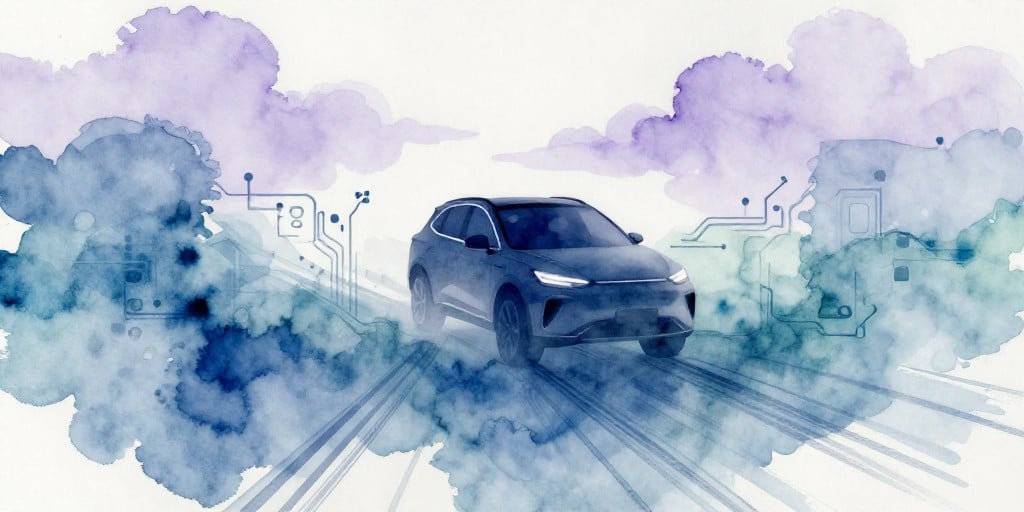
| Body type | Compact SUV | Expands beyond Rivian’s flagship R1T pickup |
| Range | 300–350 mi (EPA) | Competitive with mainstream EVs |
| Price | $40k–$50k | Entry‑level pricing, broadening consumer base |
| Powertrain | Dual‑motor AWD | Mirrors R1T’s drivetrain, reducing engineering risk |
Rivian’s strategy to introduce the R2 signals a deliberate pivot from a niche, high‑margin product line (pickup trucks) to a broader, volume‑oriented segment. By leveraging existing powertrain platforms and component synergies, the company can reduce unit cost while tapping into a larger addressable market. The projected price point aligns with competitors such as the Chevrolet Bolt EUV and Hyundai Ioniq 5, yet retains the “Rivian” brand equity that appeals to early‑adopter sensibilities.
Opportunity: A lower‑priced vehicle could catalyze a “brand halo effect,” drawing new customers into Rivian’s ecosystem of accessories, service contracts, and future model upgrades. Early adoption rates for the R2 would provide critical data for scaling the company’s manufacturing footprint.
Risk: The cost advantage may be eroded if Rivian cannot secure supply chain efficiencies at the scale of Tesla or GM’s Ultium platform. Moreover, entry‑level EVs face intense price wars; Rivian must balance margin preservation with competitive pricing.
2. Regulatory Context: Policy Environment vs. Market Momentum
The United States has enacted a series of EV incentives, including the Inflation Reduction Act’s tax credits and the Biden administration’s proposed clean‑transport mandates. While these measures create a favorable backdrop for all EV makers, they also introduce volatility:
- Credit Phase‑Outs: Tax credit eligibility for EVs is tied to battery production thresholds. Rivian’s current battery supply chain is concentrated in its own Gigafactory and a limited number of partners, potentially constraining scalability.
- Infrastructure Spending: Federal and state funding for charging infrastructure could accelerate consumer adoption, particularly for entry‑level EVs like the R2. Yet, the distribution of these funds is uneven, favoring urban areas over rural markets where Rivian’s pickup had previously excelled.
- Emission Standards: The Corporate Average Fuel Economy (CAFE) reforms and upcoming zero‑emission vehicle mandates could compel automakers to expand electric line‑ups. Rivian’s expansion aligns with these expectations, but the company must navigate compliance costs.
Opportunity: The policy mix creates a window for early entrants to secure a foothold in high‑growth segments. Rivian’s R2 could become a “policy‑friendly” vehicle if it meets the criteria for federal incentives.
Risk: Shifts in political priorities—such as changes to the tax credit structure—could suddenly alter the profitability of newly launched models. Rivian’s exposure to a single production region also heightens regulatory risk.
3. Competitive Landscape: Beyond the Tesla Benchmark
While Tesla remains the dominant narrative in the EV sector, Rivian’s competitors span a spectrum:
| Competitor | Core Strength | Market Gap |
|---|---|---|
| Tesla | Scale, battery tech | Limited pickup & SUV offerings |
| GM (Bolt, Silverado EV) | Production scale | Lower entry price, strong dealer network |
| Ford (F‑150 Lightning) | Brand heritage | Growing EV pickup segment |
| Volvo (C40 Recharge) | Premium positioning | Smaller volume |
Rivian’s R2 enters a crowded compact SUV segment that already hosts several well‑established players. However, Rivian differentiates itself through:
- Brand Identity: Emphasis on adventure and sustainability may resonate with niche segments undervalued by mainstream automakers.
- Software Ecosystem: Rivian’s proprietary infotainment and over‑the‑air update framework could provide a long‑term competitive moat.
- Supply Chain Autonomy: Building the R2 largely in-house allows for tighter quality control and rapid iteration.
Opportunity: The company’s unique brand positioning may attract a “first‑move” advantage among eco‑conscious consumers who are dissatisfied with mainstream offerings.
Risk: The incumbent advantage of Tesla, GM, and Ford is steep; capturing a significant market share will require aggressive pricing, superior customer service, and robust dealer support—areas where Rivian’s current network remains limited.
4. Financial Implications: Capital Structure and Investor Sentiment
Rivian’s recent capital raise of $1.3 billion at a $5 billion valuation has increased its cash reserves to roughly $4.2 billion, providing the liquidity necessary for rapid scale. However, the company’s burn rate remains high—$200 million per quarter—largely driven by production ramp‑up costs.
| Metric | 2023 | 2024 (Projected) |
|---|---|---|
| Net Income | –$1.5 bn | –$900 m |
| Free Cash Flow | –$1.0 bn | –$300 m |
| Capital Expenditure | $250 m | $400 m |
| Debt to Equity | 0.7 | 0.5 |
The introduction of the R2 could alter cash flow dynamics:
- Revenue Impact: A conservative estimate of 500,000 units sold at $45k average price would generate $22.5 bn in gross revenue, substantially increasing top-line growth.
- Margin Pressure: Initial production inefficiencies and lower price points may keep gross margins at 12–15%, below Rivian’s current 20% for the R1T.
- Debt Management: With projected revenue growth, Rivian could refinance existing debt, improving its debt‑to‑equity ratio.
Opportunity: Positive cash flow from the R2 could enable Rivian to pursue strategic acquisitions or invest in next‑generation battery technology, reinforcing its competitive positioning.
Risk: If sales fall short of expectations, the company may need to reinstate layoffs or delay capital projects, eroding investor confidence. Additionally, a misaligned supply chain could inflate costs and erode profitability.
5. Unseen Risks: Supply Chain, Labor, and Technological Bottlenecks
- Battery Supply: Rivian’s reliance on a single battery supplier (SK Innovation) exposes it to geopolitical and commodity price fluctuations.
- Manufacturing Capacity: The company’s Gigafactory 1 in Normal, Illinois, has a projected 500,000‑unit annual output. Scaling to meet R2 demand may require costly expansion or a new facility.
- Talent Acquisition: Rapid growth in software and hardware development may outpace Rivian’s ability to attract and retain top talent, especially in a competitive labor market.
Mitigation: Diversifying suppliers, securing long‑term battery contracts, and investing in workforce development programs can reduce these risks.
6. Bottom‑Line Insight
Rivian’s R2 launch represents a calculated risk aimed at transforming the company from a niche EV pioneer into a mainstream automotive contender. While the potential upside—market expansion, brand diversification, and improved cash flows—is tangible, the path is fraught with supply chain bottlenecks, intense competition, and regulatory uncertainty.
Investors should monitor key performance indicators such as:
- Unit Sales Velocity – Early adoption rates in the first 12 months.
- Margin Realization – Gross margin trends post‑scale.
- Supply Chain Stability – Battery supply agreements and lead times.
- Regulatory Compliance Costs – Impact of evolving EV incentives and mandates.
Only by tracking these metrics will stakeholders discern whether Rivian’s R2 truly constitutes a “catalyst” for sustained growth or merely a strategic detour in the company’s broader transformation journey.