
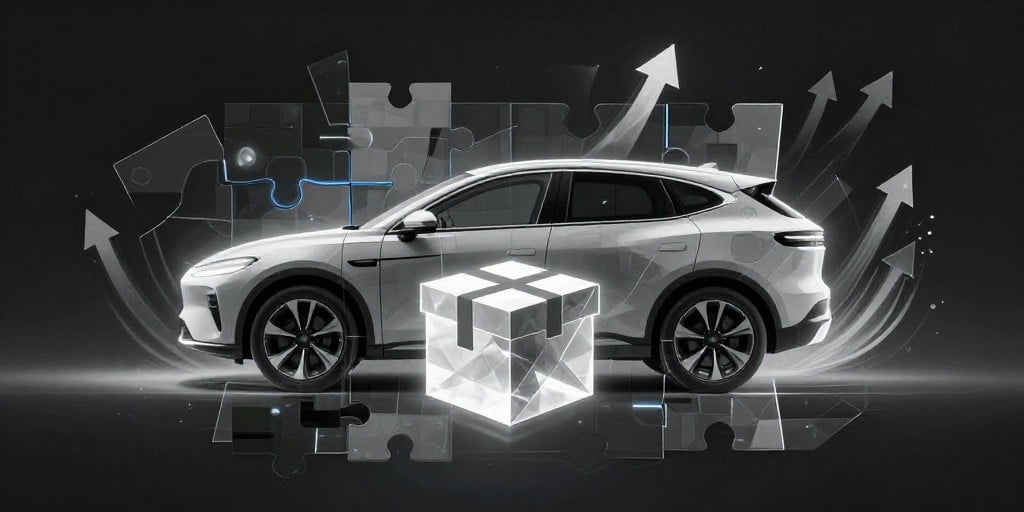
Rivian Automotive Inc. Advances R2 Delivery, Signaling a Production Upswing
Rivian Automotive Inc. has announced that its new R2 electric sport‑utility vehicle (SUV) has entered consumer delivery, marking a pivotal step in the company’s production schedule. This milestone is widely regarded by market analysts as a potential inflection point for investor sentiment, as it suggests the automaker is moving closer to achieving the sales targets set for the forthcoming fiscal year.
Production Milestone and Market Significance
The R2 launch is more than a new product introduction; it represents the fulfillment of a production threshold that could recalibrate expectations regarding Rivian’s valuation. While the company has not disclosed the exact volume of units produced, the emphasis on surpassing a predetermined benchmark indicates a strategic intent to shift the narrative from cautious to optimistic. In the electric‑vehicle (EV) sector, production capability is a critical yardstick, influencing perceptions of scalability, supply‑chain robustness, and ultimately, shareholder returns.
Strategic Context within the EV Landscape
Rivian’s focus on expanding its vehicle lineup echoes broader industry dynamics where manufacturers are diversifying product portfolios to capture multiple market segments. The introduction of a versatile, mid‑size SUV like the R2 aligns with consumer demand for vehicles that blend utility with sustainability—a trend that has accelerated following the 2021 surge in EV sales. By adding the R2 to its product mix, Rivian not only taps into a new revenue stream but also positions itself against competitors such as Tesla, Ford, and General Motors, who are aggressively expanding their own SUV offerings.
Sustainability and Innovation Imperatives
The company’s narrative consistently links production milestones to its long‑term strategy of delivering vehicles that meet evolving consumer expectations while maintaining its foundational environmental commitments. Rivian’s emphasis on sustainable manufacturing practices—such as the use of recycled materials, renewable energy sourcing, and circular design principles—reinforces its brand identity as an environmentally responsible automaker. This alignment with ESG (Environmental, Social, Governance) criteria is increasingly significant for institutional investors who are integrating sustainability metrics into portfolio decisions.
Investor and Market Implications
Market participants are closely monitoring the R2 deployment to assess its impact on Rivian’s growth trajectory. A successful, on‑time delivery schedule can enhance the company’s credibility with suppliers, regulators, and consumers alike, potentially leading to a positive reassessment of its valuation multiples. Conversely, any production delays could dampen investor confidence, underscoring the high stakes associated with scaling EV production.
Broader Economic Connections
Beyond the EV industry, Rivian’s progress illustrates the broader shift toward electrification across the automotive sector, a trend driven by tightening emissions regulations, falling battery costs, and heightened consumer environmental consciousness. The company’s ability to meet production benchmarks may serve as a barometer for the sector’s overall health, influencing capital allocation decisions in related industries such as battery manufacturing, autonomous driving technology, and charging infrastructure.
Conclusion
Rivian Automotive Inc.’s move into consumer delivery of the R2 SUV signals a critical juncture in the company’s production timeline and has significant implications for investor sentiment, valuation dynamics, and competitive positioning. By aligning its expansion strategy with sustainability imperatives and market demands, Rivian is poised to reinforce its standing within the rapidly evolving electric‑vehicle landscape while contributing to broader economic trends favoring clean transportation solutions.