
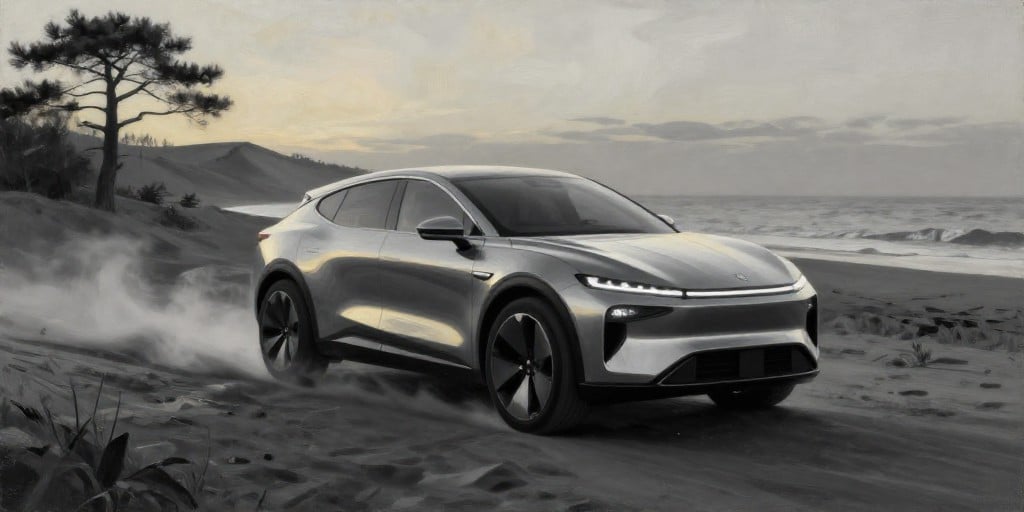
Rivian Automotive Expands Product Portfolio with the New R2 Mid‑Size Electric SUV
Rivian Automotive has begun public deliveries of its new mid‑size electric SUV, the R2, marking a significant step toward expanding its product line beyond the premium R1 pickup and R1S SUV. The launch event in Utah saw the company’s founder, RJ Scaringe, highlight the R2 as a key vehicle intended to broaden Rivian’s appeal to mainstream consumers and to compete more directly with Tesla’s Model Y and other compact‑SUV makers.
Pricing and Trim Structure
The R2 is available in a range of trims, with the entry‑level model priced at roughly $45,000 and higher‑performance variants starting near $58,000. Rivian plans to introduce further variants, including a premium package, later in 2026 and additional standard versions through 2027, aiming for a broader price spectrum within the mid‑size segment. Scaringe emphasized that each R2 model must be cash‑flow positive, a goal the firm believes is achievable once its new Georgia plant reaches full production capacity in late 2028.
Technological Features
The vehicle will feature a sophisticated driver‑assistance system and is expected to receive regular over‑the‑air updates. Rivian also noted that the R2’s design incorporates significant weight and material savings compared with the R1S, which should help keep operating costs lower.
Market Positioning and Competitive Landscape
Despite positive early reviews and a strategic focus on volume, the announcement coincided with a modest decline in Rivian’s share price, reflecting investor caution as the automaker moves from a niche luxury niche to a broader market. Analysts have noted that while the R2 could provide a new revenue stream, the company still faces challenges in scaling production, managing quality, and competing in a market that includes established internal‑combustion and electric‑vehicle brands.
Implications for Rivian’s Business Strategy
Rivian’s R2 launch represents a pivotal moment as it seeks to establish itself as a mainstream electric‑vehicle provider while aiming for profitability through increased volume and cost efficiencies. The company’s strategy of launching a lower‑priced model is designed to capture a segment of the rapidly growing electric‑vehicle market that is still dominated by larger, well‑established competitors.
The introduction of the R2 will test Rivian’s ability to manage production scale and maintain quality standards, both of which are critical to achieving the cash‑flow positive targets set for the new vehicle line. Moreover, the focus on weight savings and material efficiencies reflects an industry‑wide shift toward sustainability and cost containment, aligning Rivian with broader economic trends that favor lean manufacturing and resource optimization.
Conclusion
Rivian Automotive’s foray into the mid‑size electric SUV segment with the R2 underscores the company’s ambition to transition from a niche luxury automaker to a competitive player in the mass‑market electric‑vehicle arena. While the R2 introduces new revenue opportunities, the company must navigate significant production, quality, and competitive challenges to realize the profitability goals associated with this expansion.