Human Oversight in AI‑Driven Finance: A Risk‑Based Framework
1. The Core Thesis
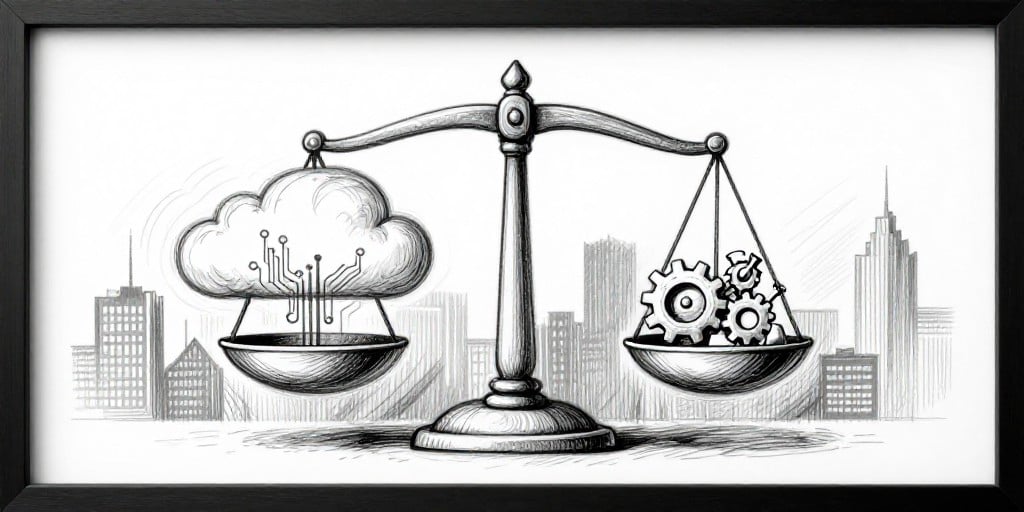
MongoDB Inc. has articulated a clear stance on how financial institutions should calibrate human oversight for artificial intelligence (AI) systems. The company stresses that while human review remains indispensable for mitigating substantial risks, it must be proportionate to the risk profile of each AI‑driven activity. Over‑checking can erode the productivity gains that automation promises, especially when agentic workflows expand across an organization.
2. Alignment with Regulatory Guidance
The Monetary Authority of Singapore (MAS) has issued guidelines that echo MongoDB’s recommendations. MAS calls for controls that scale with both the risk exposure and the operational footprint of AI usage. By aligning its approach with these guidelines, MongoDB demonstrates that a nuanced, risk‑based oversight strategy is not only prudent but also compliant with emerging regulatory expectations.
3. Differentiating High‑Risk from Low‑Risk Tasks
MongoDB proposes a clear delineation between tasks that merit human intervention and those that can rely on automated processes:
| Task Category | Typical AI Application | Human Intervention Required |
|---|---|---|
| Critical Decisions | Fraud detection, large‑value transfers, high‑value loan approvals | Yes – mandatory review |
| Operational Workflows | Document assembly, internal process updates | No – routine automation |
This stratification ensures that resources are focused where they can make the most significant impact on risk mitigation.
4. Criteria for Escalation
The company outlines several factors that should inform whether an AI action warrants escalation:
- Customer Impact – The potential harm to a customer’s financial position or privacy.
- Value at Risk – The monetary stakes involved in the transaction or decision.
- Reversibility – Whether a decision can be easily reversed or corrected if an error occurs.
- Uncertainty – The degree of ambiguity in the AI’s predictive certainty or the data quality.
By continually reassessing these criteria, institutions can adapt their escalation thresholds to evolving AI capabilities and business needs.
5. Dynamic Governance in a High‑Velocity Environment
AI agents operate at machine speed, producing outputs at a scale far beyond human capacity to monitor in real time. Governance policies, however, evolve more slowly due to the need for deliberation, stakeholder engagement, and legal compliance. MongoDB stresses the necessity for a living governance model that periodically reviews and updates escalation points to match current AI performance and organizational risk appetite.
6. Implications for the Technology Landscape
- Shift Toward Adaptive Controls – Traditional “one‑size‑fits‑all” oversight is giving way to flexible, risk‑adjusted frameworks.
- Increased Focus on Explainability – As agencies that can provide human oversight demand clearer rationales, investments in interpretable AI models are likely to rise.
- Accelerated Regulatory Engagement – Regulators are increasingly scrutinizing how firms balance automation benefits against risk mitigation, prompting tighter reporting and audit requirements.
- Operational Resilience as a Competitive Differentiator – Firms that master this balance may gain a reputation for reliability, attracting risk‑averse clients and regulators alike.
7. Strategic Outlook
Financial institutions that embrace MongoDB’s measured, risk‑based approach position themselves to harness the full potential of AI while safeguarding against systemic risk. The strategy encourages:
- Resource Optimization – Allocating human expertise where it matters most.
- Continuous Improvement – Embedding feedback loops that refine escalation thresholds.
- Regulatory Alignment – Demonstrating proactive compliance with evolving supervisory frameworks.
In an era where AI is rapidly reshaping finance, the interplay between automation efficiency and human accountability will determine who leads the market. MongoDB’s commentary provides a blueprint for navigating this complex terrain, underscoring that the future of finance lies not in choosing between humans and machines, but in orchestrating their collaboration with precision and foresight.