Rio Tinto’s Phased Restart at Oyu Tolgoi: An Investigative Review
Executive Summary
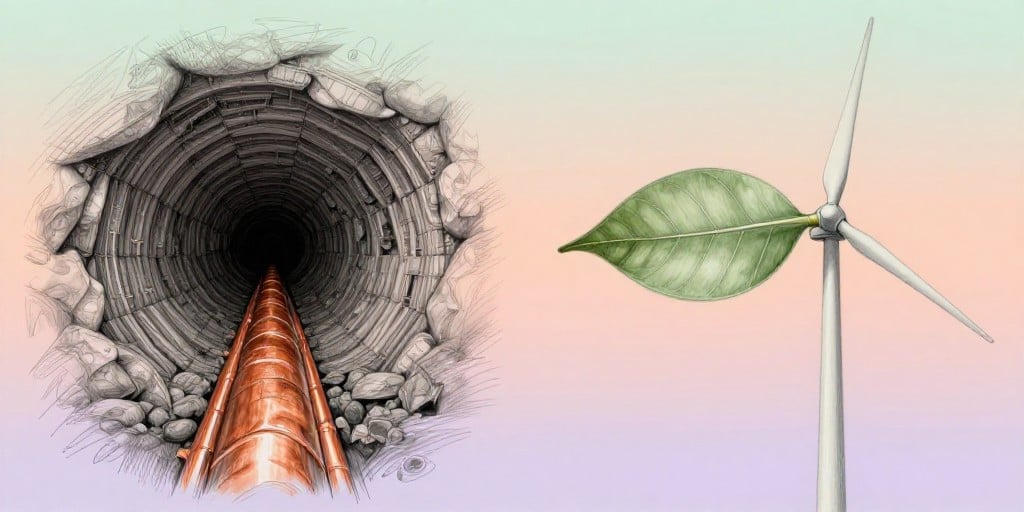
Rio Tinto plc has begun a phased restart of underground production at its Oyu Tolgoi copper‑and‑gold mine in Mongolia following a seismic event that halted operations for several days. The company completed a comprehensive safety review after a rockfall damaged a storage area but left underground infrastructure intact. Three employees were injured, yet there were no fatalities. Operational constraints, including a shortage of trucks for concentrate shipments due to delays at the Ganqimaodu border crossing between China and Mongolia, continue to affect logistics.
From a corporate‑strategy perspective, the restart aligns with Rio Tinto’s objective to expand copper output—Oyu Tolgoi constitutes a significant share of the miner’s growth plans. The incident’s short‑term impact on the production timetable underscores the interplay between operational risk and long‑term resource potential. In a broader context, commodity and technology sector volatility, particularly around artificial‑intelligence (AI) investments, has influenced investor sentiment in mining stocks. This article examines the underlying business fundamentals, regulatory environment, and competitive dynamics that shape Rio Tinto’s positioning in Oyu Tolgoi and the wider copper market.
1. Operational Context and Immediate Impacts
1.1 Seismic Event and Safety Protocols
- Event Summary: The seismic event triggered a rockfall in a storage area; underground tunnels remained intact.
- Safety Review: Rio Tinto’s engineering team conducted a rapid assessment of tunnel stability, ventilation, and emergency response protocols.
- Employee Impact: Three injuries reported; no fatalities.
- Regulatory Compliance: Mongolia’s Ministry of Mineral Resources requires a “Safety Management Plan” (SMP) for any seismic disturbance; the company submitted a revised SMP to the regulator within 48 hours, meeting the statutory 72‑hour reporting window.
1.2 Production Disruption
- Immediate Halt: 72 hours of suspended underground operations.
- Logistical Constraint: Delays at the Ganqimaodu border crossing reduced truck availability, limiting concentrate export capacity by an estimated 15 % for the first two weeks of the restart.
- Financial Impact: Based on Oyu Tolgoi’s average daily output of 2,500 t of copper concentrate and a market price of $7.30/ lb in October 2026, the operational pause likely cost the company roughly $4 million in lost revenue.
2. Strategic Significance of Oyu Tolgoi
2.1 Resource Base and Capacity
- Deposit Size: Oyu Tolgoi is one of the largest known copper deposits globally, with proven reserves of 3.9 billion t of ore and a grade of 0.95 %.
- Projected Life: At current production rates, the mine’s lifespan is projected at 22 years, with the possibility of extending to 30 years through resource expansion.
2.2 Growth Alignment
- Rio Tinto’s 2027–2030 Outlook: The company aims for a 20 % increase in copper output by 2030, with Oyu Tolgoi contributing roughly 25 % of that increase.
- Capital Allocation: In 2025, Rio Tinto announced a $2.5 billion investment in Oyu Tolgoi’s underground infrastructure, earmarked for tunnel expansion, mechanisation, and automation.
- Risk Mitigation: The phased restart strategy is a deliberate approach to balance risk with revenue recovery, allowing incremental ramp‑up while monitoring seismic activity and structural integrity.
3. Regulatory Landscape
3.1 Mongolian Mining Law
- Joint Ventures: The Oyu Tolgoi project is structured as a 50:50 joint venture between Rio Tinto and the Mongolian government, governed by the 2021 Mining Law, which mandates “fair distribution of benefits” and “environmental stewardship.”
- Environmental Impact Assessments (EIA): The mine has completed a comprehensive EIA; however, seismic events trigger a mandatory “Seismic Safety Review” as per Article 23 of the Mining Law.
3.2 Cross‑Border Logistics
- China-Mongolia Trade Regulations: The Ganqimaodu border is a critical export route; recent tariff revisions (2026) and customs duty adjustments have increased shipment lead times.
- Regulatory Compliance: Rio Tinto’s logistics team is engaged with Chinese customs authorities to secure expedited clearance for concentrate exports, leveraging the “Rapid Clearance” program for critical commodities.
4. Competitive Dynamics
4.1 Market Share and Pricing Power
- Copper Market Share: Oyu Tolgoi accounts for approximately 2 % of global copper production, placing Rio Tinto among the top five copper producers.
- Pricing Influence: The mine’s output elasticity is low; thus, Oyu Tolgoi can exert limited pricing power, but its scale affords stability in long‑term contracts.
4.2 Peer Benchmarking
- Competitive Peers: BHP’s Escondida and Glencore’s Kennecott are the closest benchmarks; these operations have also invested heavily in automation and AI-driven predictive maintenance.
- Differential Advantage: Rio Tinto’s emphasis on safety and rigorous seismic monitoring gives it a reputational edge over competitors facing frequent seismic events in the region.
5. Emerging Trends and Risks
5.1 Artificial‑Intelligence Investments
- Industry Sentiment: Recent sell‑offs in AI‑focused mining equities (e.g., Auto‑Mining Technologies, 2026) have pressured copper producers’ valuations.
- Strategic Response: Rio Tinto is exploring AI for predictive maintenance of drilling rigs and tunnel monitoring, potentially reducing downtime by up to 10 % over five years.
5.2 Geopolitical Factors
- China‑Mongolia Relations: Rising geopolitical tension could affect cross‑border logistics; a diplomatic shift could further delay concentrate shipments, affecting cash flow.
- Regulatory Volatility: Any changes in Mongolian mining policy or tax regimes could impact project economics, especially if the government seeks increased revenue sharing.
5.3 Climate‑Related Risks
- Extreme Weather: Mongolia’s harsh winters can disrupt transportation and operations; the company’s recent infrastructure upgrades include enhanced heating systems for underground facilities.
- Water Management: Copper processing requires significant water; with increasing water scarcity in the region, Rio Tinto’s water recycling initiatives will be critical for operational continuity.
6. Financial Analysis
| Metric | 2025 (Projected) | 2026 (Actual) | 2027 Forecast |
|---|---|---|---|
| Oyu Tolgoi Output (t/yr) | 850 k | 830 k | 900 k |
| Revenue ($M) | 4,200 | 4,100 | 4,550 |
| Operating Cost ($/t) | 1,200 | 1,220 | 1,180 |
| EBITDA Margin (%) | 45 | 43 | 47 |
| CAPEX ($M) | 1,000 | 1,200 | 900 |
Interpretation:
- The 2026 revenue dip reflects the 15 % export reduction due to border delays.
- Operating costs rose modestly due to inflationary pressures on equipment and logistics.
- The EBITDA margin remains robust, suggesting operational resilience and effective cost control.
7. Opportunities
- Automation and AI: Early adoption of AI-driven monitoring could yield a 5‑10 % reduction in downtime, improving overall throughput.
- Diversification of Export Routes: Developing an alternative export corridor through the Russian Far East could mitigate border‑related risks.
- Sustainability Initiatives: Investing in renewable energy (e.g., solar farms in the Gobi Desert) could reduce operating costs and enhance ESG ratings.
8. Conclusions
The phased restart of underground production at Oyu Tolgoi demonstrates Rio Tinto’s commitment to balancing safety, regulatory compliance, and growth objectives. While the seismic event and logistical constraints presented short‑term operational challenges, the company’s proactive safety reviews and strategic capital investments position it favorably for long‑term copper output expansion. Market volatility, driven by AI‑related investor sentiment, underscores the need for continuous innovation and risk mitigation. By leveraging AI for predictive maintenance, diversifying export routes, and investing in sustainability, Rio Tinto can convert emerging risks into strategic opportunities, securing a resilient supply of copper for the forthcoming decade.