
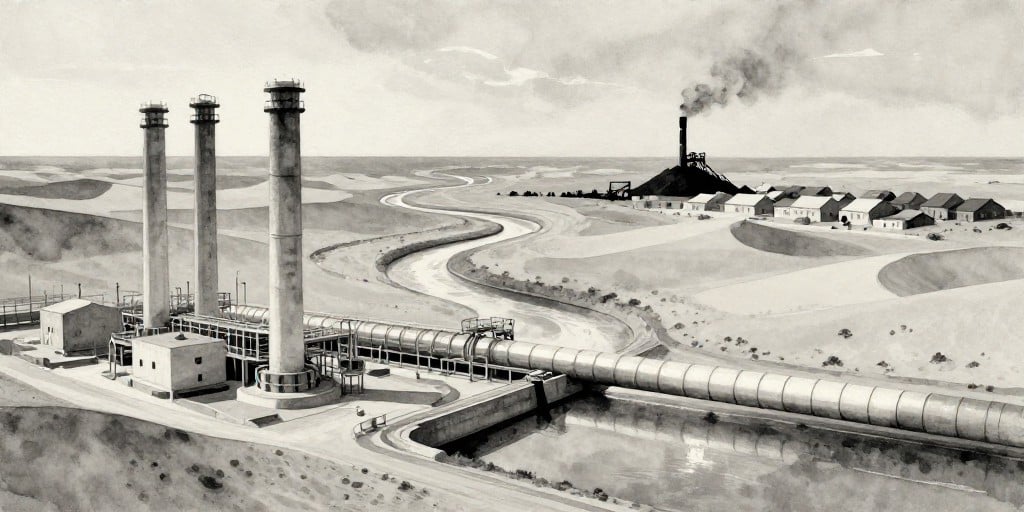
Rio Tinto and the Western Australian Government Join Forces to Build a Large‑Scale Seawater Desalination Plant in the Pilbara
The mining giant Rio Tinto has confirmed a partnership with the state government of Western Australia to construct a substantial seawater desalination facility in the Pilbara region. The project, valued at approximately A$1.5 billion, is designed to provide a reliable supply of treated water to the local distribution network, thereby reducing the region’s reliance on groundwater that is increasingly vulnerable to depletion.
Project Scope and Investment
The proposed plant will process a significant annual volume of seawater, converting it into potable water suitable for both municipal consumption and industrial use. Early agreements indicate that Yindjibarndi WaterCo, a local water services provider, will hold a future stake in the facility, while Rio Tinto will take responsibility for overseeing construction and subsequently divert a portion of the output for its own mining operations. The arrangement reflects a growing trend among resource sector companies to secure independent water sources that are resilient to climatic variability.
Strategic Rationale for Rio Tinto
Rio Tinto’s Pilbara operations have traditionally depended on rainfall and groundwater to meet water requirements for ore processing and mine support services. Recent meteorological data show a marked decline in rainfall across the region, exacerbating pressure on aquifers that serve not only mining activities but also local communities. By investing in a desalination plant, Rio Tinto aims to:
- Reduce Exposure to Water Scarcity – A climate‑independent source mitigates the risk of water shortages that could halt production or trigger costly operational disruptions.
- Enhance Regulatory Compliance – Australian water regulations increasingly demand that mining operators adopt sustainable practices. A desalination facility demonstrates proactive compliance with both state and federal water management frameworks.
- Strengthen Supply Chain Resilience – Access to a steady water supply ensures that mining outputs remain consistent, supporting long‑term contracts and investor confidence.
Industry Implications
The Pilbara desalination initiative underscores a broader shift in the resource sector toward integrating advanced water infrastructure into the core of mining operations. Key industry-wide impacts include:
- Capital Allocation Patterns – Companies are reallocating capital toward water treatment and desalination technologies, signaling a new class of infrastructure assets that parallel traditional mining capital expenditure.
- Competitive Positioning – Firms that secure reliable water sources early gain a competitive advantage by avoiding supply bottlenecks, thereby securing higher production rates and lower operating costs.
- Environmental Performance Metrics – Desalination plants contribute to the reduction of groundwater extraction, aligning with global environmental sustainability targets and potentially lowering regulatory scrutiny and carbon footprint.
Cross‑Sector Connections
The investment in desalination infrastructure resonates beyond mining. Similar initiatives are underway in the agriculture and industrial manufacturing sectors, particularly in arid regions of Australia and the Middle East. The convergence of these sectors around a shared need for dependable water supply fosters opportunities for:
- Technology Transfer – Desalination innovations developed for mining can be adapted for large‑scale irrigation or industrial cooling systems, creating ancillary markets.
- Integrated Water Management Policies – Government frameworks that promote cross‑sector collaboration can facilitate shared water infrastructure, reducing duplication of investment and improving overall efficiency.
- Economic Diversification – Enhanced water reliability supports the growth of ancillary industries such as energy production (given the power demands of desalination) and renewable energy integration.
Conclusion
Rio Tinto’s partnership with the Western Australian government to build a large‑scale desalination plant in the Pilbara exemplifies strategic adaptation to climatic and regulatory pressures within the resource sector. By securing a climate‑independent water source, the company not only fortifies its own operational resilience but also contributes to a broader industry transition toward sustainable water management. The project’s alignment with regional water policy and its potential ripple effects across multiple sectors position it as a noteworthy development in Australia’s evolving infrastructure landscape.