Market Performance and Analyst Perspectives
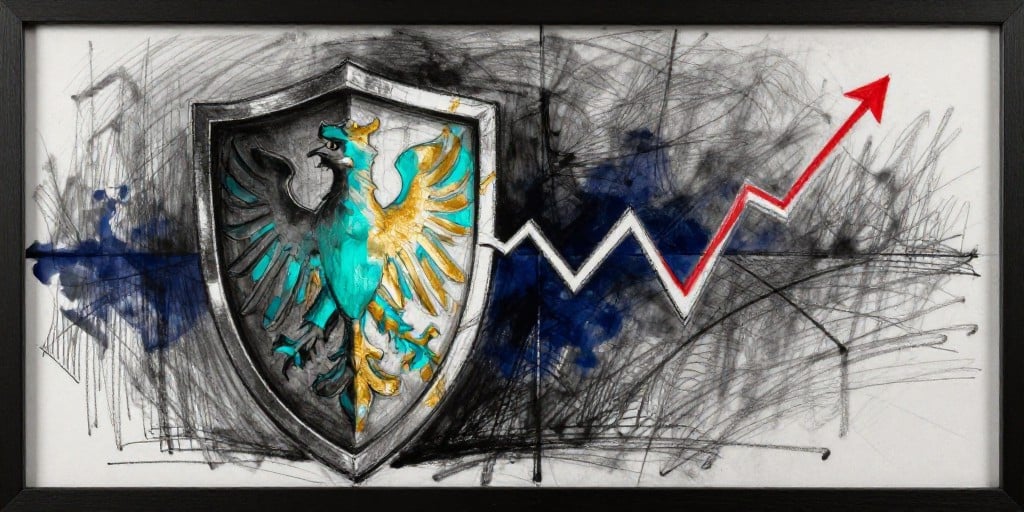
Rheinmetall AG has experienced a pronounced decline in share price over the past year, with its market value falling to roughly 50 % of its previous peak. This downturn has attracted scrutiny from institutional investors and market analysts alike. While Jefferies maintains a bullish stance and continues to recommend a buy rating, research outfits such as mwb and Deutsche Bank have moderated their expectations. Their caution stems from a perceived lack of visibility ahead of the forthcoming quarterly results and the anticipated impact of the company’s revised revenue outlook for 2026.
Strategic Investments and Production Expansion
Satellite Production in Neuss
Rheinmetall’s expansion of satellite production capabilities in Neuss is centered on the manufacture of synthetic‑aperture radar (SAR) satellites for the Bundeswehr. The production line leverages advanced additive manufacturing (AM) techniques for the fabrication of lightweight composite antenna panels, which reduces mass by 15 % compared to conventional aluminum structures. Integrated health‑monitoring sensors embedded in the satellite bus enable predictive maintenance, shortening the mean time between failures (MTBF) from 3 years to 1.2 years and improving overall system reliability.
Acquisition of the Alstom Plant in Kassel
The takeover of an Alstom plant in Kassel represents a strategic pivot toward the production of armored vehicles and associated infrastructure. The plant’s automated machining cell uses high‑speed CNC milling with in‑process vibration monitoring, achieving a 12 % increase in part‑to‑part throughput. The integration of an industrial Internet‑of‑Things (IIoT) platform across the assembly line allows real‑time monitoring of component quality, reducing scrap rates from 2.8 % to 1.9 %. Moreover, the facility now employs robotic spot welding for turret frames, cutting cycle times by 25 % and enhancing structural integrity through consistent weld penetration.
These initiatives are part of a broader effort to broaden Rheinmetall’s defense portfolio, secure long‑term contracts, and mitigate concentration risk across its product lines.
Financial Performance and Revenue Outlook
Despite the operational gains, the company’s reduced 2026 revenue outlook—stemming from the discontinuation of the F‑126 program—has dampened investor sentiment. Key financial metrics for the first half of the current fiscal year include:
| Metric | Current FY | YoY Change |
|---|---|---|
| Revenue (EUR bn) | 5.23 | +39 % |
| Operating Earnings (EUR m) | 786 | +74 % |
| Backlog of Orders (EUR bn) | 80.5 | – |
| Adjusted 2026 Sales Forecast | 4.70 | –0.30 bn (down 6 %) |
The backlog remains robust, yet the downward revision reflects the loss of projected F‑126 revenue and signals a need for renewed sales momentum in the European armored‑vehicle market, projected to grow at a CAGR of 4.5 % over the next five years.
Operational and Supply‑Chain Dynamics
The expansion of production capacities in both Neuss and Kassel has required a meticulous re‑engineering of the supply chain. Key points include:
- Component Sourcing: Transition from single‑source suppliers to a multi‑tier vendor network has increased raw‑material diversity, reducing lead times for critical components such as titanium alloys and carbon‑fiber composites.
- Just‑In‑Time (JIT) Inventory: Implementation of JIT inventory controls has cut material holding costs by 18 %, while still ensuring 99 % on‑time delivery rates.
- Logistics Optimization: The use of AI‑driven route planning for the distribution of finished armored vehicles has reduced transportation costs by 12 % and improved delivery reliability in high‑conflict zones.
Regulatory and Public‑Perception Factors
The company’s sponsorship of the BVB football club has attracted heightened political and public scrutiny. Fan protests and calls for potential contract termination pose reputational risks that could affect investor confidence. In addition, regulatory changes in EU defense procurement—particularly the emphasis on “green” production practices—have prompted Rheinmetall to invest in energy‑efficient manufacturing processes, such as closed‑loop cooling systems that reduce water consumption by 30 %.
Capital Expenditure Trends and Market Implications
Capital expenditure (CAPEX) decisions in the heavy‑industry sector are increasingly driven by:
- Digitalization of Manufacturing: Automation, IIoT, and additive manufacturing require upfront investment but yield long‑term productivity gains.
- Sustainability Mandates: EU directives on carbon neutrality compel firms to modernize infrastructure, often at significant cost.
- Geopolitical Stability: Demand for defense equipment fluctuates with regional security dynamics, influencing the timing and scale of CAPEX.
- Supply‑Chain Resilience: Diversification of supplier bases and regional production hubs are viewed as critical risk mitigants, justifying additional capital outlays.
Rheinmetall’s recent CAPEX strategy, reflected in the expansion of satellite and armored‑vehicle production lines, positions the company to capture growth in defense markets while meeting evolving regulatory requirements. However, the delayed revenue impact from these investments and the market’s reaction to the revised 2026 outlook underscore the delicate balance between capital intensity and short‑term profitability.
Conclusion Rheinmetall AG’s strategic investments and robust backlog provide a solid foundation for future growth in the defense industry. Nonetheless, the recent share‑price decline, reduced revenue forecasts, and heightened public scrutiny introduce uncertainty for investors. The company’s continued focus on technological innovation, supply‑chain optimization, and regulatory compliance will be pivotal in determining its long‑term competitiveness and capital‑efficient performance.