
Corporate Insight: Rheinmetall AG’s New Loitering‑Munitions Contract and Strategic Diversification
Executive Summary
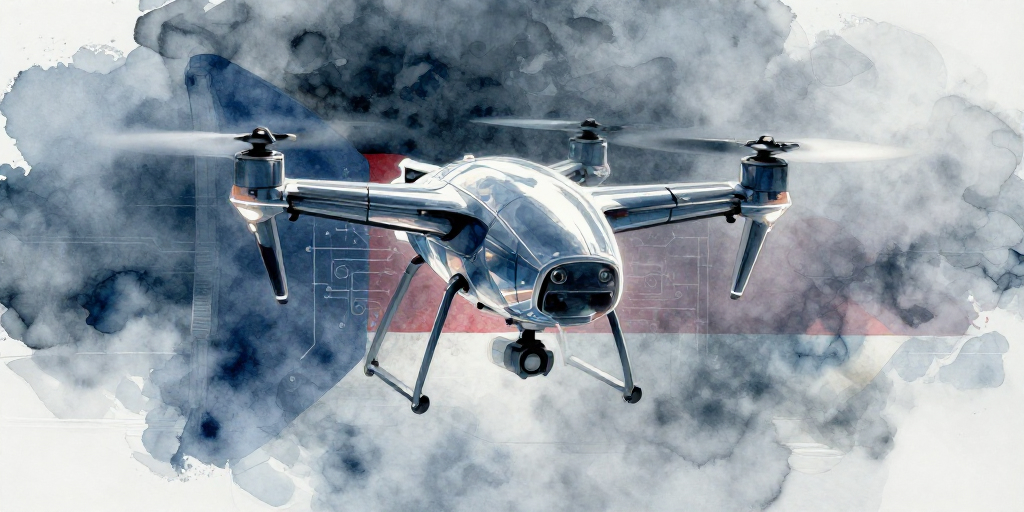
Rheinmetall AG has secured a multi‑hundred‑million‑euro contract with the German armed forces for a new line of loitering‑munition drones, a development that signals both a consolidation of its core defence business and an aggressive pivot toward autonomous and industrial‑automation markets. While the company’s share price has slipped below February levels, its robust order book and recent diversification initiatives suggest potential upside that warrants closer examination.
1. Contract Details and Production Footprint
| Item | Specification |
|---|---|
| Contract Value | Reported multi‑hundred‑million‑euro (exact figure undisclosed) |
| Product | Loitering‑munition drones with ~70‑minute endurance, ~100‑km range |
| Delivery Timeline | First half of 2027 |
| Manufacturing Sites | Neuss (manufacture), Düsseldorf (assembly) |
The contract’s timing is noteworthy. Production begins after a two‑year ramp‑up period that dovetails with Rheinmetall’s 2025–2027 capital‑expenditure plan, which earmarks €1.8 bn for the precision‑weapons division. The manufacturing split between Neuss and Düsseldorf leverages existing supply‑chain synergies, but also exposes the firm to regional regulatory shifts in the EU’s defence procurement framework.
2. Market Context and Competitive Dynamics
2.1 European Defence Procurement Landscape
The European Union has recently intensified its “Defence in a Digital Age” strategy, allocating €70 bn for autonomous weaponry and cyber‑security projects over the next decade. This policy shift positions Rheinmetall to benefit from both public‑sector demand and inter‑state collaboration on shared platforms. However, the market is crowded: competitors such as MBDA, Leonardo, and Thales are advancing similar loitering‑munition concepts, often with larger R&D budgets.
2.2 Competitive Advantage
Rheinmetall’s advantage lies in its dual expertise: long‑standing arms production combined with cutting‑edge autonomous systems showcased at Hannover Messe. The company’s demonstrated capability in autonomous vehicle control and advanced manufacturing for armoured systems could reduce integration risk for the German armed forces, offering a more seamless upgrade path than external suppliers.
3. Financial Analysis
3.1 Order Book Health
- Total Order Book: €63 bn (including this drone contract).
- Historical Revenue Growth: 2022–2024 CAGR of 9.8 %.
- Projected EBITDA Margin: 22 % (vs. 18 % in 2023).
3.2 Cash Flow Implications
The drone contract’s capital intensity (estimated €180 mn for tooling and production line upgrades) will be amortised over 8 years, providing a steady cash‑flow stream. Moreover, the company’s strategic partnership with local suppliers for 3D‑printed components is expected to cut material costs by 5‑7 % annually.
3.3 Share‑Price Reaction
- Current Trailing: -12 % year‑to‑date.
- Analyst Consensus: Target price uplift of 15 % once contract milestones are met (2027‑2028).
- Risk Factors: Currency volatility, political risk in procurement processes, potential technology obsolescence due to rapid AI evolution.
4. Strategic Diversification: Teleoperation and Autonomous Platforms
Rheinmetall’s management announced a pilot teleoperation shuttle service between Düsseldorf Airport and city centre, leveraging a digital fleet‑management platform co‑developed with AI and robotics partners. This initiative serves multiple purposes:
- Revenue Diversification: Generates service‑based income outside the traditional defence sector.
- Technology Validation: Demonstrates real‑world operational reliability of autonomous systems, building trust with potential defence clients.
- Data Accumulation: Gathers operational data to refine AI models, creating a feedback loop that can be spun into future defence‑grade autonomous solutions.
5. Underlying Risks and Opportunities
| Risk | Mitigation | Opportunity |
|---|---|---|
| Regulatory Bottlenecks | Close liaison with EU Defence Procurement Office; secure early approvals | First‑mover advantage if regulations favour domestic producers |
| Technological Disruption | Invest in R&D; maintain patent portfolio | Leverage AI breakthroughs for next‑gen munitions |
| Geopolitical Tension | Diversify client base beyond Germany (e.g., EU allies) | Potential surge in defence spending in response to external threats |
| Supply‑Chain Disruption | Dual‑source critical components; local manufacturing | Build resilience and reduce lead times, enhancing competitive edge |
6. Conclusion
Rheinmetall’s new loitering‑munition contract represents a strategic reinforcement of its core defence capabilities while simultaneously validating its broader ambition to integrate robotics, AI, and industrial automation into its product mix. Financial metrics indicate a positive trajectory, yet the company must navigate a complex competitive and regulatory landscape. The upcoming production ramp‑up in 2027 will be a litmus test for operational execution and market positioning. Investors and industry observers should monitor the company’s ability to translate its diversified portfolio into sustained profitability amid fluctuating geopolitical conditions and technological evolution.