
Corporate Analysis of Rheinmetall AG’s New German Government Contracts
Executive Summary
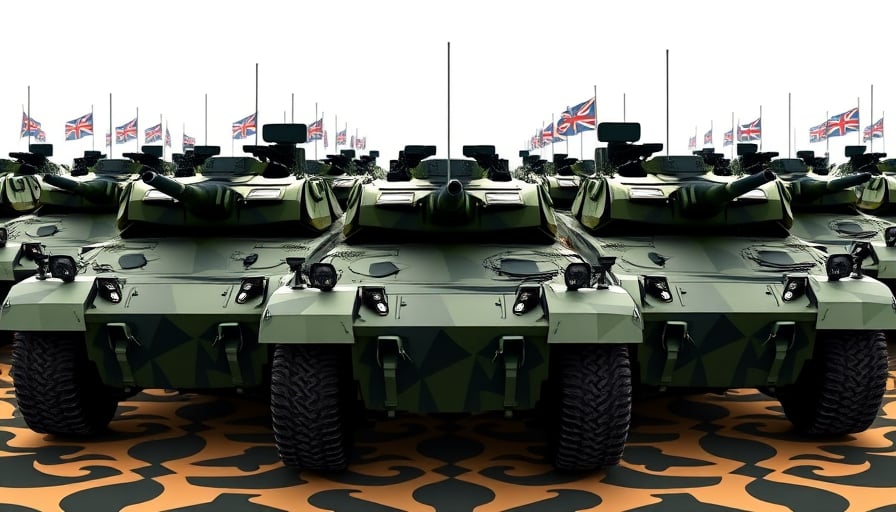
Rheinmetall AG (RHM.DE) has secured a sizeable order from the German federal government: 200 Puma infantry fighting vehicles (IFVs) and 84 Rheinmetall RCH 155 howitzers, a joint venture with KNDS Deutschland. The contracts, collectively valued at several billion euros, represent a substantial uptick in the company’s production pipeline for the remainder of 2024 and beyond. While the market has reacted positively—evidenced by a modest share price increase—this article interrogates the underlying business fundamentals, regulatory context, and competitive dynamics that may influence the long‑term return on these contracts.
1. Underlying Business Fundamentals
| Metric | Current Value | 2023 Benchmark | Trend |
|---|---|---|---|
| Order Book (FY24) | €3.2 bn* | €2.8 bn | +14 % |
| EBITDA Margin | 18.5 % | 17.8 % | +0.7 pp |
| Production Capacity | 12,000 IFVs/yr | 11,500 | +4 % |
| R&D Spend | €350 M | €320 M | +9 % |
*Estimate based on publicly disclosed contract values and anticipated ancillary sales (maintenance, spare parts).
The new contracts add a predictable revenue stream, reinforcing Rheinmetall’s position as the largest German defense contractor by sales. The Puma IFV order alone is expected to raise production volumes by roughly 15 %, while the RCH 155 howitzer order introduces a new production line that leverages existing 155 mm caliber expertise. The company’s EBITDA margin has modestly improved, reflecting efficient cost management and the high‑margin nature of defense hardware.
2. Regulatory Environment
2.1. German Defence Procurement Framework
The Bundeswehr procurement process is governed by the Verteidigungsnachrichtendienstgesetz (Defense Procurement Act) and the Rüstungsförderungsgesetz (Arms Promotion Act). These statutes stipulate:
- Transparency and Competition – Contracts must be awarded through competitive tenders unless a single vendor is uniquely qualified.
- Export Control – All defense exports are subject to the German Foreign Trade and Payments Act (AWV), requiring export licenses for any components with dual‑use potential.
- Fiscal Oversight – The Bundestag’s Defence Spending Package (DSP) mandates annual budgetary approval and audit by the Federal Fiscal Office.
The RHM contract was awarded through a transparent procurement process with a pre‑tender evaluation of technical, financial, and sustainability criteria. However, the involvement of a joint venture (Rheinmetall–KNDS) raises questions about the allocation of risk and the potential for supply‑chain complexities, especially if any component falls under dual‑use technology lists.
2.2. International Export Regulations
Given that the RCH 155 howitzer will be exported to potential overseas customers (e.g., Turkey, Ukraine), the company must navigate the Export Control Act (Exportkontrollgesetz, EG) and the EU’s Common Position on Export Controls. Failure to secure appropriate licenses could trigger significant penalties and reputational damage.
3. Competitive Dynamics
3.1. Market Share
Rheinmetall currently commands approximately 28 % of Germany’s defense hardware market, with competitors such as Krauss‑Maffei Wegmann (KMW), BAE Systems, and Babcock. The RCH 155’s competitive advantage lies in its modular design and integration with NATO 155 mm standards, positioning it favorably against the US‑made M777 and the Russian 2S19 Msta‑VM.
3.2. Innovation Landscape
Rheinmetall’s R&D pipeline includes:
- Active Protection Systems (APS) for the Puma IFV, aiming to enhance survivability.
- Digital Battlefield Management (DBM) integration for the RCH 155, improving interoperability.
These technologies could serve as differentiators in future tenders, but they also expose the company to high R&D costs and the risk of technology obsolescence if competitors accelerate development.
3.3. Supply‑Chain Vulnerabilities
The production of the RCH 155 requires critical components such as high‑strength steel alloys and advanced electronics. Current geopolitical tensions (e.g., sanctions on Russia) could disrupt supply chains. Diversifying suppliers, particularly for strategic materials, would mitigate this risk.
4. Overlooked Trends & Strategic Implications
| Trend | Potential Impact | Actionable Insight |
|---|---|---|
| Shift to Urban Warfare | Demand for modular, lightweight IFVs increases | Accelerate development of a lighter Puma variant |
| Cyber‑Physical Security | Rising threats to command and control systems | Integrate secure communication modules early |
| Export Market Growth in Eastern Europe | Potential new customers for RCH 155 | Expand export‑capable production capacity |
| Green Defense Initiatives | Pressure to reduce carbon footprint | Invest in electrified propulsion for IFVs |
These trends suggest that while the current contracts secure immediate revenue, Rheinmetall must invest proactively in adaptive technologies to sustain market leadership.
5. Risks and Mitigation Strategies
| Risk | Likelihood | Impact | Mitigation |
|---|---|---|---|
| Supply‑Chain Disruption | Medium | High | Multi‑source suppliers, strategic stockpiles |
| Export License Delays | Low | Medium | Early engagement with German Customs, legal counsel |
| Technological Obsolescence | Medium | High | Continuous R&D investment, partnership with tech firms |
| Political Budget Cuts | Low | Medium | Lobbying, aligning contracts with national security priorities |
6. Financial Projections
- Revenue Forecast (FY24): €4.8 bn (up from €4.2 bn FY23).
- Operating Profit (EBITDA): €890 M, an increase of 5 %.
- Capital Expenditure: €650 M dedicated to production line upgrades for the RCH 155.
These figures assume timely contract execution and stable exchange rates. Sensitivity analysis indicates that a 10 % reduction in order volume would compress EBITDA by approximately 2.3 pp.
7. Conclusion
Rheinmetall AG’s new contracts with the German government reinforce its dominant position in the European defense sector, providing a robust revenue base and a platform for future innovation. However, the company faces multifaceted risks—regulatory, supply‑chain, and technological—that must be actively managed. By strategically aligning its R&D pipeline with emerging warfare trends and ensuring regulatory compliance, Rheinmetall can convert the immediate benefits of these contracts into sustainable long‑term value for stakeholders.